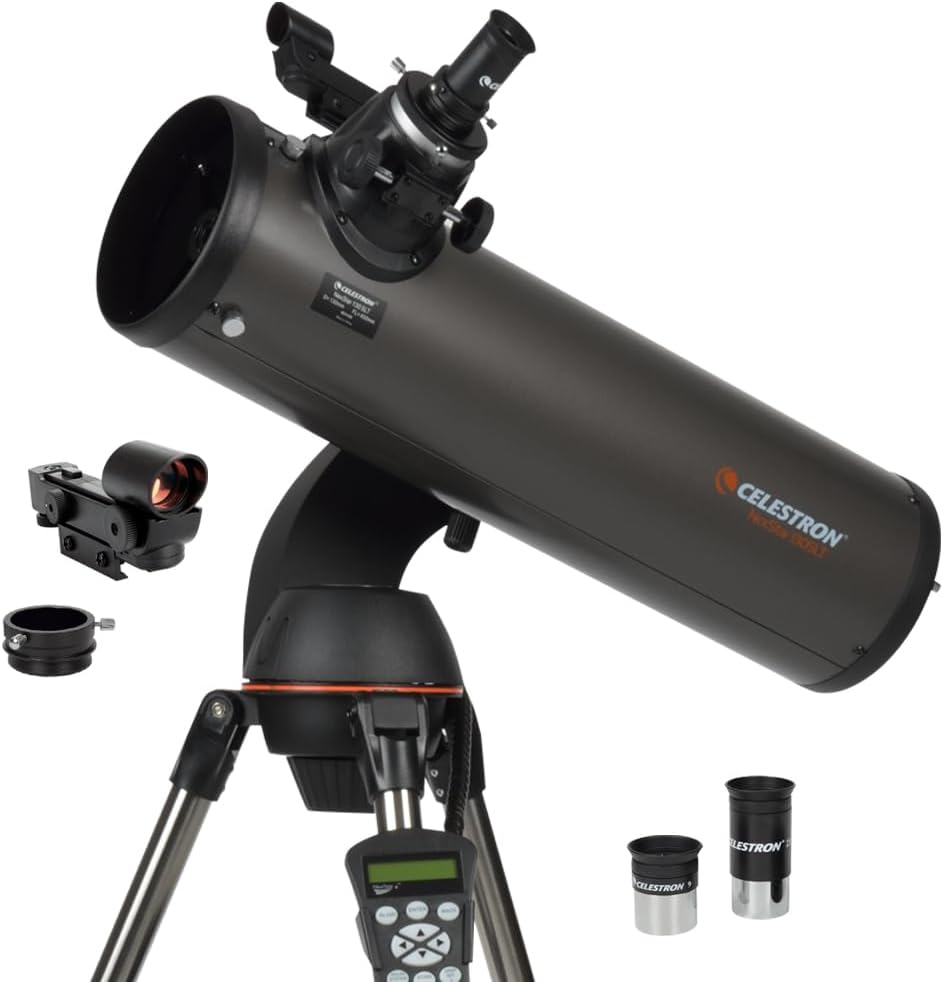
Celestron NexStar 130SLT
4.4Editor score
One hundred thirty mm aperture
Compact portable design
Free Starry Night software
Discovering the cosmos becomes effortless with computerized telescopes designed for adults who want precision and ease. These advanced optical instruments automate the search for celestial objects, allowing you to focus on viewing rather than aligning. Whether you are a beginner or an experienced observer, these scopes deliver stunning views of planets, stars, and galaxies with minimal setup time.
We evaluated ten top-rated models based on optical quality, mount stability, and automation features. Our comparison considers aperture size, GoTo accuracy, and ease of use to ensure you find a reliable tool for night sky exploration. Each option offers unique strengths, from portable tabletop designs to robust equatorial mounts suitable for serious imaging.
Each pick highlights specific capabilities and ideal use cases to match your interests and budget. Note that prices and availability can change frequently, so check current listings before purchasing. We aim to provide clear, honest insights to help you invest in a telescope that will inspire years of astronomical discovery and family enjoyment.
4.4Editor score

4.3Editor score

4.4Editor score
As an Amazon Associate we earn from qualifying purchases.
This side-by-side comparison highlights key specifications and features across all ten models to help you make an informed decision based on your specific needs and observational goals.




The Celestron NexStar 8SE ranks as our top pick for adults seeking a balance of power and portability. With its eight-inch aperture, this computerized telescope reveals fine details on the Moon and planets while handling deep-sky objects effectively. Its rating reflects strong performance among users who value automated tracking and ease of use during night sessions.
We may earn a commission when you buy through this link, at no additional cost to you.
This model shines with its fully automated GoTo mount that slews to over 40,000 objects in seconds. The NexStar hand control offers intuitive navigation, while SkyAlign technology simplifies calibration even for beginners who do not know star names. The iconic orange tube design is built for durability and provides stunning views through Schmidt-Cassegrain optics that maximize light gathering in a compact form.
While excellent, the 8SE requires a reliable power source for its computerized functions, which may limit remote use without a battery pack. The price is also higher than entry-level options, reflecting the premium optics and mount quality. These trade-offs are acceptable for serious observers who want reliable performance and detailed views of celestial targets.
Buy this if you want a robust, computerized telescope that grows with your skills and delivers exceptional optical performance. It is ideal for families or adults ready to move beyond manual scopes and explore the night sky with precision. For those seeking a premium experience, the 8SE offers unmatched value and versatility in its class.
The eight-inch aperture collects significant light, allowing clear views of faint galaxies and nebulae that smaller scopes miss.
The computerized mount tracks objects automatically, keeping them centered even as the Earth rotates during long observation sessions.
We may earn a commission when you buy through this link, at no additional cost to you.
The Celestron NexStar 130SLT stands out as the best budget option for adults new to computerized telescopes. It offers a database of over 4,000 objects and a GoTo mount that locates targets accurately without complex alignment. Its high rating indicates user satisfaction with its performance for planetary viewing and ease of transport to dark sky sites.
We may earn a commission when you buy through this link, at no additional cost to you.
With a 130mm aperture, this Newtonian reflector gathers enough light to see Saturn's rings and Jupiter's cloud bands clearly. The compact design makes it easy to set up for camping trips or backyard sessions, and it includes bonus Starry Night software for interactive sky simulation. Users appreciate the straightforward setup and reliable tracking for casual observing.
The smaller aperture means faint deep-sky objects may appear dimmer compared to larger models, and the lightweight tripod can vibrate in wind. However, these limitations are minor for the price, making it a smart entry point for families or beginners. It balances cost with essential computerized features without overwhelming new astronomers.
Choose this if you want an affordable, portable telescope that simplifies stargazing for adults and kids alike. It is perfect for weekend trips or learning the night sky without breaking the bank. For those starting their astronomy journey, the 130SLT provides excellent value and reliable performance.
This model delivers core GoTo features at a price accessible to most hobbyists looking to explore automated astronomy.
The included Starry Night software helps users plan sessions and learn about celestial objects before heading outside.
We may earn a commission when you buy through this link, at no additional cost to you.
The Odyssey PRO by UNISTELLAR redefines modern astronomy as a premium smart telescope with app-controlled automation. It starts observing in under two minutes with automatic alignment and autofocus, making it ideal for adults who want stunning visuals without complex setups. Its rating reflects strong performance in delivering enhanced vision and digital imaging capabilities.
We may earn a commission when you buy through this link, at no additional cost to you.
This all-in-one system integrates optics, electronics, and a motorized mount into a compact package. The eyepiece technology offers an immersive visual experience while allowing RAW and FITS data export for advanced processing. Users can join citizen science campaigns, contributing to real discoveries like asteroid occultations. The 64GB storage supports capturing numerous images without external devices.
Despite its advanced features, the 85mm aperture limits light gathering compared to larger scopes, and the price is significant for casual users. However, the convenience of no polar alignment and excellent night viewing in cities or dark skies outweighs these downsides for tech-savvy observers. It is a cutting-edge choice for serious astrophotography and digital exploration.
Buy this if you want a high-tech, smart telescope that automates alignment and offers premium imaging features. It suits adults seeking a hassle-free experience with professional capabilities. For those prioritizing convenience and advanced data export, the Odyssey PRO delivers a unique and powerful solution.
The proprietary eyepiece provides immersive viewing, blending visual and digital experiences for comfortable long sessions.
Users contribute to real scientific research by participating in NASA and SETI campaigns through the app interface.
We may earn a commission when you buy through this link, at no additional cost to you.
The Celestron NexStar 5SE is a versatile computerized telescope designed for those who want to start astrophotography. Its five-inch Schmidt-Cassegrain optics gather enough light for detailed lunar and planetary views, while the built-in wedge allows for polar alignment. Users praise its reliability and ease of alignment, making it a solid choice for beginners.
We may earn a commission when you buy through this link, at no additional cost to you.
With the NexStar hand control, you can select from over 40,000 objects for precise viewing. The compact form factor ensures portability, while compatibility with accessories lets you upgrade as you advance. The wedge feature is critical for long-exposure imaging, reducing field rotation and improving image quality during sessions.
However, the smaller aperture limits deep-sky performance, and the price is higher than other mid-range models. Setup requires patience, especially with polar alignment for imaging. These trade-offs are worth it for users focused on planetary imaging and portability rather than wide-field views.
Select this if you are interested in astrophotography and want a compact computerized telescope with imaging features. It suits adults looking for a balance of visual performance and digital capture. For those ready to learn imaging, the 5SE provides an excellent foundation.
The integrated wedge supports polar alignment, essential for long-exposure images without field rotation issues.
Its compact size makes it easy to transport, allowing observations at various dark sky locations.
We may earn a commission when you buy through this link, at no additional cost to you.
The Celestron 114LCM is an ideal entry-level computerized telescope for beginners seeking automated stargazing. With all-glass optics, it locates over 4,000 celestial objects using its GoTo mount. Users find the Sky Tour button particularly helpful for spontaneous observing, and the package includes essential eyepieces and a finder scope.
We may earn a commission when you buy through this link, at no additional cost to you.
This model simplifies setup with intuitive controls, allowing anyone to view planets and bright nebulae quickly. The full-height tripod provides stability, and the included Starry Night software enhances learning by simulating the night sky. It is a practical choice for casual observers or families interested in astronomy.
Optical quality is basic compared to higher-end models, and the mount may struggle with heavier accessories. However, the cost is low enough that it serves well as a first computerized scope. For those unsure about long-term commitment, this offers a risk-free entry into automated astronomy.
Purchase this if you need a simple, affordable telescope that automates target finding. It is great for beginners or families wanting an easy stargazing experience. For those taking first steps, the 114LCM delivers functional performance without complexity.
The Sky Tour button generates a list of best visible objects, guiding users without prior knowledge.
Includes eyepieces, finder scope, and software, ensuring everything needed for immediate use is in the box.
We may earn a commission when you buy through this link, at no additional cost to you.
The Celestron NexStar 127SLT uses Maksutov-Cassegrain optics to provide sharp, high-contrast views of planetary objects. With 127mm aperture, it gathers sufficient light to show details on the Moon and Saturn. Users appreciate its lightweight design and SkyAlign technology, which ensures fast setup for casual viewing.
We may earn a commission when you buy through this link, at no additional cost to you.
This telescope locates over 40,000 objects and tracks them automatically, ideal for users who want convenience. The bonus Starry Night software helps plan sessions and understand celestial movements. Its portability makes it perfect for travel or quick backyard sessions, requiring minimal setup time.
However, Maksutov optics can take time to cool down, affecting sharpness initially. The narrow field of view limits wide-sky exploration. Despite these limitations, it remains a strong choice for planetary enthusiasts who value precision and ease of use in a compact package.
Choose this if you want a portable, sharp computerized scope for planets. It suits adults looking for high-quality visuals without bulk. For those prioritizing clarity and travel, the 127SLT delivers reliable performance.
Maksutov-Cassegrain optics deliver sharp views with minimal aberration, ideal for detailed planetary observation.
SkyAlign technology aligns the mount quickly, so you can start observing within minutes.
We may earn a commission when you buy through this link, at no additional cost to you.
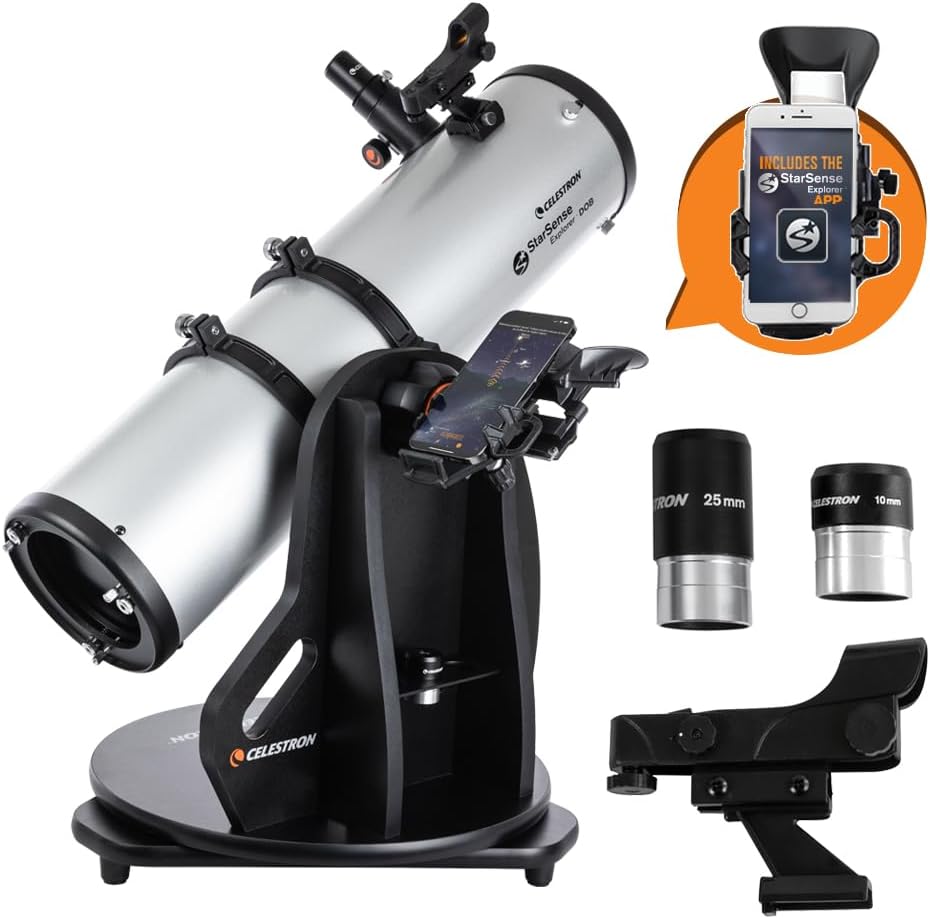
The Celestron StarSense Explorer uses a smartphone-powered system to guide you to celestial targets. With 150mm aperture, it delivers bright views of planets and deep-sky objects. Users praise its simplicity, as the app recognizes star patterns to pinpoint your scope's position, making stargazing accessible to everyone.
We may earn a commission when you buy through this link, at no additional cost to you.
This tabletop Dobsonian requires no complex setup; just launch the app and follow on-screen arrows. The curated list of best targets helps optimize your session. It combines optical power with intuitive navigation, ensuring a rewarding experience without star charts or specialized knowledge.
Without a motorized mount, tracking requires manual adjustment. The tabletop design may limit stability for heavier setups. However, its ease of use and app integration make it a standout for casual observers or families looking to enjoy astronomy together quickly.
Buy this if you want an app-enabled telescope that simplifies finding objects. It suits adults seeking convenience and bright views without complex tech. For those new to astronomy, the StarSense Explorer offers a fun and educational entry.
The app uses sky recognition to turn your phone into a navigation system for pinpoint target location.
Follow on-screen arrows to find objects quickly, reducing the learning curve for beginners.
We may earn a commission when you buy through this link, at no additional cost to you.
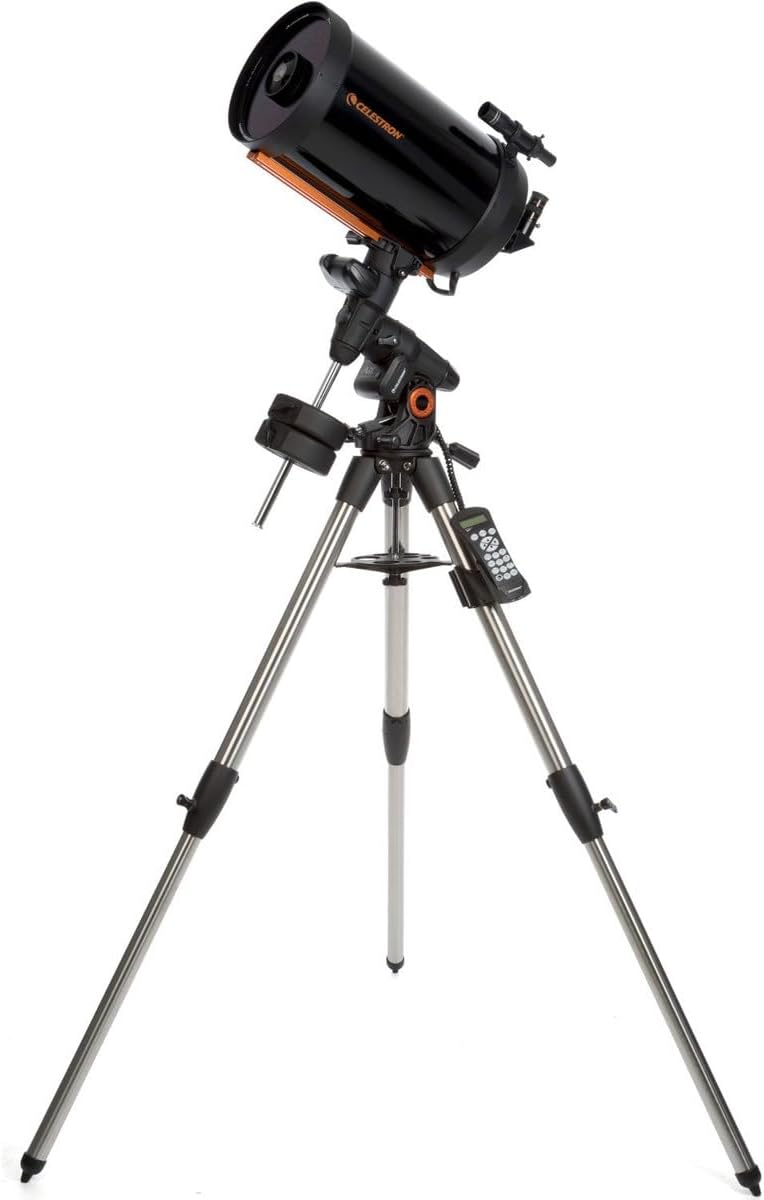
The Celestron Advanced VX 8 combines powerful optics with a robust German Equatorial mount for serious imaging. Its eight-inch aperture provides exceptional light gathering and clarity for deep-sky objects. Users value the mount's stability, minimizing vibrations and ensuring smooth tracking for long exposures.
We may earn a commission when you buy through this link, at no additional cost to you.
Equipped with a NexStar controller and over 40,000 objects, it offers precise pointing. The stainless steel tripod supports up to 30 lbs, allowing for heavy accessories. This setup is designed for adults focused on high-quality astrophotography and detailed visual observation.
However, polar alignment is required for imaging, which can be challenging for beginners. The weight and cost also limit portability. For those dedicated to advanced astronomy, the stability and optical quality justify these trade-offs and higher price.
Select this if you need a stable computerized scope for serious imaging. It suits adults prioritizing mount quality and light gathering. For those focused on long exposures, the Advanced VX 8 delivers professional performance.
The Advanced VX mount provides solid tracking, essential for long-exposure astrophotography and steady views.
Optics support high magnification for detailed views of planets and nebulae.
We may earn a commission when you buy through this link, at no additional cost to you.
The Celestron Advanced VX 9.25 offers a massive aperture for stunning views and imaging capabilities. With 235mm light gathering, it reveals incredible detail on galaxies and nebulae. Users rate it highly for brightness and clarity, making it a premium choice for advanced observers.
We may earn a commission when you buy through this link, at no additional cost to you.
The mount ensures accurate tracking, and the NexStar hand control simplifies navigation. It is built to handle heavy accessories and support up to 30 lbs of instrument weight. This setup is ideal for those committed to deep-sky astrophotography and high-resolution visual observation.
The weight makes transport difficult, and the price is steep. Polar alignment is also necessary for imaging. However, for serious stargazers, the optical performance and stability are unmatched. It delivers breathtaking views worth the investment.
Invest in this if you need maximum aperture for imaging. It suits adults focused on deep-sky targets. For those prioritizing detail and brightness, the 9.25 offers top-tier performance.
The 9.25-inch aperture gathers ample light, revealing stunning details of faint celestial objects.
The computerized mount ensures smooth tracking, essential for long-exposure imaging without star trails.
We may earn a commission when you buy through this link, at no additional cost to you.
The Celestron Advanced VX 6 balances power and portability for imaging enthusiasts. Its six-inch aperture and XLT coatings ensure bright, sharp views of planets and galaxies. Users praise the mount's stability and easy navigation, making it a solid mid-range choice for advanced beginners.
We may earn a commission when you buy through this link, at no additional cost to you.
The 1500mm focal length supports high magnification, while the NexStar controller simplifies target selection. It provides sufficient capacity for deep-sky imaging without being overly heavy. This scope is ideal for adults wanting a versatile setup without premium costs.
Setup requires some learning, and power is necessary for the motorized mount. However, the optical quality and mount performance make it a reliable tool. It is a great stepping stone for those aiming to improve astrophotography skills.
Choose this if you want a mid-range imaging scope with stable tracking. It suits adults ready to move beyond beginner models. For those balancing features and cost, the Advanced VX 6 delivers strong performance.
StarBright XLT coatings enhance light transmission, delivering brighter and more vivid views.
The Advanced VX mount minimizes vibrations, ensuring smooth tracking during observation and imaging.
We may earn a commission when you buy through this link, at no additional cost to you.
Selecting the right computerized telescope depends on your experience, budget, and observing goals. Understanding key factors ensures you invest in a scope that enhances your night sky journey.
Aperture determines how much light the telescope gathers, affecting brightness and detail. Larger apertures reveal fainter deep-sky objects but increase cost and size. For adults prioritizing planetary views, 80mm to 130mm may suffice, while deep-sky enthusiasts should consider 150mm or more.
Prioritize aperture based on target objects. If you prefer galaxies and nebulae, choose larger scopes. For casual planet viewing, smaller apertures offer portability.
Mounts support the telescope and enable tracking. Computerized GoTo mounts automate alignment and tracking, ideal for beginners. Equatorial mounts are better for astrophotography as they compensate for Earth's rotation. Altazimuth mounts are simpler but may require more manual tracking.
Choose equatorial mounts for long-exposure imaging. For visual stargazing, altazimuth GoTo mounts offer convenience and stability.
Newtonian reflectors offer large apertures affordably but may require collimation. Schmidt-Cassegrain telescopes provide compact designs with excellent optics for various targets. Maksutov-Cassegrain scopes deliver sharp planetary views but take longer to cool down. Each has strengths and trade-offs.
Pick reflectors for deep-sky viewing and SCTs for versatility. Maksutovs suit planetary observers prioritizing contrast over field width.
GoTo systems locate and track celestial objects automatically, saving time and effort. Look for databases with thousands of objects and user-friendly controls. SkyAlign technology simplifies setup by using three bright stars. Ensure the system integrates well with accessories.
Choose scopes with intuitive GoTo hand controls. Larger databases and alignment features improve the experience for all skill levels.
Portability affects where you can observe. Compact scopes are ideal for travel and dark sky sites. Heavier setups may require vehicles and multiple people to transport. Consider how often you plan to move the telescope.
Select lighter models for frequent travel. Ensure the mount and tripod are stable enough for your viewing location.
Computerized telescopes require power for motors and electronics. Some run on batteries, while others need AC adapters. Check compatibility with rechargeable batteries for remote use. Ensure sufficient runtime for long observation sessions.
Opt for models with efficient power usage. Carry spare batteries if you plan extended outings.
Prices range from affordable entry-level options to premium professional-grade scopes. Entry-level models may lack features but serve beginners well. Premium models offer better optics and mounts for serious imaging. Decide based on how long you plan to use the telescope.
Set a realistic budget balancing performance and cost. Higher prices often bring better durability and features for long-term use.
Accessories like eyepieces, finders, and software enhance your experience. Some telescopes come bundled with essentials. Others allow upgrades for specific needs like astrophotography. Check compatibility with third-party tools.
Consider included accessories to save costs. Ensure the scope can be upgraded as your skills progress.
To start using your computerized telescope, set it up on a stable surface away from light pollution. Power on the mount and align it using the included instructions or app. Ensure the battery is charged or connected to a power source for reliable operation.
When observing, use the hand control or app to select a target. The GoTo system will slew the telescope and track the object automatically. Adjust eyepieces as needed to view details. Avoid moving the tripod during use to maintain alignment accuracy.
Maintain your telescope by storing it in a dry, temperature-controlled environment. Clean lenses gently with proper cloths to avoid scratches. Regularly check alignment and update software. Proper care ensures longevity and optimal performance over time.
No, computerized telescopes are designed to simplify stargazing. They automate alignment and tracking, making it easy to find celestial objects. Most models feature user-friendly controls and clear instructions to guide new users.
GoTo scopes automatically locate and track objects using motorized mounts. Manual scopes require you to find objects by hand and track them. GoTo systems save time and help beginners see more targets quickly.
Yes, but light pollution may limit deep-sky views. Planetary and lunar observations are less affected. Choose scopes with filters or larger apertures to compensate for artificial light.
Yes, most require power for motors and electronics. Many run on rechargeable batteries or AC adapters. Check your model's compatibility to ensure it fits your usage needs.
Yes, especially with equatorial mounts and stable setups. Look for features like built-in wedges or advanced tracking for long exposures. Some models support direct camera integration for detailed imaging.
Most use SkyAlign or auto-alignment by selecting bright stars. Follow the on-screen prompts to calibrate the mount. Accurate alignment ensures the GoTo system works correctly for tracking.
Essential accessories include eyepieces, finders, and batteries. Extra eyepieces help adjust magnification. A red flashlight preserves night vision during setup and adjustments.
Clean optics only when necessary to avoid damage. Dust off surfaces gently with a soft cloth. Professional cleaning may be needed for stubborn dirt to maintain optical clarity.
We highlighted ten outstanding computerized telescopes offering varying levels of performance and features. The Celestron NexStar 8SE, 130SLT, and Odyssey PRO lead our top picks for their balance of automation, optics, and user experience.
Consider your observing goals and budget when selecting. Larger apertures and equatorial mounts suit serious imaging, while portable GoTo models work best for casual viewing. Prioritize stability and ease of use to ensure a rewarding experience.
Prices and availability change frequently, so verify current listings before purchasing. With the right telescope, you will unlock endless opportunities to explore the cosmos. Choose wisely to maximize your enjoyment and discovery.