
Hanchen Semi-Automatic Round Bottle Labeling Machine
3.7Editor score
20 to 40 pieces per minute
Optical eye sensor for accuracy
High quality pure aluminum alloy body
This guide compares the top ten label applicator tools and machines for round bottles, jars, and cylinders, highlighting speed, accuracy, and ease of use.
Label applicator tools and machines help small businesses and creators apply labels consistently. A good tool saves time, reduces waste, and ensures your product looks professional on the shelf.
We evaluated ten top-rated options from manual hand-cranked devices to semi-automatic machines. Each pick balances speed, capacity, and build quality for different production needs.
Each pick below shows key specs, pros, and cons to help you decide. Prices and availability change frequently, so check the current links before purchasing your next labeling tool.
3.7Editor score

4.0Editor score
4.1Editor score
This side by side comparison lists the top ten tools available this month. Each entry includes a short name, image link, and key specs to help you narrow down your choice quickly.


The VEVOR Manual Round Labeling Machine is a strong contender for small to medium production needs. It carries a 4.0 rating and offers a solid balance of speed and control for round bottles and jars.
We may earn a commission when you buy through this link, at no additional cost to you.
Its standout quality is the ability to label 15 to 20 bottles per minute while maintaining a bubble-free finish. The included pressing bar and rubber roller ensure labels adhere smoothly without wrinkles. The adjustable range of 0.78 to 4.72 inches handles most common container sizes.
On the trade-off side, this is a manual device so it requires consistent hand cranking. Users with very high volume needs might find the physical effort tiring over long sessions. However, for startups and small brands the cost and simplicity justify the effort.
Buy this tool if you want a reliable, affordable way to upgrade from hand-labeling without moving to a full machine. It is ideal for home brewers, candle makers, and small bottlers who value professional results.
The rubber roller and pressing bar work together to smooth out air pockets and ensure a sleek look on every container.
Adjustable from 0.78 to 4.72 inches, this tool fits everything from small vials to larger jars without needing extra parts.
We may earn a commission when you buy through this link, at no additional cost to you.
The Hanchen Semi-Automatic Round Bottle Labeling Machine steps up the game for small enterprises needing more speed. It holds a 3.7 rating and is built to handle 20 to 40 pieces per minute with greater accuracy.
We may earn a commission when you buy through this link, at no additional cost to you.
Its key strength is the automatic optical eye technology which detects labels and positions them precisely. This reduces labeling waste and avoids missing labels. The pure aluminum body ensures stability during operation, while the waste paper receiving wheel keeps the workspace tidy.
This machine is best for complete cylinders without uneven curves or protruding caps. It also requires opaque labels, as gold or silver finishes may confuse the sensor. The higher cost is a trade-off but the efficiency gains are significant for growing production runs.
Consider this if you are outgrowing manual tools and need semi-automation to meet demand. It is suited for small companies looking to integrate a labeling step into their assembly line.
The automatic optical eye detects label edges for precise placement, reducing human error and material waste significantly.
Constructed from thickened swing arms and pure aluminum, the machine stays stable even during extended labeling sessions.
We may earn a commission when you buy through this link, at no additional cost to you.
This Manual Round Labeling Machine is a straightforward choice for anyone wanting a sturdy, no-frills manual device. With a 3.9 rating, it offers a lengthened body and all-metal build that feels robust in the hand.
We may earn a commission when you buy through this link, at no additional cost to you.
Its standout feature is the lengthened machine design which accommodates more label sizes than standard compact models. The positioning mode helps place labels accurately, and the adjustable rollers let you fine-tune the setup for different bottle diameters.
The trade-off is that it is designed for round bottles only. Very light or uneven bottles might not work well without additional fixtures. For those with steady products this machine provides consistent results without the cost of automation.
Pick this if you need a durable manual tool that can handle a range of label lengths. It is a solid pick for home-based businesses that prioritize build quality over speed.
The all-metal body ensures the device withstands frequent use and resists bending or warping over time.
Adjust the distance between rollers to match your bottle size for a consistent and centered label application.
We may earn a commission when you buy through this link, at no additional cost to you.
The Primera AP362 Label Applicator is designed for users who need to process a large number of containers in a day. With a 3.5 rating, it offers up to 1200 containers per hour, making it a true productivity booster.
We may earn a commission when you buy through this link, at no additional cost to you.
Its strength is in the ability to apply one or two labels quickly to cylindrical containers. It integrates well with Primera LX-series printers, allowing for seamless label creation and application. The semi-automatic nature reduces manual effort compared to hand tools.
The trade-off is the higher cost and the need for compatible printers. If you do not already have a Primera printer the ecosystem may feel limiting. But for those with existing hardware, this machine streamlines the workflow significantly.
Buy this if you run a busy workshop or small factory and need reliable speed. It is ideal for companies labeling bottles, cans, jars, and tubes with high throughput needs.
Processing up to 1200 containers an hour makes this a top choice for small to medium production environments.
Apply labels to both the front and back of containers with accurate placement and minimal setup time.
We may earn a commission when you buy through this link, at no additional cost to you.
The Label Wizard Adjustable is a compact, hand-held tool designed for those who label small batches or need a portable option. With a 4.3 rating, it is praised for its simplicity and US craftsmanship.
We may earn a commission when you buy through this link, at no additional cost to you.
Its standout feature is the ability to pre-position peel and stick labels manually to achieve a professional look. It works best on bottles between 1 and 3.25 inches, making it perfect for candles, small jars, and cosmetics. The Amish craft quality adds to its reliability.
The main trade-off is the size limit. It will not fit larger containers, and it relies on your manual dexterity for placement. For very small businesses or hobbyists the ease of use outweighs these limitations.
Choose this if you value a lightweight, reliable tool for small-scale production. It is great for Etsy sellers or crafters who want consistent labels without bulky machinery.
This tool is lightweight and easy to move, making it ideal for workshops with limited space or on-the-go labeling.
It simplifies the alignment of adhesive labels, helping you avoid crooked results with minimal setup.
We may earn a commission when you buy through this link, at no additional cost to you.
The Label Ledge is an original patented tool built to help makers apply labels consistently and professionally. With a 4.3 rating, it is favored for its robust build and ability to reduce wasted labels from crooked placement.
We may earn a commission when you buy through this link, at no additional cost to you.
Its key strength is the adjustable design that fits most round containers like jars and tins. The powder-coated steel gives it industrial durability, and the design helps eliminate product presentation issues. It is especially useful for candle brands and soap makers.
The trade-off is that it is a manual hand tool and requires some practice to master. However, the time saved by avoiding rework makes it a smart choice for small businesses focused on presentation.
Buy this if you need a reliable guide for labeling jars and bottles without moving to a machine. It is ideal for makers selling on local markets or online stores.
By keeping labels straight every time, this tool reduces the number of ruined labels and rework needed.
Constructed from powder-coated steel, the tool withstands frequent use and remains stable on any tabletop.
We may earn a commission when you buy through this link, at no additional cost to you.
This Label Applicator for Jars Bottles and Candles is a practical manual tool that offers a wide adjustment range for various container sizes. With a 3.6 rating, it balances affordability with a sturdy metal build.
We may earn a commission when you buy through this link, at no additional cost to you.
Its standout feature is the ability to handle containers from 0.5 to 5 inches without adapters. The powder-coated steel and non-slip feet keep containers stable during use, ensuring a professional, centered label. The flat storage design is a bonus for small studios.
The trade-off is that adjusting the threaded post takes time and effort. It is also manual so it requires your physical input. But for those needing a reliable tabletop tool, the versatility makes it worthwhile.
Choose this if you have a mix of container sizes and want a durable, compact solution. It fits home workshops and small brands needing consistent results.
Handle containers from 0.5 to 5 inches easily without needing to change parts or buy adapters.
Disassemble the tool to store it flat at just 2 inches high, saving valuable workshop space.
We may earn a commission when you buy through this link, at no additional cost to you.
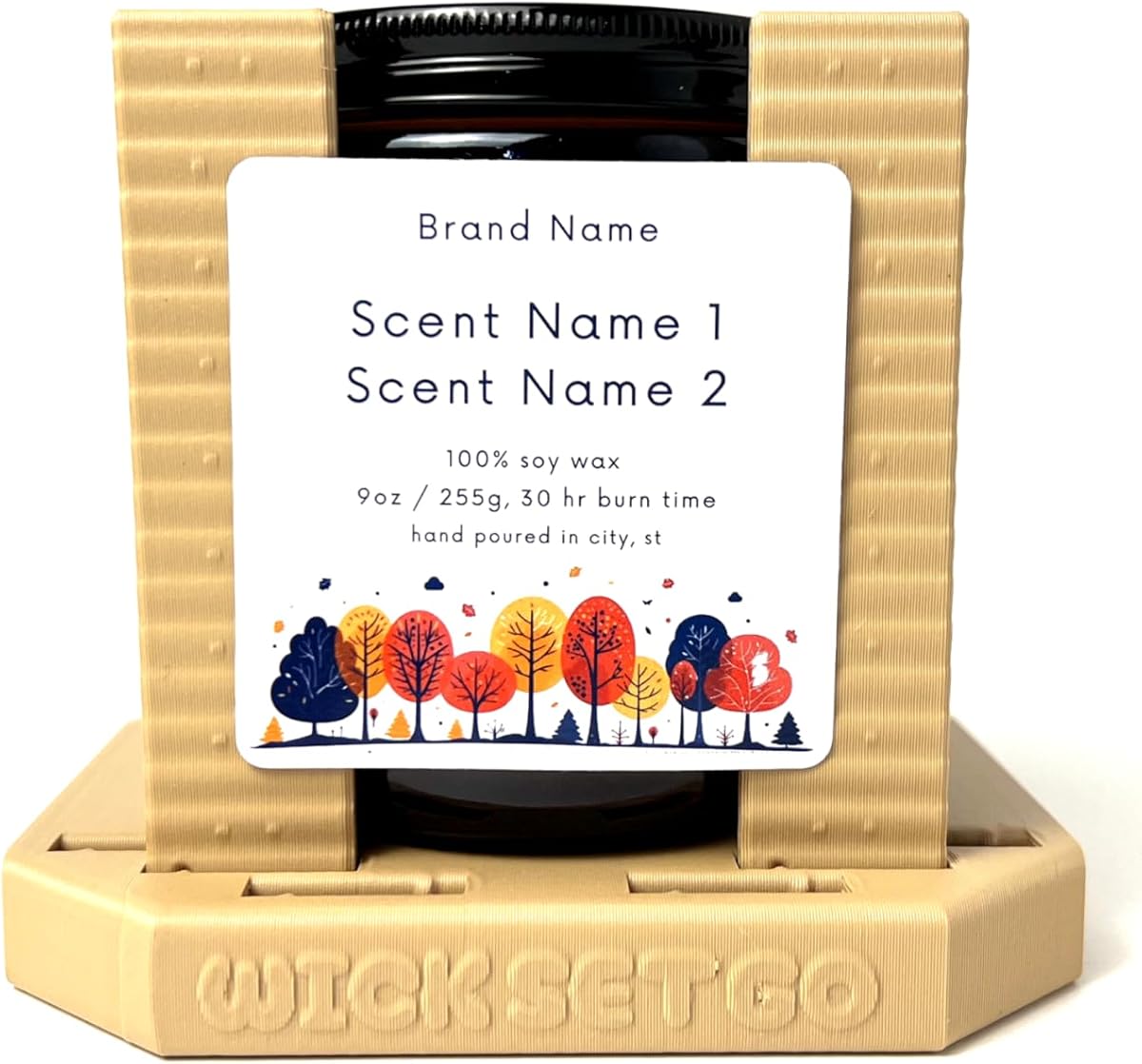
This Sticker Label Application Installation Tool is a low-cost option that provides basic alignment features for jars and bottles. It holds a 4.1 rating and uses three width configurations and height notches to guide placement.
We may earn a commission when you buy through this link, at no additional cost to you.
Its key strength is affordability and sustainability since it is made from PLA bioplastic in the USA. The base and two sticking columns help position labels straight and level. For small batches or occasional use, it delivers value without a large investment.
The trade-off is that PLA may not be as durable as steel under heavy use. It is also specific to sticker labels. But for budget-conscious makers this tool offers a good starting point.
Buy this if you need an inexpensive, easy tool to straighten labels. It is ideal for small startups or hobbyists on a tight budget.
Notches in 5mm increments help you keep label placement consistent across multiple containers.
Made from PLA bioplastic in the USA, this tool offers a greener option for everyday labeling tasks.
We may earn a commission when you buy through this link, at no additional cost to you.
The BAUSATZ Bottle Labeling Machine is a versatile manual tool designed to work with various label printers. It carries a 4.0 rating and offers an adjustable range from 0.5 to 5.9 inches for broad compatibility.
We may earn a commission when you buy through this link, at no additional cost to you.
Its strength is in the adapter-free design that works with both tape-fed and roll-fed label printers. The ABS construction with industrial-grade finish ensures durability, while the adjustable height accommodates different bottle widths. This is great for candle makers and brewers.
The trade-off is that it is manual and may need leveling on a tabletop for best results. However, the ease of use and compatibility make it a solid option for those with existing printers.
Choose this if you own a label printer and want a reliable manual tool to apply them. It is ideal for small businesses needing consistent results.
Use with tape-fed or roll-fed label printers without needing extra adapters for a streamlined workflow.
Handle containers from 0.5 to 5.9 inches with adjustable height settings for flexible production.
We may earn a commission when you buy through this link, at no additional cost to you.
The Towa APN-30 Label Applicator is a specialized tool focused on accurate dispensing and carriage adjustment. With a 4.6 rating, it is known for reliable performance in specific labeling tasks.
We may earn a commission when you buy through this link, at no additional cost to you.
Its key strength is the adjustable carriage that allows for precise label placement. The female Nwick guide offers better control during outdoor winding and dispensing. It ships new in box with all relevant accessories, ensuring you have what you need.
The trade-off is that it is designed for specific applications like wheels rather than general bottles. But if your work involves those surfaces the accuracy is valuable.
Buy this if you need precise label dispensing for wheels or similar objects. It is ideal for specialized labeling jobs requiring accuracy.
The adjustable carriage ensures labels are dispensed accurately, reducing waste and improving placement.
Designed with female Nwick guides, this tool performs well on wheels and outdoor winding tasks.
We may earn a commission when you buy through this link, at no additional cost to you.
Choosing the right label applicator depends on your production volume and container types. This section breaks down the key factors to consider.
Manual tools rely on hand cranking or pre-positioning to apply labels. They are affordable and portable but slower. Semi-automatic machines use sensors and motors to increase speed and reduce errors.
For small batches or startups, manual tools are often enough. For higher production needs, semi-automatic machines save time and labor costs.
Check the diameter range your tool supports. Round bottles and jars are most common, but some machines require specific shapes. Ensure your tool fits your largest and smallest containers.
Select a tool that covers your full range without needing adapters. This reduces setup time and avoids extra costs.
Look for durable materials like stainless steel or aluminum. Plastic tools are cheaper but may wear quickly under heavy use. Powder-coated steel adds corrosion resistance.
Invest in a solid build if you plan daily use. A sturdy frame prevents flex and improves label consistency.
Manual tools can apply 15 to 20 labels per minute. Semi-automatic options reach 40 to 1200 per hour. Match this to your production goals.
Higher output reduces labor time but increases cost. Choose a speed that meets your peak demand without overspending.
Some machines require specific label types like opaque or paper rolls. Others support peel and stick or roll-fed printers. Check if the tool works with your current labels.
Ensure compatibility before purchasing. Mismatched labels can cause waste or sensor errors on machines.
Adjustable rollers or posts help you set the right label position for different sizes. Notches or guides ensure consistent height and width.
Choose tools with easy-to-use adjustments. Fine-tuning reduces time between batches and keeps results uniform.
Manual hand tools start under $20. Semi-automatic machines range from $200 to over $1500. Higher prices bring automation and speed.
Start with a manual tool if you are unsure. Upgrade to automation once production grows and returns justify the investment.
Manual tools are compact and can be stored flat. Machines may need a table or assembly line. Measure your workspace before buying.
If space is limited, pick a portable model. Compact designs help small workshops stay organized and efficient.
Start by reading the manual to understand setup. Mount the tool on a stable surface and adjust rollers or posts to fit your container size. This ensures smooth labeling and reduces errors.
Test a few labels before full production. Watch for wrinkles or bubbles and adjust pressure or speed as needed. Consistent labeling helps maintain a professional look.
Clean the tool after use to prevent adhesive buildup. Wipe rollers and guides with a soft cloth. Store in a dry place to avoid rust on steel parts.
Manual tools like The Label Wizard or VEVOR are best for small batches. They are affordable and easy to set up without needing power. They work well for hobbyists and small businesses producing up to a few hundred units.
Most tools listed are designed for round bottles. Some semi-automatic options can handle certain cylinders, but square bottles may need custom jigs. Check the product specs for container shape compatibility before buying.
No, manual label applicators do not need electricity. They use hand cranks or physical positioning to apply labels. This makes them ideal for workshops without outlets or for portable on-the-go work.
Use tools with rubber rollers or pressing bars to smooth out labels. Apply steady pressure and check that your labels are not too wide. Proper roller adjustment helps eliminate air pockets and wrinkles.
Most tools support roll-fed labels from thermal printers. Ensure the label width fits the tool's range. Semi-automatic machines may have specific printer requirements. Check the specs for your printer type.
Clean the tool after each batch or daily use. Remove adhesive residue with a soft cloth and avoid harsh chemicals. Regular cleaning keeps rollers moving smoothly and prevents label sticking.
Light containers may shift during labeling. Use a tool with non-slip feet or a holder to stabilize the bottle. Some tools allow you to add weight or a clamp to keep things steady.
Yes, many tools support jars and cans. Adjust the diameter range to match your jar size. Ensure the tool has a flat surface or guide to align the label correctly on jar edges.
We covered ten top tools ranging from manual guides to semi-automatic machines. The VEVOR Manual Round Labeling Machine and Hanchen Semi-Automatic stand out for speed and build quality.
Prioritize your container size and batch volume when picking. Manual tools save money for small runs, while machines boost efficiency for growth. Ensure your tool fits your workspace and label type.
Prices change frequently so check the current links for each tool. Compare features and specs before buying to avoid extra costs. The right tool will improve your product presentation and save time.