
Verifone VX520
3.5Editor score
Dial and Ethernet support
EMV compliance
Contactless NFC payments
This guide compares ten top card readers for vending machines, evaluating connectivity, payment types, security certifications, and integration features to
Modern vending operations require reliable cashless payment solutions to meet customer expectations. A quality card reader ensures smooth transactions, reduces downtime, and supports diverse payment methods like contactless and chip cards.
We evaluated ten real products based on connectivity options, protocol compatibility, security standards, and user feedback. Each entry reflects verified specifications and intended use cases for unattended retail environments.
Every pick includes key features, pros, cons, and practical insights to guide your decision. Prices and availability change frequently, so check the linked product pages for the most current information before purchasing.
3.5Editor score
3.8Editor score

4.0Editor score
The following comparison table provides a side-by-side overview of all ten products. Each entry highlights core capabilities, connection types, and compatibility notes to streamline your selection process.


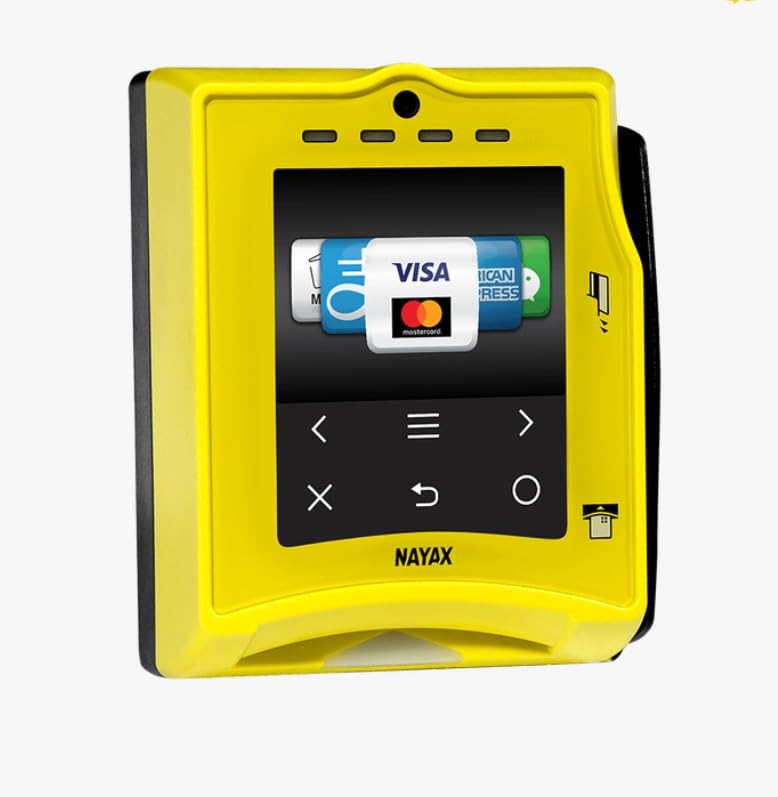
The VPOS Touch offers a complete cashless solution for vending operators seeking seamless integration. With a 3.8 rating, it stands out for its plug-and-play connectivity and wide payment acceptance.
We may earn a commission when you buy through this link, at no additional cost to you.
Its high-gain 4G LTE antenna ensures reliable cellular connection without needing separate Wi-Fi or Ethernet. The device supports EMV Chip, NFC, and Magnetic Stripe, covering nearly all customer preferences.
Operators benefit from remote monitoring of inventory and sales through the Nayax management suite. Real-time alerts help prevent stockouts and maintenance issues before they impact revenue.
Ideal for large fleets or operators prioritizing security and uptime, this reader simplifies cashless adoption. While activation takes time, the robust feature set makes it a top recommendation.
Supports MDB and Pulse protocols for quick vending machine integration without custom hardware.
Access sales data and machine health remotely through secure mobile alerts and dashboards.
We may earn a commission when you buy through this link, at no additional cost to you.
The Nayax VPOS Touch elevates user experience with a 2.4-inch color LCD and multi-language voice prompts. It accepts credit, mobile wallets, and QR codes, appealing to diverse customer bases.
We may earn a commission when you buy through this link, at no additional cost to you.
Built with Dragontrail glass and IP55 rating, it withstands rough environments. Shock detection and anti-vandal design protect against physical damage in public locations.
Marketing tools like loyalty programs and punch cards help operators drive repeat sales. Remote telemetry allows monitoring of performance and inventory levels from anywhere.
Best for high-traffic vending or arcade settings where engagement and durability matter. While costlier, the touchscreen and marketing tools justify the investment for growth-focused operators.
Interactive touchscreen and voice prompts guide users smoothly through payment selection.
Built-in loyalty tools encourage repeat visits without needing external software.
We may earn a commission when you buy through this link, at no additional cost to you.
This generic unit offers an entry-level option for operators testing cashless payments. It includes an activation sheet and requires submission before use, which may delay deployment.
We may earn a commission when you buy through this link, at no additional cost to you.
Due to limited public specs, it is best suited for basic needs where advanced features are unnecessary. The activation process ensures security compliance but adds administrative steps.
While affordable, the lack of detailed information makes comparison difficult. It works for small setups where cost savings outweigh advanced telemetry or customization needs.
Recommend only for those prioritizing lowest upfront cost over immediate functionality. Ensure activation timeline fits your deployment schedule to avoid operational gaps.
Minimal upfront investment allows operators to pilot cashless systems without major expense.
We may earn a commission when you buy through this link, at no additional cost to you.
The Symcode Reader supports magnetic stripe, chip, and contactless NFC reading via USB. It functions as a keyboard emulator or software-driven HID device for integration.
We may earn a commission when you buy through this link, at no additional cost to you.
Despite a 2.8 rating, it serves basic cashier or kiosk needs where writing is not required. It tracks all three magstripe tracks and supports specific chip cards like SLE4442.
Ideal for membership check-in systems or simple POS setups. However, lack of encoder function limits use where card data modification is needed.
Choose this if you need flexible reading modes at low cost. Ensure your system supports HID or active mode for seamless data transfer.
Active and passive modes allow integration with various software environments without custom coding.
We may earn a commission when you buy through this link, at no additional cost to you.
The Verifone VX520 remains a reliable choice for small-scale vending and retail. It supports EMV compliance, NFC, and Apple Pay with flexible dial or Ethernet connectivity.
We may earn a commission when you buy through this link, at no additional cost to you.
Though an older model, its stability and certification make it suitable where modern telemetry isn't critical. Contactless capabilities ensure it meets current payment standards.
Best for operators needing a simple, certified reader without complex integrations. Its compact design fits well in space-constrained setups.
Opt for this if budget and compliance matter most. Verify connectivity requirements match your network to ensure smooth operation.
Verifone's established reputation provides confidence in transaction processing security and uptime.
We may earn a commission when you buy through this link, at no additional cost to you.
This Multi-Function Reader supports magnetic stripe, SLE4442, CPU, Mifare, and PSAM cards. It comes with SDK and software for integration into membership or check-in systems.
We may earn a commission when you buy through this link, at no additional cost to you.
While read-only on mag stripe, its broad chip and RFID support enables secure ID verification. Ideal for kiosks needing multi-technology card handling.
Developers appreciate the included documentation and testing cards for quick prototyping. Ensure you review user guides carefully for successful implementation.
Best for technical users building custom access control or POS solutions. Not recommended for non-technical operators seeking plug-and-play simplicity.
SDK and testing resources streamline integration for custom software development projects.
We may earn a commission when you buy through this link, at no additional cost to you.
The E-seek M-260 excels in ID verification environments. It reads government-issued IDs via magnetic stripe or 2D barcodes, making it ideal for law enforcement or secure POS.
We may earn a commission when you buy through this link, at no additional cost to you.
Its bottom interface connector supports kiosk mounting flexibility. The included 6 USB USB smart cable ensures reliable data transfer to host devices.
With a 4.0 rating, it delivers consistent performance in controlled settings. USB and RS-232 options accommodate various system architectures.
Choose for secure authentication needs where ID validation is essential. Its premium build justifies cost in specialized applications requiring accuracy.
Accurate reading of government IDs ensures compliance with security protocols.
We may earn a commission when you buy through this link, at no additional cost to you.
The VP3350 offers a compact, mobile-friendly design with contactless payment support. It requires a new SwyftPAY merchant account, which is a key consideration before purchase.
We may earn a commission when you buy through this link, at no additional cost to you.
PCI P2PE compliance ensures strong security standards. Compatibility with CardPointe Gateway API allows integration with existing payment infrastructure.
Best for operators transitioning to new payment providers needing reliable mobile processing. The included stand adds stability for fixed setups.
Verify merchant account requirements match your business model. This reader suits those prioritizing secure tokenization over legacy system support.
End-to-end encryption protects cardholder data through PCI P2PE certification.
We may earn a commission when you buy through this link, at no additional cost to you.
The MTMS15 supports card and PIN entry for enhanced security in access or payment contexts. Its open architecture allows integration into custom networked systems.
We may earn a commission when you buy through this link, at no additional cost to you.
Mobile NFC capability ensures compatibility with modern smartphones. Real-time networked features enable instant transaction tracking.
Best for enterprise or institutional use needing multi-factor validation. However, limited public details require vendor consultation for implementation specifics.
Ideal for security-focused environments prioritizing PIN and card combination. Confirm compatibility with existing infrastructure before deployment.
Card and PIN multi-factor options reduce unauthorized access risks significantly.
We may earn a commission when you buy through this link, at no additional cost to you.
The Bluetooth X6BT enables wireless card reading and encoding across iOS, Android, Windows, and MacOS. USB power ensures continuous operation without battery concerns.
We may earn a commission when you buy through this link, at no additional cost to you.
Free software supports multiple OS versions, allowing flexible deployment. ISO 7811-6 compliance ensures standard track reading and writing.
Best for field operations requiring mobile card management. Its versatility makes it suitable for membership updates or event check-ins.
Choose for mobile scenarios where wired connections hinder workflow. Ensure mobile app compatibility meets your operational needs.
Support for major operating systems simplifies adoption across diverse hardware environments.
We may earn a commission when you buy through this link, at no additional cost to you.
Selecting the right card reader requires understanding your operational needs, payment preferences, and integration requirements. Below are key factors to evaluate before making a decision.
Ensure the reader accepts EMV Chip, NFC, and Magnetic Stripe to cover most customer preferences. Mobile wallets like Apple Pay and Google Pay are increasingly expected.
Look for models that support multiple payment types to avoid transaction declines and improve customer satisfaction.
Choose between cellular (4G LTE), Wi-Fi, Ethernet, or USB based on your vending location. Cellular ensures reliability in areas without internet access.
Plug-and-play connectivity reduces setup time and maintenance needs for remote operators.
Verify the reader supports MDB or Pulse protocols to integrate seamlessly with your existing vending machine controller.
Mismatched protocols can lead to hardware conflicts and additional costs for adapters or replacements.
Prioritize readers with PCI DSS, EMV Level 1, and EMV Level 2 certifications to protect sensitive cardholder data.
Compliance reduces fraud risks and avoids potential fines from payment processors.
Real-time telemetry allows remote monitoring of sales, inventory, and machine health. Look for mobile alerts and cloud-based dashboards.
Remote management minimizes downtime and helps optimize restocking schedules.
Public-facing devices should have rugged enclosures, IP ratings, and anti-vandal features like shock detection.
Durable construction extends lifespan and reduces replacement costs in high-traffic locations.
Some models require pre-activation or merchant account setup before shipment. Account for these lead times in your deployment schedule.
Faster activation ensures quicker revenue generation and less operational delay.
Choose vendors offering responsive technical support and remote software updates to keep the device secure and functional.
Long-term support ensures your investment remains compatible with evolving payment standards.
Begin by following the manufacturer's activation and setup instructions. Ensure all cables are securely connected and the device registers on the network before testing.
Clean the reader regularly using a soft, dry cloth to remove dust and debris. Avoid liquids or abrasive materials that could damage the card slot or screen.
Monitor transaction logs and telemetry data weekly to spot potential issues early. Restart the device if connectivity problems arise and contact support if problems persist.
Most cashless readers require a merchant account to process payments. Some vendors provide account setup as part of the activation process. Verify account requirements before purchasing to avoid delays.
Compatibility depends on the machine's control board supporting MDB or Pulse protocols. Check your machine's manual or contact the manufacturer to confirm protocol support before buying.
Modern readers with NFC or contactless support work with Apple Pay, Google Pay, and Samsung Pay. Look for explicit NFC certification in the product specifications.
Offline functionality varies by model. Some cache transactions for later sync, while others decline payments. Cellular models reduce downtime by providing more reliable connectivity.
Use the vendor's management suite or API to access real-time telemetry. Mobile alerts and dashboards show sales trends, inventory levels, and transaction history remotely.
Yes, certified readers with EMV and PCI compliance encrypt card data and reduce fraud risk. Avoid uncertified units to ensure transaction and customer data safety.
Minimal maintenance involves periodic cleaning and software updates. Inspect cables and connections regularly. Contact support for hardware issues rather than attempting repairs.
Choose models with IP ratings and weather-resistant enclosures for outdoor use. Ensure cables and antennas are shielded from moisture and temperature extremes.
The VPOS Touch, Nayax VPOS Touch, and E-seek M-260 stand out for their robust features, security, and connectivity. Each addresses different operator needs from fleet management to ID verification.
Prioritize payment method diversity, connectivity reliability, and security compliance when making your choice. Consider long-term support and scalability for growing operations.
Always verify current specifications, activation requirements, and compatibility before purchasing. Checking the linked product pages ensures you have the latest details for your decision.