
Mini Micro N20 Gear Motor
4.6Editor score
3V-6V low voltage
Full metal gearbox
D-type 3mm shaft
This guide compares the top DC motors for robots, reviewing gear ratios, torque, voltage, and build quality to help hobbyists and engineers choose the right
Choosing the right DC motors for robots is critical for performance. You need motors that offer the correct torque and speed for your specific chassis design. The wrong motor can lead to stalling or inefficient movement.
We compared ten top-rated DC motors based on their torque output, voltage ranges, and gear box durability. Each product was selected for its reliability in DIY smart car projects and robotics competitions.
Each pick shows detailed specs on shaft diameter, ratio, and encoder support. Please note that prices change frequently, so check the current listings before purchasing your next robot build.
4.6Editor score

4.7Editor score

4.6Editor score
The following table compares the top ten DC motors for robots side by side. It highlights key specifications like gear ratio, stall torque, shaft type, and voltage ranges to help you make a quick decision.



This encoder motor offers a perfect balance of power and precision for modern robot builds. With a 1:90 ratio, it delivers strong torque suitable for heavy loads.
We may earn a commission when you buy through this link, at no additional cost to you.
The integrated Hall encoder provides crucial feedback for closed-loop control systems. This allows for precise speed regulation and accurate positioning in autonomous projects.
While the price is higher than basic TT motors, the durability of the all-metal construction justifies the investment. It handles continuous operation better than plastic alternatives.
Ideal for advanced smart cars and robots that require exact movement control. This is the top pick for engineers seeking reliability and performance.
The 12PPR Hall encoder enables accurate speed and position tracking for sophisticated navigation tasks.
All-metal gears and shafts resist wear and tear, ensuring a longer service life for demanding robotics applications.
We may earn a commission when you buy through this link, at no additional cost to you.
The N20 motor is a staple for small, lightweight robots due to its compact size and low voltage needs. It runs efficiently on standard batteries.
We may earn a commission when you buy through this link, at no additional cost to you.
Despite the low cost, the metal gearbox provides better durability than plastic versions. This helps prevent stripping under moderate load conditions.
It lacks encoder feedback and torque compared to larger motors, so it is best for simple line followers or light chassis designs.
Perfect for beginners or projects where budget constraints are tight. It is a reliable choice for basic movement and simple robotics.
The small footprint allows for easy integration into miniature robots or tight chassis spaces.
Full metal gears ensure longevity even with the motor's small form factor.
We may earn a commission when you buy through this link, at no additional cost to you.
This high torque motor is built for heavy-duty tasks like rotating tables or lifting mechanisms. The planetary gearbox offers superior efficiency.
We may earn a commission when you buy through this link, at no additional cost to you.
Operating at up to 22V, it provides significant power for demanding applications. The metal construction ensures it can handle high stress without failing.
Due to its size and voltage needs, it is not suitable for small, battery-powered robots. It works best in industrial or stationary robotic projects.
Ideal for advanced builds requiring massive torque. This motor is the premium choice for serious robotics engineering.
With 200W capability, this motor handles heavy loads that would stall standard hobby motors.
The 6-22V range allows integration with various power systems and controllers.
We may earn a commission when you buy through this link, at no additional cost to you.
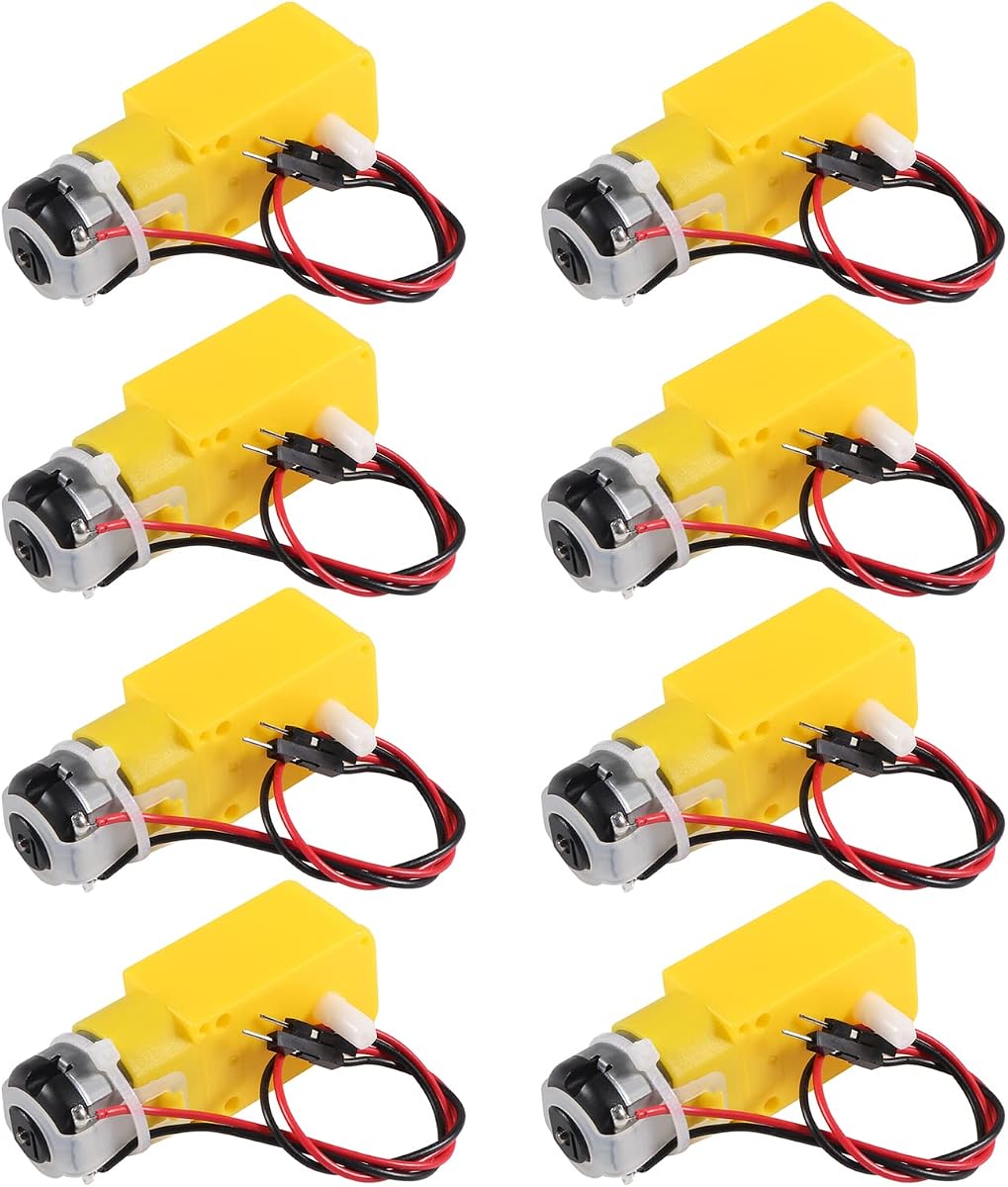
This 8-pack provides exceptional value for building multiple units or stocking parts. It includes 2.54mm wires for easy breadboard integration.
We may earn a commission when you buy through this link, at no additional cost to you.
The 1:48 ratio offers a good balance for general use. The included wheels save time on the initial setup of your robot chassis.
While not as strong as encoder motors, it is sufficient for standard smart car competitions. The connectors are a nice touch for prototyping.
Recommended for educators or hobbyists needing multiple units. It is a practical choice for group projects or large builds.
The inclusion of wheels and wire connectors makes this an all-in-one solution for beginners.
Its simplicity and low voltage make it safe and easy for students to use.
We may earn a commission when you buy through this link, at no additional cost to you.
This motor features a magnetic gear design which reduces weight while maintaining durability. It is designed for 12V systems specifically.
We may earn a commission when you buy through this link, at no additional cost to you.
The rubber tire wheel kit allows for immediate testing of your robot. The mounting bracket simplifies the attachment process to your chassis.
While it lacks an integrated encoder, the metal gear reduction ensures consistent performance. It is robust enough for competitive smart car projects.
Best for users wanting a 12V solution with included accessories. It offers a solid build for reliable movement.
The magnetic shoes help reduce weight without sacrificing the durability needed for robot wheels.
Included wheels and brackets mean you can start building and testing immediately.
We may earn a commission when you buy through this link, at no additional cost to you.
This motor offers an incredible stall torque of 27kg.cm at 12V. It is designed for heavy lifting or high friction environments.
We may earn a commission when you buy through this link, at no additional cost to you.
The metal mounting bracket provides a secure fit that won't flex under load. The D-shaped shaft ensures wheels stay connected even during high torque turns.
While the speed is low, the power output is substantial. This makes it ideal for balanced robots or those needing strong acceleration.
Recommended for builders prioritizing torque over top speed. It is a heavy-duty option for serious robotics.
The 27kg.cm stall torque allows this motor to push through rough terrain easily.
The included bracket ensures the motor stays fixed even under high vibration conditions.
We may earn a commission when you buy through this link, at no additional cost to you.
This motor is noted for its quiet operation and reliable torque delivery. It runs efficiently on 6-12V power sources.
We may earn a commission when you buy through this link, at no additional cost to you.
The double-shaft design allows for flexible mounting configurations. You can connect wheels on both ends or use gears easily.
Pure copper windings enhance conductivity, ensuring efficient power usage. The metal gears ensure it withstands repeated use.
Ideal for RC cars or robots needing silent movement. It is a high-quality choice for smooth performance.
Its design minimizes noise, making it perfect for robotics in quiet environments.
The double-shaft offers more mounting options than standard single-shaft motors.
We may earn a commission when you buy through this link, at no additional cost to you.
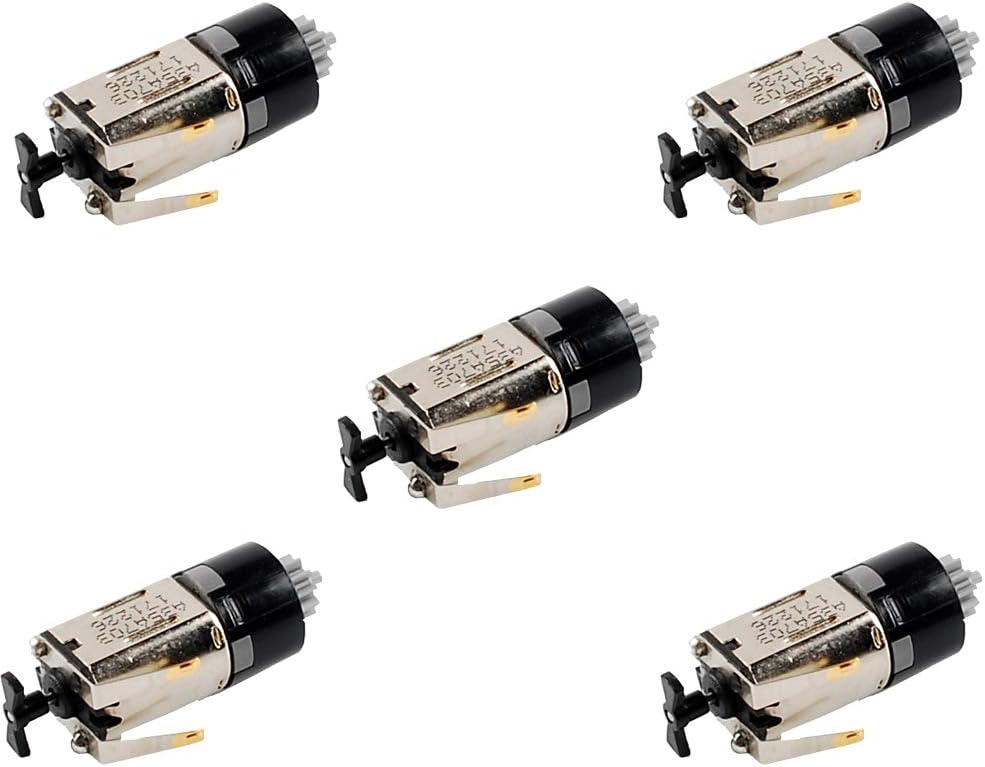
These miniature motors spin at high speeds making them ideal for fans or fast-spinning brushes. They are small and lightweight.
We may earn a commission when you buy through this link, at no additional cost to you.
The wire leads are pre-soldered for quick connection to Arduino or other controllers. This saves time during the initial build phase.
Due to their size, they offer low torque and are not suitable for driving large wheels. They are best for auxiliary movements.
Best for DIY hobbyists needing small motors for simple tasks. They are a versatile option for non-drive applications.
At 16000 RPM, these motors are perfect for high-speed spinning tasks or lightweight fans.
The included leads allow for immediate connection without soldering requirements.
We may earn a commission when you buy through this link, at no additional cost to you.
Planetary motors are known for their compact size and high torque density. This one operates efficiently on 3V power.
We may earn a commission when you buy through this link, at no additional cost to you.
The reduction mechanism allows for better control and higher torque at low speeds. This is ideal for precise movements.
The low RPM might be a limitation for fast projects but ensures stability. It is a strong performer for micro robots.
Recommended for small, precise robot builds. It is a reliable choice for low voltage applications.
The planetary reducer provides a compact way to achieve high torque without a large motor.
Running on 3V makes it easy to power with standard batteries or USB.
We may earn a commission when you buy through this link, at no additional cost to you.
This motor is designed for direct drive applications in small RC cars. It offers a good balance of speed and size.
We may earn a commission when you buy through this link, at no additional cost to you.
The 2.3mm shaft fits many standard hobby gears. It is a practical replacement for worn-out motors in existing projects.
It runs quietly and provides decent torque for light loads. The 12000 RPM speed allows for quick movement.
Best for repairs or quick fixes in RC projects. It is a solid backup for standard hobby motors.
Designed to fit into standard RC chassis, making it a great fix for broken units.
The small size allows it to fit into tight spaces without sacrificing too much power.
We may earn a commission when you buy through this link, at no additional cost to you.
Selecting the right motor depends on your specific project needs. This guide breaks down the key factors to consider.
Ensure your motor voltage matches your power supply. Common options include 3V, 6V, and 12V. Using the wrong voltage can damage the motor or fail to run it properly.
Always check the input limits of your controller before wiring the motor.
Gear ratios determine the trade-off between speed and torque. A higher ratio like 1:90 offers more torque but less speed. Lower ratios are faster but weaker.
Choose a ratio based on the weight of your robot and the terrain it will navigate.
Torque is the force the motor applies to move your robot. Calculate the weight of your chassis to ensure the motor has enough power to move it.
Higher torque is essential for climbing slopes or carrying heavy payloads.
Encoders provide feedback to the controller about speed and position. This is crucial for autonomous robots needing precise navigation.
If you are building a simple remote control car, encoders may not be necessary.
The shaft size must match your wheels and gears. Common sizes are 3mm, 4mm, and 6mm. A mismatched shaft will prevent secure attachment.
Check your wheel hub dimensions before purchasing to avoid extra machining work.
Metal gears are more durable than plastic gears. They resist wear and heat, making them suitable for long runs. Plastic gears are lighter but prone to stripping.
For heavy use, opt for metal gearboxes to extend the life of your robot.
A motor with a mounting bracket simplifies assembly. It provides a secure point to attach to your frame. Some motors require custom brackets which adds to the build time.
Look for products that include a bracket if your chassis does not have dedicated mounts.
Check the current draw to ensure your battery and motor driver can handle it. High torque motors often draw more current. This impacts battery life significantly.
Select a battery with enough capacity to sustain the motor during operation.
Always match the motor voltage to your battery to prevent burning out the internal windings. A voltage regulator can help maintain a steady input.
Use a motor driver board to control the speed and direction safely. Direct connection to a microcontroller can damage it due to high current.
Keep the motor clean and free from dust and debris. This ensures the gears and brushes operate smoothly without friction.
A 6V motor is often the best choice for beginners. It balances power and ease of use without requiring a large power supply. It is widely compatible with standard batteries.
If you want precise movement or autonomous navigation, an encoder is essential. For simple remote control tasks, a standard motor without feedback works fine.
Use a motor driver with PWM (Pulse Width Modulation) capabilities. This allows you to vary the speed smoothly using code on your controller.
Choose a high ratio for torque-heavy tasks like lifting. Choose a low ratio for speed-focused tasks like racing. Consider the weight of your robot.
Check the shaft diameter of the motor. Use a set screw or adhesive to secure the wheel. Ensure the shaft matches the hole in the wheel hub.
Most motor drivers are compatible with standard DC motors. Ensure the driver can handle the current required by your motor to avoid overheating.
We reviewed ten top DC motors ranging from budget options to high torque premium models. The TT Motor with Encoder stands out for precision while the N20 is great for small projects.
Prioritize torque and voltage compatibility for your specific build. Consider the gear ratio and mounting options to ensure a smooth assembly process.
Prices change frequently on marketplaces. Check the latest offers to get the best deal for your robotics project before you buy.