
Canon EF 50mm f/1.8 STM Lens
4.8Editor score
Affordable prime lens option
50mm focal length standard
STM motor for smooth focus
This guide compares the top camera lenses for product photography to help you find the best optics for sharp detail and professional results.
Selecting the right camera lens for product photography is essential for capturing sharp details and true colors. Whether you shoot e-commerce listings or artisanal goods, the lens defines clarity and appeal.
We evaluated ten top lenses based on optical quality, focal range, and compatibility with modern camera systems. Each option was chosen for its ability to render textures and shapes with precision.
Every pick includes key specs and real-world performance notes to guide your decision. Prices and availability change frequently, so verify current offers before purchasing your next lens.
4.8Editor score

4.8Editor score
4.7Editor score
This side-by-side comparison highlights the key optical and mechanical specifications of each lens to help you choose based on your camera system and shooting needs.


The Canon RF24-70mm F2.8 L IS USM Lens stands out as a top choice for professional product shooters. With its high image quality and bright f/2.8 aperture, it delivers sharp detail across the frame.
We may earn a commission when you buy through this link, at no additional cost to you.
Its optical image stabilization provides up to 5 stops of shake correction, making handheld shots cleaner. The high speed and quiet Nano USM autofocus ensures smooth operation during video and stills.
While the price is higher than average, the build quality and optical performance justify the investment. The control ring offers direct setting changes for efficient workflow adjustments.
Photographers needing a versatile zoom for e-commerce or catalogs will appreciate its range and clarity. It is compatible with Canon Mirrorless Cameras like the EOS R5 and EOS R6.
High image quality ensures fine textures are captured accurately for detailed product shots.
Optical image stabilization reduces camera shake for sharper results in lower light.
We may earn a commission when you buy through this link, at no additional cost to you.
The Canon EF 50mm f/1.8 STM Lens is a reliable option for those starting out. Its 50mm focal length and maximum aperture of f/1.8 offer great versatility for portraits and product shots.
We may earn a commission when you buy through this link, at no additional cost to you.
The stepping motor delivers near silent AF for movies and smooth AF for stills, enhancing user experience. Minimum focusing distance allows close-up detail without distortion.
While it lacks weather sealing and uses lighter materials, the optical performance remains strong for the price. It is ideal for entry-level photographers needing quality images.
Compatible with Canon EOS DSLR Cameras, it is a practical choice for budget-conscious buyers seeking clear, sharp results for small goods or services.
This lens offers excellent image quality at a fraction of the cost of premium zooms.
The STM motor ensures quiet and smooth focusing for both video and photo work.
We may earn a commission when you buy through this link, at no additional cost to you.
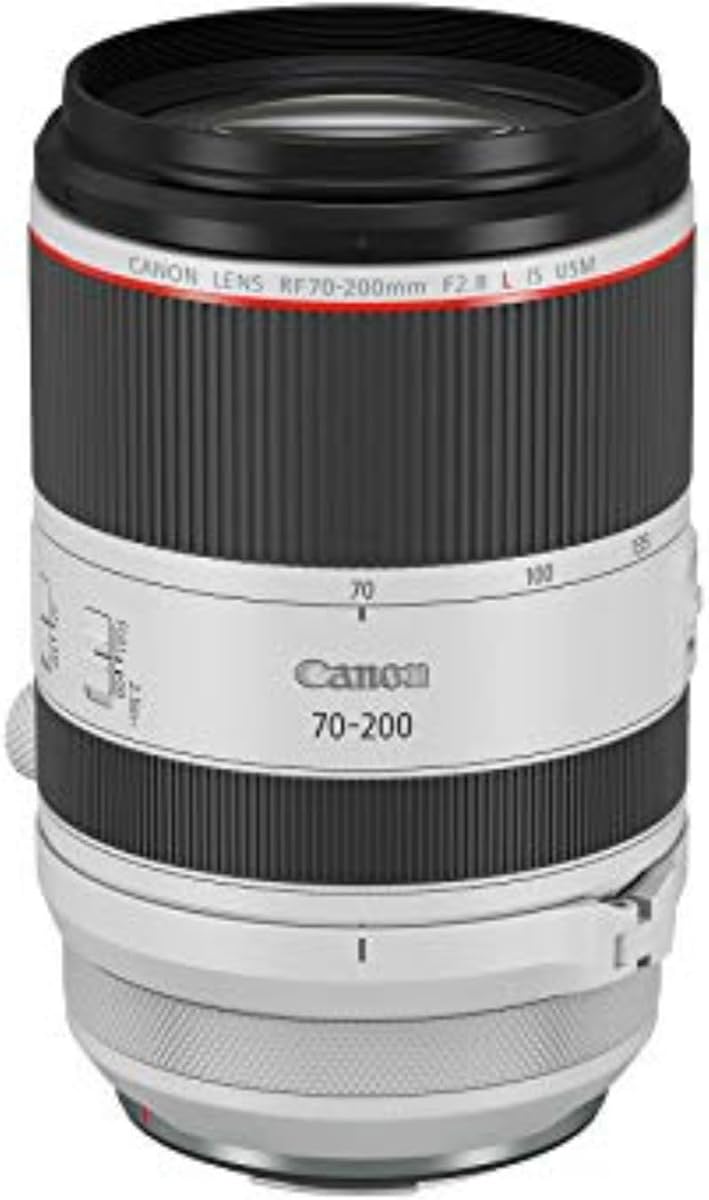
The Canon RF70-200mm F2.8 L IS USM Lens is a high-end telephoto zoom for professional use. It provides high image quality and a bright f/2.8 aperture for consistent exposure.
We may earn a commission when you buy through this link, at no additional cost to you.
Its compact and lightweight design compared to previous models makes it easier to handle during long shoots. Optical image stabilization offers up to 5 stops of shake correction for clarity.
The high speed and smooth autofocus with dual Nano USM ensures precise focus on products. Minimum focusing distance of 2.3 ft allows for detailed shots from a distance.
Ideal for photographers needing a powerful telephoto lens for product photography, it is compatible with Canon Full Frame Mirrorless Cameras like the EOS R5.
The 70-200mm range offers the flexibility to capture products from various distances.
Up to 5 stops of shake correction helps maintain sharpness in challenging conditions.
We may earn a commission when you buy through this link, at no additional cost to you.
The Canon EF 75-300mm f/4-5.6 III is a renewed option for shooters needing a longer reach. It features an aperture range of f/4-5.6 and a DC Autofocus Motor for basic performance.
We may earn a commission when you buy through this link, at no additional cost to you.
With a 4.9-foot closest focusing distance, it allows for decent close-up shots of products. The lens measures 2.8 inches in diameter and weighs 16.8 ounces, making it lightweight.
The improved mechanism makes zooming smoother, enhancing usability. However, the variable aperture may limit low light performance compared to fixed aperture lenses.
Suitable for those looking for an economical telephoto option, it fits Canon SLR Cameras well and delivers solid images for varied product types.
The 75-300mm range allows you to frame products tightly from a safe distance.
Its light weight makes it easy to carry and use for extended shooting sessions.
We may earn a commission when you buy through this link, at no additional cost to you.
The Lightdow 85mm F1.8 Portrait Lens is a fully manual option for photographers seeking creative freedom. It uses a manual focus design to allow precise control over focus and exposure.
We may earn a commission when you buy through this link, at no additional cost to you.
With 6 rounded aperture blades, it creates a smooth and charming bokeh effect for background separation. Hybrid aspherical lens technology helps reduce aberrations and glare.
This lens is ideal for those who prefer manual settings for ultimate precision. It is fully manual non-autofocus, so switch your camera to full manual mode to avoid errors.
Perfect for users wanting to refine their photographic skills, it offers superb image quality and is compatible with a wide range of Canon EOS Rebel and Professional DSLRs.
Manual focus allows for exact composition and focus control on specific product details.
The 6 rounded blades create a dreamy background blur to isolate your products.
We may earn a commission when you buy through this link, at no additional cost to you.
The Canon RF50mm F1.8 STM Lens is a compact fixed focal length lens ideal for mirrorless shooters. Its large f/1.8 aperture supports low-light photography and creative background blur.
We may earn a commission when you buy through this link, at no additional cost to you.
A Stepping Motor provides smooth and quiet continuous AF during video recording and shooting photos. The control ring allows direct setting changes for efficient adjustments.
Optimized lens placement and coatings help deliver outstanding color balance while minimizing ghosting and flare. It is lightweight and easy to carry for on-the-go shooting.
Compatible with the Mirrorless EOS R System, this lens is a strong choice for everyday photography and product work that requires portability.
The compact design makes it easy to pack for travel or small studio setups.
The control ring allows quick changes to settings without diving into menus.
We may earn a commission when you buy through this link, at no additional cost to you.
The Sigma 135mm F1.8 DG HSM ART is a high-performance prime lens known for its outstanding optical quality. It features a large Hyper Sonic motor that delivers ample torque for stable performance.
We may earn a commission when you buy through this link, at no additional cost to you.
A stunning compression effect makes it ideal for product shots that need a flattering perspective. The large 1.8 aperture allows for creative control over imagery and depth of field.
Handcrafted at the factory in Aizu, Japan, this lens undergoes individual evaluation before leaving the facility. It is dust and splash proof for performance in any condition.
Recommended for serious photographers wanting high-end optics, it offers precise focus and excellent clarity for detailed product photography tasks.
Handcrafted construction ensures high precision and durability for long-term use.
The large f/1.8 aperture provides superior control over background blur and depth.
We may earn a commission when you buy through this link, at no additional cost to you.
The Xenvo Pro Lens Kit is designed for smartphones and includes a macro and wide angle lens. It allows users to capture 45% more picture with every snap using the TruView lens.
We may earn a commission when you buy through this link, at no additional cost to you.
The Clarus 15x Macro Lens lets you magnify nearby subjects for close-up detail. A rechargeable LED light clips anywhere on your phone to illuminate subjects naturally.
The TruGrip Lens Clip offers superior gripping power to fasten lenses to your phone securely. The kit includes a travel case to store components safely on the go.
Ideal for social media sellers or hobbyists without a DSLR, this kit helps you take better product photos directly from your phone easily.
The macro lens allows you to see tiny details in textures or small items clearly.
The included LED light helps avoid harsh shadows in dark environments.
We may earn a commission when you buy through this link, at no additional cost to you.
The Canon EOS Rebel T7 DSLR Camera Double Zoom Lens Kit is an all-in-one solution for beginners. It features a 24.1 Megapixel CMOS sensor and includes two lenses for wide to telephoto shots.
We may earn a commission when you buy through this link, at no additional cost to you.
Improved Dual Pixel CMOS AF and eye detection AF help focus quickly on your product. Built-in Wi-Fi and NFC technology allow easy image transfer to your devices.
With an optical viewfinder and 9-Point AF system, it provides solid control for new users. The included 18-55mm and 75-300mm lenses cover a broad range of shooting scenarios.
This kit is perfect for photographers just starting their product photography journey. It offers essential tools to capture clear images and learn the basics of the craft.
Includes everything you need to start shooting right away without buying extra lenses.
Built-in Wi-Fi allows you to share photos quickly for review or posting.
We may earn a commission when you buy through this link, at no additional cost to you.
The Canon EF 200mm f/2.8L II USM Telephoto Fixed Lens is a professional grade lens for SLR cameras. It is not zoomable but provides high image quality at 200mm.
We may earn a commission when you buy through this link, at no additional cost to you.
The lens construction features 9 elements in 7 groups, with a maximum aperture of 1:2.8 for consistent exposure. Closest focusing distance is 1.5m / 4.9 ft for decent macro capability.
Weighing 1.7 lbs, it offers a robust build for durability. The USM motor ensures fast and precise autofocus for capturing clear product details.
Recommended for photographers needing a fixed focal length for tight product shots, this lens delivers professional image quality and reliability for serious work.
L-series build and optics ensure sharp, reliable performance for demanding shoots.
A fixed 200mm lens encourages deliberate framing and consistent product presentation.
We may earn a commission when you buy through this link, at no additional cost to you.
Choosing the right lens depends on your camera, budget, and product types. Understanding focal length and aperture helps you find the best fit.
Focal length determines how much of the scene you capture and how close objects appear. For product photography, 50mm to 200mm is often ideal to avoid distortion.
Look for lenses that give you a comfortable working distance without introducing perspective warping.
A larger maximum aperture like f/2.8 or f/1.8 lets in more light and offers better depth of field control. This helps isolate products from busy backgrounds.
Prioritize a bright aperture if you shoot in low light or want soft backgrounds.
Ensure the lens mount matches your camera body. Canon has EF for DSLRs and RF for mirrorless. Mismatches require adapters which may affect performance.
Always check compatibility with your specific model before purchasing.
Fast autofocus motors like Nano USM or STM help you focus quickly and quietly. This is vital when shooting video or moving products.
Look for smooth and silent AF to avoid noise in video recordings.
Optical image stabilization reduces camera shake for sharper images. It is especially useful when shooting handheld or at slower shutter speeds.
Consider lenses with IS if you often shoot without a tripod.
Sharpness and clarity are critical for showing product details. Lenses with aspherical elements and multi-coating reduce aberrations and flare.
Select lenses known for high resolution and color accuracy.
Durable construction with weather sealing protects against dust and moisture. Professional lenses often have metal mounts and better ergonomics.
Invest in a sturdy lens if you plan to shoot in varied conditions.
Balance cost with performance needs. Budget options like the 50mm f/1.8 STM offer great value for beginners.
Evaluate if the extra cost of premium lenses justifies your specific workflow.
Always clean your lens front and rear elements with a microfiber cloth before shooting to ensure clear images. Avoid touching the glass with fingers to prevent oils and smudges.
Store your lens in a protective case or padded bag when not in use to prevent scratches and impacts. Keep it in a dry place to avoid moisture damage.
Regularly update your camera firmware to ensure full compatibility with autofocus and stabilization features. Inspect lens mounts for dust or debris before attaching to the camera.
A focal length between 50mm and 100mm is often best for product photography because it provides minimal distortion. Telephoto lenses like 70-200mm are useful for capturing details from a distance.
Image stabilization helps reduce blur when shooting handheld. If you often use a tripod, stabilization is less critical, but it is very helpful for handheld work or video.
DSLR lenses like Canon EF lenses can be used on mirrorless cameras with an adapter. Native RF lenses may offer better performance and faster autofocus integration.
An aperture around f/5.6 to f/8 is often ideal for product photos to ensure sharpness across the entire item. Larger apertures are good for isolating single elements.
Use a soft brush to remove dust, then a microfiber cloth with lens cleaner for smudges. Avoid using harsh chemicals or abrasive materials that could scratch the coating.
A macro lens is great for small products or fine details. If you shoot larger items, a standard prime or zoom lens will suffice for most tasks.
The Canon RF24-70mm F2.8 L IS USM and RF70-200mm F2.8 L IS USM lead in versatility and image quality for professionals. Budget shooters may prefer the EF 50mm f/1.8 STM for its value.
Consider your camera system and typical subjects before choosing. A prime lens offers sharpness while a zoom provides flexibility for different product sizes.
Always check current prices and availability as they change over time. Invest in a lens that matches your budget and workflow for the best results.