
Skybasic Wireless Digital Microscope
4.2Editor score
WiFi and USB connectivity options
Eight adjustable LED lights included
Portable handheld design for field use
Exploring the microscopic world of insects requires the right tools to reveal hidden details like compound eyes and wing veins. A digital microscope for studying insects transforms these tiny specimens into clear, viewable images on screens, making science accessible for students and hobbyists alike without complex setup.
We evaluated ten top-rated models based on magnification range, screen quality, connectivity options, and ease of use. Our analysis focuses on portability for field work, battery life for extended sessions, and image clarity for accurate identification of species and structural details in various lighting environments.
Each pick in this list highlights specific strengths for different users, from young explorers to serious collectors. While we provide detailed insights, note that prices and availability change frequently, so checking the latest offers on the product pages ensures you get the best current deal for your needs.
4.2Editor score
4.5Editor score

4.3Editor score
As an Amazon Associate we earn from qualifying purchases.
This side-by-side comparison highlights the key specifications and unique features of each model to help you identify which digital microscope for studying insects aligns best with your specific requirements for magnification, portability, and image quality in both indoor and outdoor settings.
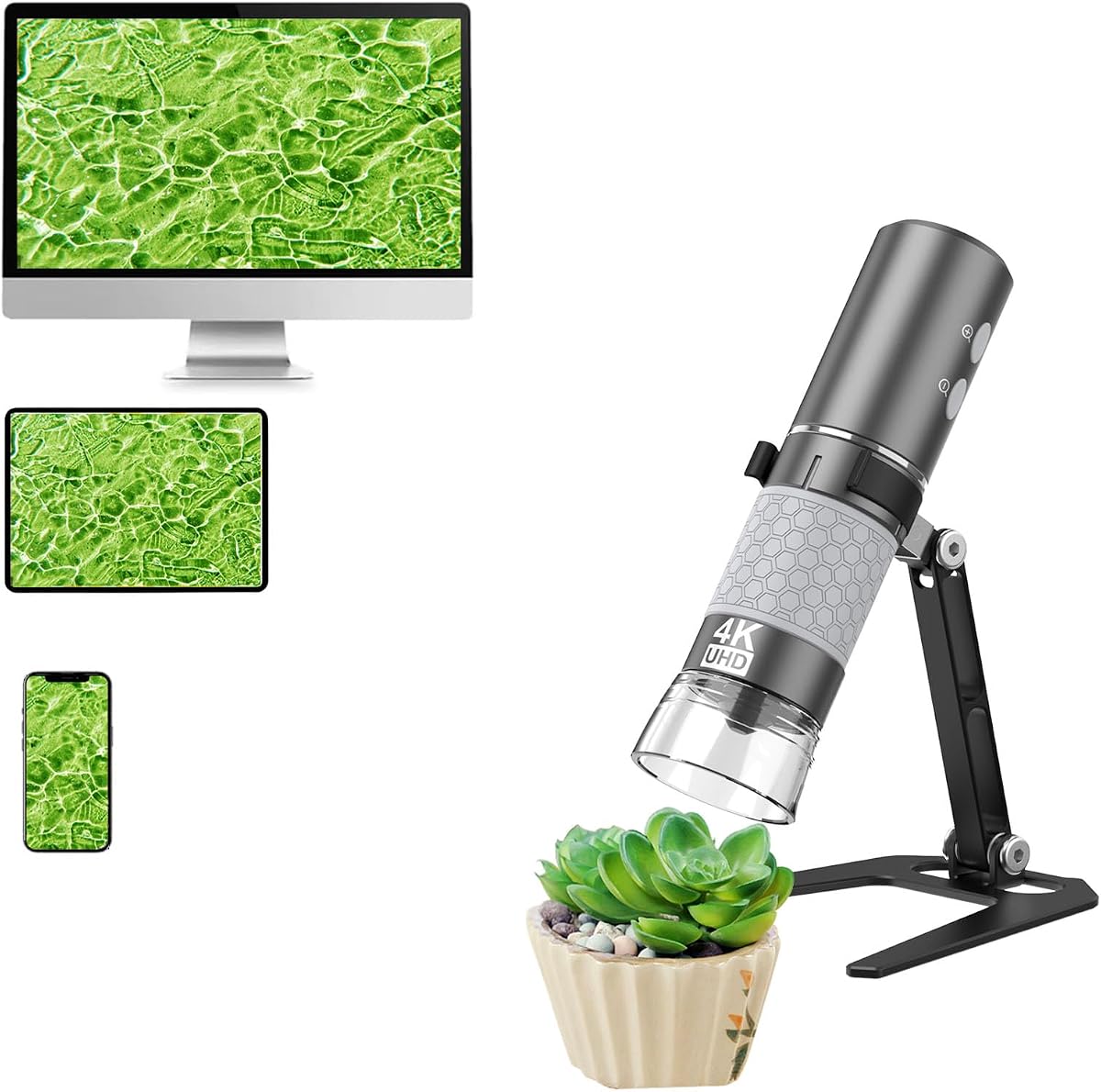




The Skybasic Wireless Digital Microscope ranks first as an affordable entry point for studying insects. With a 4.2-star rating, it offers solid functionality for students and casual explorers who need to view specimens without spending heavily on lab equipment.
We may earn a commission when you buy through this link, at no additional cost to you.
Its standout feature is the dual connectivity via WiFi and USB, allowing seamless transfers to smartphones or computers. The eight adjustable LED lights ensure you can see fine details like insect hairs even in dim conditions, while the one-button capture makes documenting findings quick.
The main trade-off is its fixed focus nature, which limits deep microscopy work. Users must maintain a strict 3-60 mm distance from the object to keep images sharp. While not for professional biologists, this is acceptable for general education and hobbyist insect exploration.
This model is ideal for parents buying gifts or teachers needing classroom tools. If you want a portable, low-cost digital microscope for studying insects that handles basic needs well, the Skybasic delivers value without compromising on essential clarity for most specimens.
Connecting to various devices ensures you can share insect discoveries instantly with classmates or save files for later analysis.
Eight LEDs provide the necessary illumination to reveal texture on wings and legs that standard magnifiers might miss.
We may earn a commission when you buy through this link, at no additional cost to you.
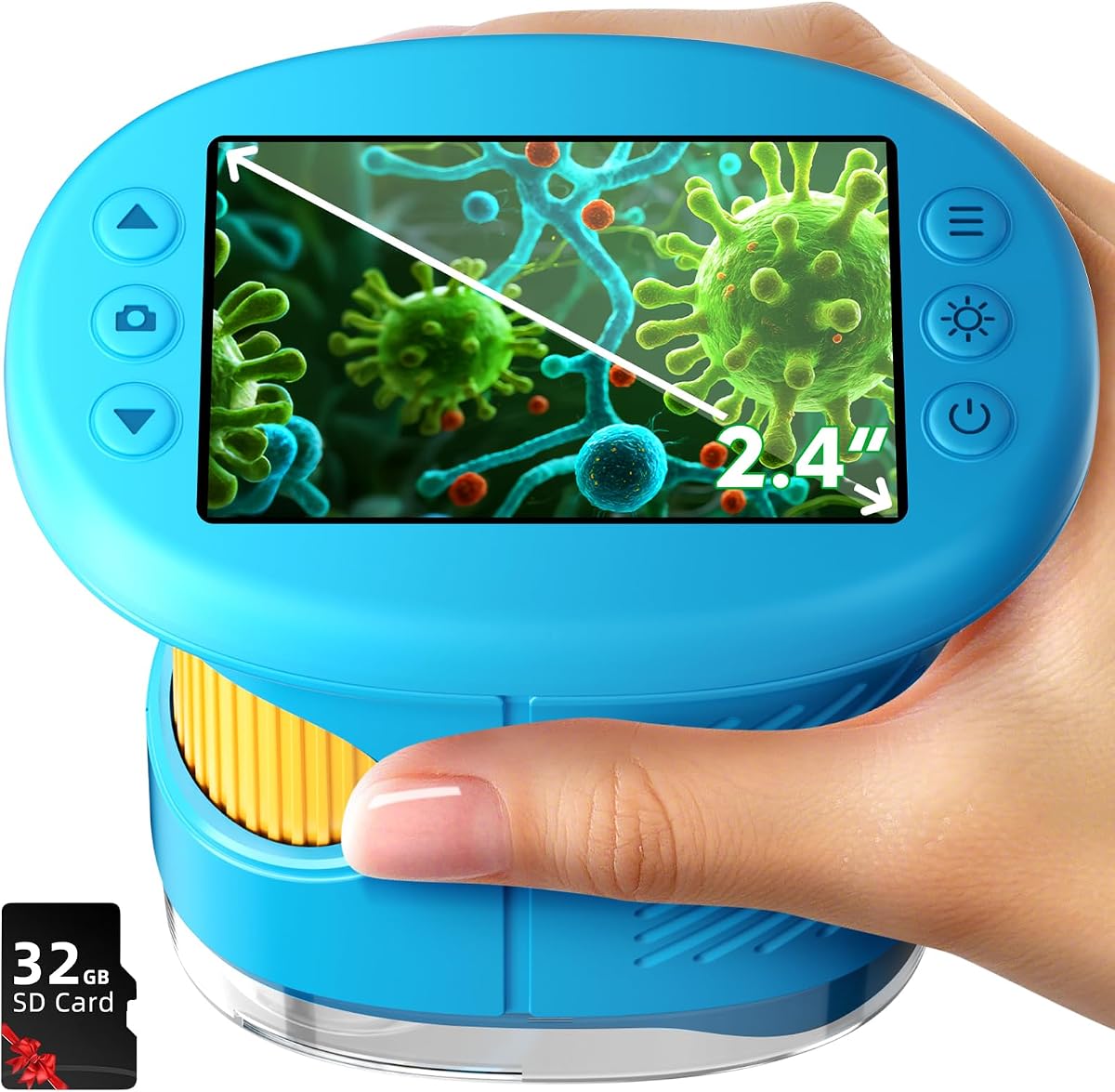
The Odatay 4K Digital Microscope claims the Editor's Choice spot due to its balance of quality and educational value. Rated 4.5 stars, it is specifically designed for young explorers but delivers image clarity that satisfies older students too. Its 4K camera ensures insect details are visible on the built-in screen.
We may earn a commission when you buy through this link, at no additional cost to you.
A key strength is the complete kit, which includes a 32GB card and twelve prepared slides. This means you can start exploring immediately without buying extra accessories. The adjustable LED lights allow for bright views of live bugs or stored samples, fostering curiosity in any environment.
While the 2.4-inch screen is compact, it is perfect for handheld use. Some might find the viewing area limiting for group lessons. However, the ability to connect to a PC for larger displays mitigates this, making it a flexible choice for both home and school settings.
We recommend this for anyone seeking a rugged, user-friendly digital microscope for studying insects. It transforms learning into play with durable design and clear optics. If you want a gift that lasts and inspires scientific thinking, this Odatay model stands out as a top performer.
Having slides and storage ready out of the box reduces friction and encourages immediate engagement with science.
The layout and controls are tailored for small hands, ensuring kids can operate it safely without adult supervision.
We may earn a commission when you buy through this link, at no additional cost to you.
For serious entomologists or advanced students, the Andonstar AD266S offers unmatched premium features. With a 4.3 rating, it provides up to 5000X magnification when output to an external monitor. This allows for the detailed study of insect anatomy that simpler handhelds cannot achieve.
We may earn a commission when you buy through this link, at no additional cost to you.
The inclusion of five different lenses means you can switch from viewing whole insects to specific body parts effortlessly. The metal stand reduces vibration, ensuring stable images even at high powers. HDMI support allows projection onto large screens for educational demonstrations or group viewing.
The main limitation is the cost and size compared to handheld models. It is less portable for field trips but excels in a lab or home station. The measurement software adds utility for scientific research, though beginners may find the controls complex initially.
If you require professional-grade results and plan to use the microscope frequently for detailed research, this is the top pick. It bridges the gap between casual toys and lab equipment, making it the best premium digital microscope for studying insects on the market.
5000X magnification reveals cell structures and fine textures that are invisible to lower-tier devices.
Vibration control is critical for high-power viewing, and the metal construction ensures steady observations.
We may earn a commission when you buy through this link, at no additional cost to you.
The WiFi Digital Microscope 4K stands out for its impressive four-hour battery life. Rated 4.5 stars, it is ideal for long field sessions where charging isn't an option. The 4K support ensures that insect videos recorded outdoors remain crisp and detailed even after transfer to a computer.
We may earn a commission when you buy through this link, at no additional cost to you.
Its adjustable LED lights help capture clear images in varying natural light, while the bracket allows for stable shots without holding it manually. The compatibility with iOS, Android, and desktop systems ensures you can share findings with anyone instantly without format issues.
One downside is the lack of a built-in screen, requiring a device for viewing. This makes it more dependent on smartphone availability. However, for those who already have compatible tablets or phones, this reduces the cost and bulk of the setup.
This model is perfect for adventurers who need endurance. If you plan on hours of observation in the wild, the battery performance makes this the best choice for extended use. It balances portability with high-quality imaging for serious insect documentation.
Long battery life means you can spend all day exploring without worrying about recharging in the middle of a hike.
Leveraging existing devices keeps the kit lightweight and ensures easy sharing of discovery photos on social media.
We may earn a commission when you buy through this link, at no additional cost to you.
The Andonstar AD246S-M offers a versatile three-lens system for diverse viewing needs. Rated 4.5 stars, it allows you to switch between lenses optimized for whole insects or detailed biological slides. This flexibility makes it useful for a wide range of specimens from beetles to butterfly scales.
We may earn a commission when you buy through this link, at no additional cost to you.
The HDMI connection supports high-definition viewing on larger monitors, which is great for teaching. The included measurement software adds a layer of scientific rigor, allowing you to estimate sizes of insect parts. The wireless remote ensures hands-free operation when capturing photos.
The trade-off is the setup time involved in changing lenses and focusing. It is less quick to grab for a snap shot than handheld models. However, the optical quality and resolution for research or detailed hobby work justify the extra effort.
We suggest this for users who value versatility and screen size. If you want a digital microscope for studying insects that can handle both macro and slide views with precision, this Andonstar model provides excellent value through its comprehensive kit.
Three lenses cover multiple use cases, from general inspection to specific slide analysis without buying separate tools.
Software support enables accurate tracking of specimen dimensions for educational or hobbyist research purposes.
We may earn a commission when you buy through this link, at no additional cost to you.
Safety and durability are paramount for young users, and this model delivers with triple safety certification. Rated 4.5 stars, it uses ABS plastic and rubber casing to survive drops. The 200g weight ensures kids can hold it steady while looking at insects without fatigue.
We may earn a commission when you buy through this link, at no additional cost to you.
The anti-shake design helps maintain a clear view even if little hands tremble. Focus wheels are oversized for better grip, making operation intuitive. The built-in storage saves photos directly, so children can create their own bug albums without needing a computer immediately.
The screen is small compared to tablet-connected models, but this keeps the unit pocket-sized and simple. Battery life covers short sessions, which aligns with typical attention spans for younger explorers. This balance of features targets the toddler to pre-teen demographic perfectly.
For parents seeking a safe introduction to microscopy, this is the ideal choice. It prioritizes child-friendly engineering and robustness. If you need a digital microscope for studying insects that encourages hands-on learning without breakage risks, this tool is highly recommended.
Safety certifications and non-toxic materials ensure peace of mind when children handle the device independently.
Stabilization technology ensures that shaky hands do not ruin the viewing experience for excited young scientists.
We may earn a commission when you buy through this link, at no additional cost to you.
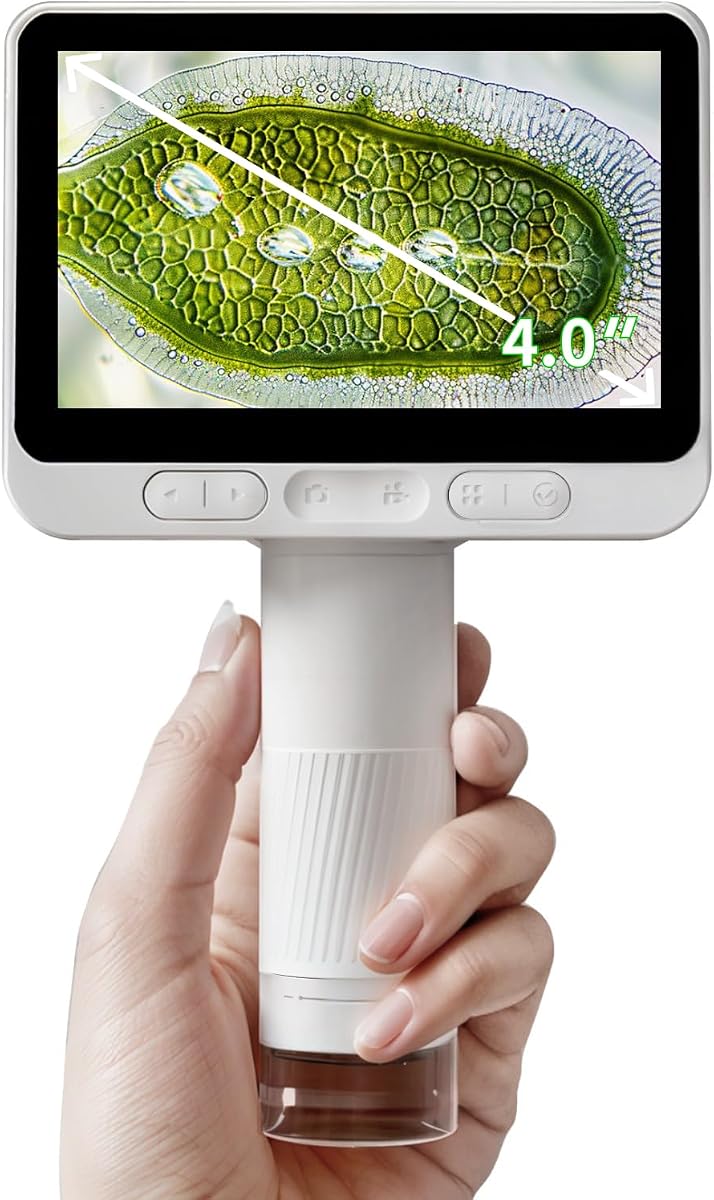
The BEAVERLAB Finder impresses with a large 4.0-inch IPS display. Rated 4.6 stars, it offers a viewing experience closer to a tablet than a tiny lens. This large screen makes it easier for children to view fine details like insect compound eyes without straining.
We may earn a commission when you buy through this link, at no additional cost to you.
The built-in hotspot simplifies sharing photos and videos with family or classmates via mobile devices. The 1600X magnification provides enough zoom to see structures on wings and antennae clearly. The 1080P recording ensures high-quality video documentation of moving specimens.
While the larger screen adds some bulk, it is still portable. The extra weight might be tiring for small hands over long periods. However, the visual clarity often outweighs this minor inconvenience for shared viewing or group activities.
If your priority is screen quality and shared viewing, this is the best option. It offers a rich digital experience that stands out among pocket microscopes. For families wanting to explore insects together, the visual clarity of this device is unmatched.
A bigger screen provides better visibility for multiple viewers, making group science projects more engaging.
Easy sharing without cables or computers encourages children to share their discoveries instantly and proudly.
We may earn a commission when you buy through this link, at no additional cost to you.
This model offers exceptional value for the price while maintaining solid performance. Rated 4.4 stars, it includes anti-shake technology that is often missing in budget devices. This ensures that even during excited outdoor exploration, the image remains clear enough to identify insect features.
We may earn a commission when you buy through this link, at no additional cost to you.
The USB-C charging standard aligns with modern tech, making it easy to charge alongside phones. The 600mAh battery supports three hours of use, which is ample for a day of exploration. BPA-free materials ensure safety during handling.
It lacks some advanced features like complex software or HDMI output, keeping it simple. This simplicity might be a limitation for professional users but is ideal for kids who just want to look and take pictures. The balance of cost and function is its main selling point.
For families wanting a reliable tool without overspending, this is a top pick. It handles the basics of digital microscopy for studying insects well. If you need a durable, affordable option that kids can use independently, this device delivers consistent results.
Stabilization makes the difference between a blurry mess and a clear image, especially for beginners.
Using a standard USB-C cable simplifies charging logistics for families who already own compatible chargers.
We may earn a commission when you buy through this link, at no additional cost to you.
The Elikliv Autofocus model introduces AI-driven focusing to the handheld category. Rated 4.4 stars, it adjusts focus automatically, which helps when observing moving insects. The 8-inch screen provides a massive viewing area, allowing multiple students to see the same insect detail simultaneously.
We may earn a commission when you buy through this link, at no additional cost to you.
The TOF sensor measures distance to maintain focus quickly, saving time compared to manual adjustment. The split-screen feature allows comparison of two specimens side by side, which is useful for educational studies. 4K recording captures high-fidelity video for later review.
This device is designed with soldering in mind but works well for detailed biological observation. Its bulk makes it less ideal for carrying in a pocket. However, the clarity and auto-focus capabilities make it stand out for stationary or table-based exploration.
If you prioritize ease of use and large screen viewing, this is a strong contender. The AI focus removes a barrier for beginners. For those wanting a digital microscope for studying insects that feels modern and automated, the Elikliv offers unique advantages.
Automatic adjustments mean less fumbling with knobs, allowing more time to focus on observation and learning.
Comparing specimens side by side facilitates better understanding of differences in structure and coloration.
We may earn a commission when you buy through this link, at no additional cost to you.
This microscope is praised for its broad compatibility with almost any device. Rated 4.2 stars, it supports everything from Linux to iOS, ensuring you can use whatever device you own. The 4K resolution allows for high-fidelity imaging of insect patterns that are hard to capture otherwise.
We may earn a commission when you buy through this link, at no additional cost to you.
The wide angle helps in capturing the whole insect in the frame without constant adjustments. The long focal length provides flexibility, allowing you to step back slightly to keep your hand from blocking light. This makes it versatile for various scenarios including coin collecting or bug viewing.
The zoom controls work best on mobile apps rather than on PCs, which is a minor annoyance for computer users. But for field work, this limitation is negligible. The sheer adaptability of this device makes it a reliable tool for varied environments and user groups.
If compatibility is your main concern, this model is the top choice. It adapts to your existing tech ecosystem seamlessly. For anyone seeking a digital microscope for studying insects that works across all platforms, this option provides peace of mind and consistent quality.
Capturing the full specimen in one frame helps maintain context while examining fine details under the lens.
Support for all major operating systems ensures you never face device barriers when trying to view a specimen.
We may earn a commission when you buy through this link, at no additional cost to you.
Selecting the right microscope involves balancing magnification, portability, and usability features based on your specific goals. Whether for a child or a serious hobbyist, understanding key factors helps you avoid costly mistakes.
Magnification is the primary metric for viewing detail. Handhelds typically range from 100X to 1000X, while advanced models offer up to 5000X via digital zoom. For studying insects, 400X to 1000X is usually sufficient to see wings and legs clearly. Higher magnification may reduce light quality or require stable stands.
Choose a range that suits your target specimens. High magnification is useful for detailed research, while lower ranges offer wider fields of view for general observation.
Portable units are essential for field work where you encounter live insects. Handheld models weigh less than half a pound and fit in pockets. However, larger devices with screens may offer better viewing but require carrying bags or stands. Consider your primary use case before deciding on bulk.
A lightweight design ensures you can explore outdoors without fatigue. Look for models with battery packs or USB charging for extended trips away from power sources.
Built-in screens vary from 2 to 8 inches. Larger screens allow group viewing and reduce eye strain, while smaller ones save space and cost. Resolution matters for clarity; 4K or 1080P ensures fine details like hairs or eye structures are visible. Without a screen, you rely on external devices.
Prioritize screen size if sharing findings is a priority. High resolution is critical for capturing clear photos for documentation or school projects.
Connectivity options include USB, WiFi, HDMI, and standalone storage. WiFi allows instant sharing to phones, while HDMI connects to monitors. USB is reliable but may need drivers. Standalone SD card storage is useful for recording without a connected device. Choose based on how you plan to save data.
Ensure the connection type matches your existing tech. A device with multiple options offers flexibility for different environments.
Built-in LED lights are standard and crucial for dark environments. Adjustable brightness prevents glare on reflective insect surfaces. Good lighting reveals color and texture details that are otherwise lost. Check for the number of LEDs and the ease of control.
Adjustable lights ensure visibility in varying conditions. Quality lighting is as important as the lens for capturing usable images.
Durability is key for handheld use where drops are likely. Rubberized coatings and sturdy plastic casings extend the life of the unit. Check for water resistance if you plan to use it outdoors. Safety certifications also indicate build quality for children.
A rugged design reduces maintenance costs and ensures longevity. Look for shock-absorbing materials if children will use the device.
Battery life affects how long you can use the device before recharging. Models offer between two and six hours. If you plan long sessions, ensure the battery is replaceable or supports fast charging. Some models support direct USB power which solves the battery issue.
Long battery life keeps exploration uninterrupted. Always check if the device supports external power sources for continuous use.
Prices range from budget-friendly to premium. Higher prices usually buy better resolution and durability. Always check the warranty period; a longer warranty indicates manufacturer confidence. Support quality also matters for technical troubleshooting.
Balance cost with the features you truly need. A decent warranty provides protection against early defects and ensures satisfaction.
Start by placing the specimen on a flat surface. For live insects, use a clear container to keep them safe and still. Adjust the LED lights to ensure even illumination without harsh shadows. This step is vital for capturing sharp images without glare.
Focus the lens slowly by moving it closer or further from the object. If the device has auto-focus, let it settle before taking photos. Use the capture button to save your findings. Always check the screen or connected device to verify clarity.
Clean the lens with a soft, dry cloth after every use. Avoid touching the glass with fingers to prevent smudges. Store the unit in its protective case to avoid scratches. Regular maintenance extends the life of the optics and keeps image quality high.
Yes, many models support live viewing via the built-in screen or connected app. However, high magnification may cause blurring if the insect moves quickly. Stabilizing the device helps capture clearer shots of moving specimens. It is best to use lower magnification for live subjects.
No, most models work independently with built-in screens or connect directly to smartphones via WiFi. Using a computer is optional and mainly for storing files or larger viewing. If you want a fully standalone experience, choose a handheld model with internal storage.
Magnification between 400X and 1000X is ideal for most insect details like wing veins and legs. Higher magnification is useful for specific parts like eyes or antennae. Going too high may darken the image or reduce field of view significantly.
Use a microfiber cloth gently to remove dust. Do not use liquids unless specified by the manufacturer. Touching the lens with fingers causes smudges that reduce image clarity. Store the device in a case to minimize dust accumulation.
Yes, several models are designed specifically for kids with simplified controls and durable casings. Safety certifications ensure non-toxic materials and safe use. Supervision is still recommended to prevent drops or misuse of lenses by very young children.
Most digital microscopes support both photo and video recording. You can save these files to internal memory or transfer them to a phone or PC. This allows you to create time-lapse videos of insects or share discoveries easily.
Blurry images often result from incorrect focal distance or dirty lenses. Ensure you are within the recommended focus range. Clean the lens and check the lighting. If the device has auto-focus, allow it time to adjust before capturing.
Connect via WiFi or USB to transfer files. Use the provided app for seamless sharing or simply plug the SD card into a reader. Ensure your phone allows external file access. Some models offer direct sharing to social media through their apps.
We have explored ten distinct digital microscope options that cater to different needs and budgets. From the affordable Skybasic to the high-powered Andonstar AD266S, each device brings unique strengths. The Odatay model stands out for its balance of quality and educational value for families.
When making your choice, prioritize factors that match your usage environment. If you plan to study in a lab, a model with high magnification and stand is better. For outdoor exploration, battery life and portability are key. Match these features to your specific insect studies.
Remember that prices fluctuate based on demand and seasonal sales. Check current listings to ensure you get the best value. With the right tool, you will unlock a fascinating world of tiny details and foster a deeper appreciation for the natural world.