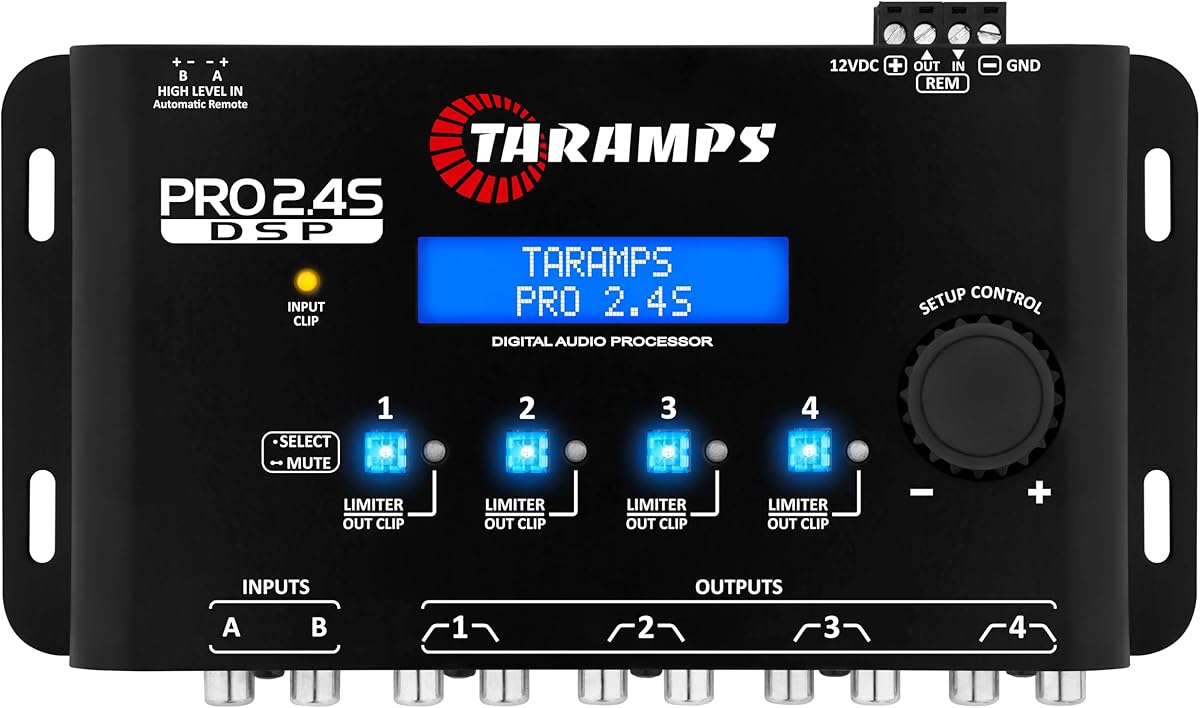
Taramps PRO 2.4S
4.6Editor score
Compact four-channel design
Integrated anti-pop system
RCA and high-level inputs
This guide compares the top Digital Signal Processor Dsp for Car Audio units based on features, sound quality, and integration options for 2026.
Upgrading your car audio system often requires more than just new speakers or amplifiers. A Digital Signal Processor Dsp for Car Audio allows you to fine-tune frequencies, time alignment, and phase for perfect soundstage and clarity across your vehicle interior.
We analyzed ten leading models available this year, focusing on channel count, equalization precision, connectivity options, and ease of use. Each product was evaluated on its ability to handle OEM integration, aftermarket flexibility, and professional-grade tuning capabilities for serious enthusiasts.
Every pick below highlights key specs, real-world performance traits, and specific use cases to help you match the right processor to your build. Please note that product availability and pricing fluctuate frequently, so verify current details before making your final purchase decision.
4.6Editor score
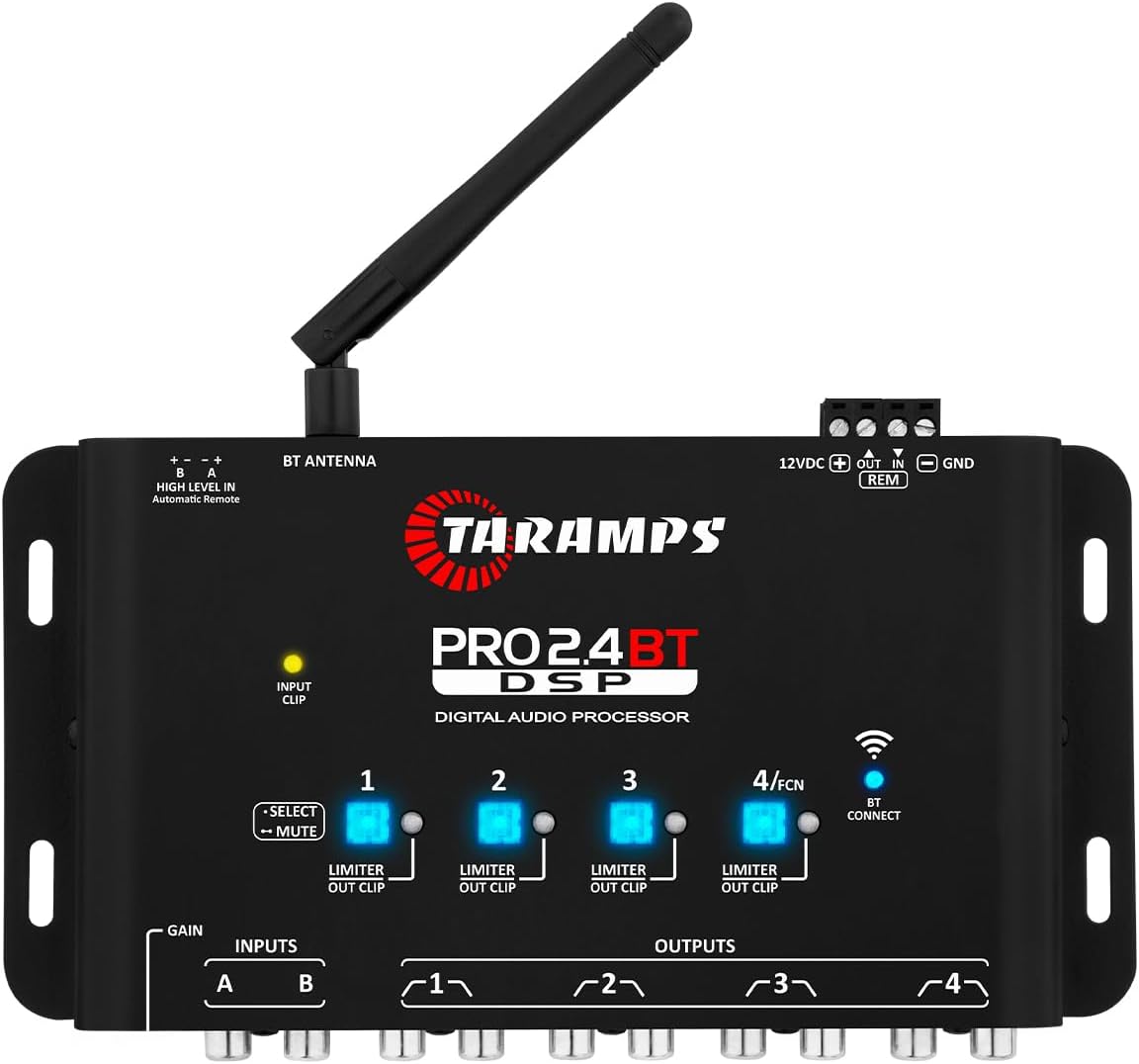
4.6Editor score

4.6Editor score
This side-by-side comparison outlines the core specifications and unique strengths of each ranked processor to help you quickly identify the model that fits your specific car audio configuration and tuning needs.


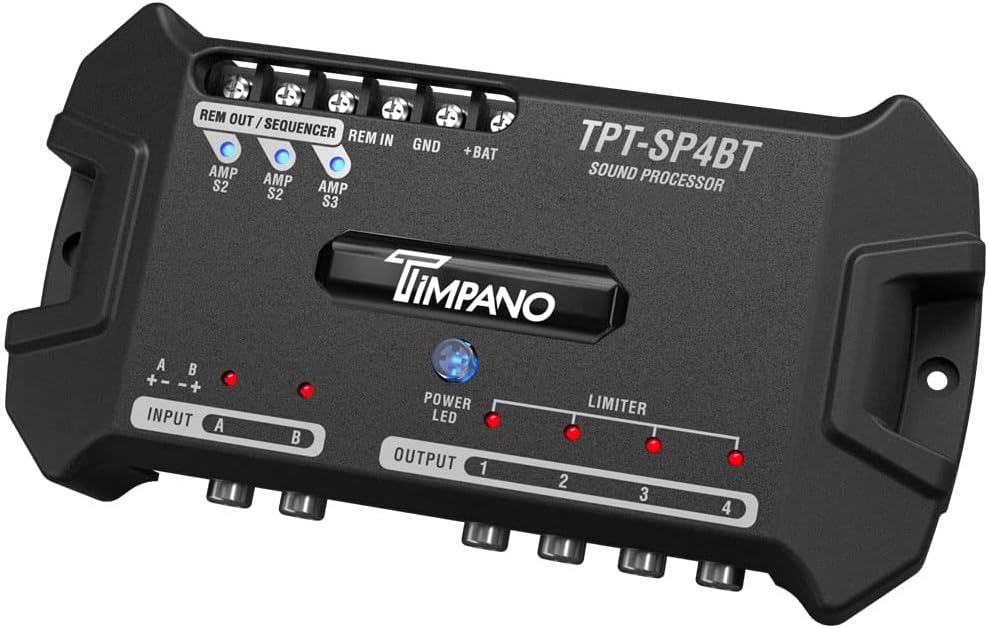


The Taramps Pro 2.4 BT stands out as a top-tier Digital Signal Processor Dsp for Car Audio due to its seamless Bluetooth integration and professional-grade tuning tools. It scores highly among enthusiasts who value convenience without sacrificing control over their audio environment.
We may earn a commission when you buy through this link, at no additional cost to you.
Its standout feature is the ability to configure all parameters in real-time via a dedicated app on iOS or Android. The 15-band graphic EQ combined with parametric controls lets you shape frequencies precisely while the high-level input simplifies integration with factory head units.
While the wireless setup is convenient, it means you need a smartphone handy during installation and tuning. Some users might find the interface dense if they are new to DSP concepts, but the encryption and preset sharing features make collaboration with tuners easy.
This unit is ideal for daily drivers and custom builds where OEM integration is key. The automatic turn-on and anti-puff system ensure clean operation, making it a reliable choice for anyone seeking high-fidelity sound without replacing the entire infotainment system.
Bluetooth 5.4 BLE ensures stable connectivity for real-time adjustments without cable clutter.
High-level input accepts factory speaker signals up to 9V RMS for plug-and-play upgrades.
We may earn a commission when you buy through this link, at no additional cost to you.
The PRV AUDIO DSP 2.4X offers a straightforward interface for those who prefer physical controls over smartphone apps. It delivers strong performance for a four-channel setup with a clear LCD screen showing adjustments in real time during installation.
We may earn a commission when you buy through this link, at no additional cost to you.
Its ability to mix audio sources A and B independently per output gives flexibility for complex systems like dual-source installations. The sequencer feature allows triggering of other products via remote connections which is useful for advanced lighting or amplifier sequencing setups.
Without Bluetooth connectivity you must make adjustments manually which might slow down fine-tuning sessions. However, the dedicated interface remains reliable and does not depend on wireless stability or device compatibility issues common with app-based solutions.
Ideal for installers needing a compact and effective processor without app overhead, this model balances cost and functionality. It suits builds where direct access to settings is preferred and the sequencer adds extra value for system automation.
LCD display shows real-time adjustments making manual tuning straightforward and precise.
Sequencer remote relay enables triggering multiple products in sequence for coordinated system activation.
We may earn a commission when you buy through this link, at no additional cost to you.
For complex car audio setups requiring more channels, the PRV AUDIO DSP 2.8X expands the four-channel design to eight outputs. It maintains the same intuitive LCD interface and sequencer capabilities for larger component speaker and subwoofer systems.
We may earn a commission when you buy through this link, at no additional cost to you.
Each channel allows independent crossover and gain settings enabling precise tuning for front and rear stages plus subwoofers. The ability to select audio sources per output adds versatility for vehicles with multiple media inputs or source switching needs.
The lack of app connectivity means tuning relies on manual navigation through menus. This can be time-consuming compared to smartphone-adjusted models but ensures consistent operation without relying on external device connections or software updates.
This unit fits serious enthusiasts building active multi-amp systems who need channel flexibility. The sequencer and display make it a workhorse for installations where physical control and eight-channel distribution are top priorities over wireless convenience.
Eight channel outputs support complex active systems with individual crossover and gain per speaker.
Sequencer relay allows coordinated startup sequences for amplifiers and accessories via remote connections.
We may earn a commission when you buy through this link, at no additional cost to you.
The PRV AUDIO DSP 2.4X BT targets users wanting to upgrade factory radios while keeping the original head unit. It includes high-level inputs and preset filters tuned for PRV speakers to simplify crossover setup during installation.
We may earn a commission when you buy through this link, at no additional cost to you.
Bluetooth app control allows wireless adjustments which is a major plus over non-wireless models. The limiter phase and delay controls per channel provide professional tuning options that can significantly improve imaging and clarity even in challenging acoustic environments.
User ratings suggest some may find the initial configuration challenging or inconsistent. The interface relies on app connectivity which might be less intuitive than a physical display for quick changes or standalone use without a paired device.
Best suited for OEM upgrades where factory wiring is kept intact, this model offers solid value for specific setups. If you already own PRV drivers the preset filters can save time, but ensure app compatibility meets your expectations before buying.
High-level input accepts speaker wire signals enabling upgrades without replacing the OEM head unit.
Exclusive crossover presets for PRV drivers streamline tuning and ensure proper frequency distribution.
We may earn a commission when you buy through this link, at no additional cost to you.
Taramps PRO 2.4S provides essential DSP features at an accessible price point making it ideal for entry-level or budget-conscious builds. It includes both RCA and high-level inputs so it works with nearly any head unit without extra converters.
We may earn a commission when you buy through this link, at no additional cost to you.
Key features include active crossover filters delay alignment and a limiter to protect speakers. The anti-pop system ensures clean power cycles which reduces noise when turning the vehicle on or off preserving both equipment and listening experience.
Lacking wireless connectivity means adjustments are manual which can be slower for fine-tuning. However, the straightforward design keeps things simple for users who do not need remote app features and prefer direct control during installation.
This model is perfect for custom systems needing reliable four-channel control without extra cost. It balances performance and price well for daily drivers or modest upgrades where professional tuning is needed but smartphone integration is not a priority.
Supports both RCA and high-level inputs for seamless integration with factory or aftermarket units.
Built-in limiter and anti-pop circuit protect components from clipping and power cycle noise.
We may earn a commission when you buy through this link, at no additional cost to you.
The Banda Audiopart X8AiR delivers audiophile-grade processing with 32-bit 96kHz resolution ensuring minimal distortion and maximum detail. Its 79-band equalizer per channel offers unmatched precision for shaping frequency response across any acoustic space in a vehicle.
We may earn a commission when you buy through this link, at no additional cost to you.
Eight output channels support advanced multi-amp configurations allowing precise tuning for tweeters mids woofers and subwoofers simultaneously. Bluetooth app control lets you adjust EQ curves and time alignment on the fly without physically accessing the processor during test drives.
This unit carries a higher price reflecting its advanced specs and build quality. It is best for serious enthusiasts with complex setups who need granular control and high-resolution processing to extract every ounce of performance from their components.
Ideal for custom show cars or critical listening setups where sound quality is paramount. If you have the budget and a multi-speaker system, this processor provides the flexibility and fidelity that standard units cannot match.
32-bit 96kHz conversion maintains signal integrity and reduces digital artifacts during playback.
79-band equalizer per channel allows surgical frequency adjustments for perfect tonal balance.
We may earn a commission when you buy through this link, at no additional cost to you.
Taramps PRO 2.8S targets high-performance builds needing eight outputs with robust dynamic control. It features adjustable RMS and peak limiters that protect amplifiers and speakers while maintaining headroom for loud clean sound.
We may earn a commission when you buy through this link, at no additional cost to you.
Filters range from 10Hz to 22kHz offering flexibility for subwoofers and tweeters. Time alignment and phase controls help align speakers to create a wide focused soundstage which is crucial for imaging in moving vehicles with multiple listening positions.
Without wireless features you must access the unit directly for tuning which adds time to installations. The physical design ensures reliability without app dependencies but lacks the modern convenience of remote adjustment via smartphone apps.
Best for installers and enthusiasts prioritizing raw channel count and dynamic features over connectivity. It fits large systems where amplifier protection and precise crossover management are more critical than app-based tuning.
Adjustable RMS and peak limiters safeguard components while preserving audio dynamics during peaks.
Delay controls align speaker arrival times to create a centered focused soundstage for listeners.
We may earn a commission when you buy through this link, at no additional cost to you.
The Timpano TPT-SP4BT adds useful diagnostic tools like a built-in voltmeter and pink noise generator to standard DSP functions. These features help monitor voltage levels and test speakers during tuning to ensure system health and accuracy.
We may earn a commission when you buy through this link, at no additional cost to you.
Bluetooth control allows wireless adjustments while the sequencer remote enables multi-product startup sequences. This combination is ideal for custom installations requiring coordinated power-up of amplifiers accessories and the processor itself for seamless operation.
While powerful for diagnostics the unit relies on an app for full configuration which may be a limitation if you prefer physical buttons. The voltmeter offers peace of mind but does not replace the need for proper power wiring and fusing.
Best for installers who value built-in testing tools and remote automation. If you need to track power quality or automate system startup alongside audio tuning this processor provides practical advantages over basic models.
Built-in voltmeter and pink noise generator assist with system testing and health monitoring.
Sequencer remote allows synchronized startup of multiple components via dedicated relay connections.
We may earn a commission when you buy through this link, at no additional cost to you.
Dayton Audio DSP-408 stands out with four inputs allowing complex source mixing alongside eight outputs for multi-stage speakers. The graphical user interface simplifies setup making it accessible for users transitioning from analog processors to digital ones.
We may earn a commission when you buy through this link, at no additional cost to you.
Each output has a fully adjustable 10-band parametric EQ enabling precise frequency shaping without relying on preset curves. Time alignment and mixing options let you combine sources creatively which suits installations with multiple media inputs like radio and streaming devices.
Bluetooth requires an optional dongle which adds to the cost and setup steps. Without it you must rely on wired remote or direct interface adjustments. The price reflects the high channel count and flexibility but may not suit all budgets.
Ideal for setups needing multiple inputs like factory plus aftermarket or dual streaming sources. If you need mixing capabilities and parametric precision this unit delivers versatile control for complex audio routing and tuning needs.
Four input channels allow combining radio streaming and other sources without signal loss or extra gear.
Fully adjustable parametric EQ per channel enables detailed frequency corrections for every speaker zone.
We may earn a commission when you buy through this link, at no additional cost to you.
Stetsom STX2448 FLOATING PRO introduces a unique floating mode allowing different audio streams and features to be loaded dynamically. This flexibility supports diverse system configurations and advanced use cases that standard processors cannot handle easily.
We may earn a commission when you buy through this link, at no additional cost to you.
Subharmonic bass control adds low-end extension for deep bass performance while input level monitoring shows clipping indicators to protect amplifiers. The improved encoder button provides intuitive navigation through menus without needing a display or smartphone app.
The feature set is powerful but may overwhelm casual users needing only basic crossover and EQ. Manual control means no wireless adjustments but ensures the unit operates independently without relying on external devices for tuning.
Best for enthusiasts seeking advanced customization and bass enhancement without changing head units. If you need subharmonic processing and flexible streaming modes this processor delivers specialized tools for demanding audio environments.
Floating mode allows flexible audio streams enabling varied system configurations on demand.
Subharmonic bass control enriches low frequencies for deeper impact without extra amplification.
We may earn a commission when you buy through this link, at no additional cost to you.
Selecting the right processor depends on your system size budget and how much control you need over tuning. Below are key factors to consider when shopping for a DSP unit.
Channel count determines how many speaker zones you can control independently. Four channels suit standard front and rear setups while eight channels allow full component and subwoofer control for active systems.
Match channel count to your amplifier and speaker layout to ensure full coverage without unused capacity.
Check whether the unit supports high-level inputs for factory radios or RCA inputs for aftermarket head units. Some models offer both for universal flexibility.
Choose a model with inputs matching your current head unit to avoid extra wiring or converters.
Graphic equalizers are easier for quick adjustments but parametric controls give finer frequency tuning. Look for units with multiple bands for better sound shaping.
More bands allow detailed corrections that help flatten response and improve clarity across all frequencies.
Bluetooth app control allows tuning without physical access which is convenient for adjustments. However physical displays or manual menus ensure reliability without needing a phone.
Decide if wireless convenience outweighs the reliability of direct manual adjustments for your use case.
Built-in limiters and clipping indicators protect your speakers from distortion and overload. Some units also include anti-pop circuits for clean power cycles.
Ensure the DSP has protection features to safeguard your investment and maintain consistent performance.
Extra tools like sequencer remotes subharmonic bass or voltmeters add value for custom builds. Consider if these match your needs before paying for features you will not use.
Prioritize units with features that align with your specific system goals and tuning requirements.
Metal housings and solid construction ensure durability in the heat and vibration of a vehicle. Look for reputable brands with good support.
A well-built unit reduces failure risk and ensures long-term performance in harsh car environments.
Prices vary based on features and channel count. Higher cost usually means better resolution and more controls but entry-level models still deliver solid sound improvements.
Balance your budget with the features you truly need to get the best value for your build.
Connect the DSP between your head unit and amplifiers using RCA or high-level inputs. Secure wiring properly and ground the unit to a clean metal surface to prevent noise.
Use the app or display to set crossover points and time alignment. Start with flat settings and adjust gradually to avoid extreme changes that could distort sound.
Keep firmware updated if applicable and avoid excessive heat exposure. Regularly check connections for corrosion and ensure the unit remains ventilated to maintain performance and longevity.
Yes, even a good head unit benefits from a DSP for precise speaker alignment and frequency tuning. Factory speakers often have uneven response that a DSP corrects to deliver clearer and more balanced sound across the vehicle.
Absolutely. Many processors include high-level inputs that accept speaker wire signals from factory radios. This lets you upgrade your system without replacing the original infotainment screen or console.
Graphic EQ uses fixed frequency bands that are easy to adjust while parametric EQ lets you choose specific frequencies bandwidth and gain for detailed correction. Parametric offers more precision but requires more tuning knowledge.
No. While Bluetooth app control is convenient, some models use LCD displays or physical buttons. Wired remotes or computer interfaces are also available. Choose based on your preference for wireless versus manual adjustments.
For most two-way front and rear systems a four-channel DSP is sufficient. If you plan adding dedicated subwoofers or multi-amplifier setups consider eight channels to maintain full control over each speaker zone.
Improper tuning can cause phase issues or frequency dips but a properly configured DSP improves clarity and imaging. If you are unsure consider using presets or professional tuning to avoid unintended distortions.
Most include high-pass and low-pass filters suitable for subs. Verify that the unit offers adjustable crossover points and limiter settings specifically for subwoofer channels to ensure optimal integration with your system.
We highlighted ten top Digital Signal Processor Dsp for Car Audio units ranging from budget-friendly four-channel models to premium eight-channel processors with advanced equalization and streaming capabilities.
Focus on channel count input types and tuning control to match your specific vehicle and audio setup. High-quality units significantly improve imaging and clarity when configured correctly.
Verify current availability and pricing before purchasing as product details may change over time. The right processor can transform your listening experience while keeping your factory or aftermarket system intact.