
Reotemp K83B1 Compost Thermometer
4.7Editor score
Twelve inch stainless steel stem
Includes digital composting guide
Waterproof and dustproof design
Discover the top 10 digital soil thermometers for accurate planting and gardening. Compare features, probes, and smart capabilities to choose the right tool.
Finding the right digital soil thermometer ensures your plants get the precise conditions they need to thrive. These devices measure critical soil metrics quickly and accurately for any grower.
We compared ten leading models based on probe depth, display clarity, and measurement speed. Our analysis highlights tools for composting, indoor gardening, and large-scale farming needs.
Each pick shows key strengths and ideal use cases for your specific garden setup. Remember that product availability and pricing can change frequently, so check current listings before buying.
4.7Editor score

4.2Editor score

4.5Editor score
This side by side comparison highlights the unique strengths of each model to help you decide which fits your gardening routine and environment.




The YAMRON 4-in-1 Soil Moisture Meter stands out as a top choice for gardeners needing comprehensive data. It rates well for its ability to measure moisture, pH, temperature, and sunlight simultaneously. This device simplifies the process of understanding your soil's current state.
We may earn a commission when you buy through this link, at no additional cost to you.
Its standout qualities include a large LCD screen with a white backlight, making readings easy even in dim light. The rotating head design allows you to view the screen from different angles without bending down. This is particularly helpful when checking plants in tight spaces or low-growing garden beds.
One trade-off is that it requires four AAA batteries which are not included, adding to the initial cost. Additionally, the probe must be inserted into moist soil for accurate readings, so dry or hard ground may damage the unit. These are minor issues given the extensive data it provides.
Anyone looking for a quick snapshot of soil conditions should consider this meter. It is ideal for home gardeners who want to optimize watering and fertilizing based on scientific data rather than guesswork. We recommend it as the primary tool for balanced plant care.
This device consolidates four critical metrics into one reading, saving you from buying separate tools for moisture, pH, temperature, and light.
The rotating head allows you to tilt the screen up to 45 degrees, making it easier to read data while kneeling or standing.
We may earn a commission when you buy through this link, at no additional cost to you.
The Luster Leaf 1625 is a straightforward tool designed specifically for determining soil temperature. It has earned a solid rating for reliability and ease of use during planting seasons. This model helps gardeners know exactly when the soil is ready for seeds or seedlings.
We may earn a commission when you buy through this link, at no additional cost to you.
Its key strength lies in its simplicity. You do not need to navigate menus or calibrate sensors; just insert the probe and read the temperature. This makes it a favorite for those who primarily need to track heat levels for germination and transplanting.
The main limitation is that it does not measure moisture or pH, which might require you to use a separate device for a complete soil profile. However, for a dedicated temperature monitor, it is efficient and robust. The digital display is clear enough for quick checks.
We suggest this thermometer for gardeners who already have moisture tools but need a precise temperature read. It fits perfectly into routine gardening tasks where timing is critical for crop success. It is a practical addition to any seed starting kit.
This thermometer is tuned to give accurate readings crucial for deciding when to start seeds or move seedlings outdoors.
With no complex settings or buttons, the interface is intuitive for users of all experience levels.
We may earn a commission when you buy through this link, at no additional cost to you.
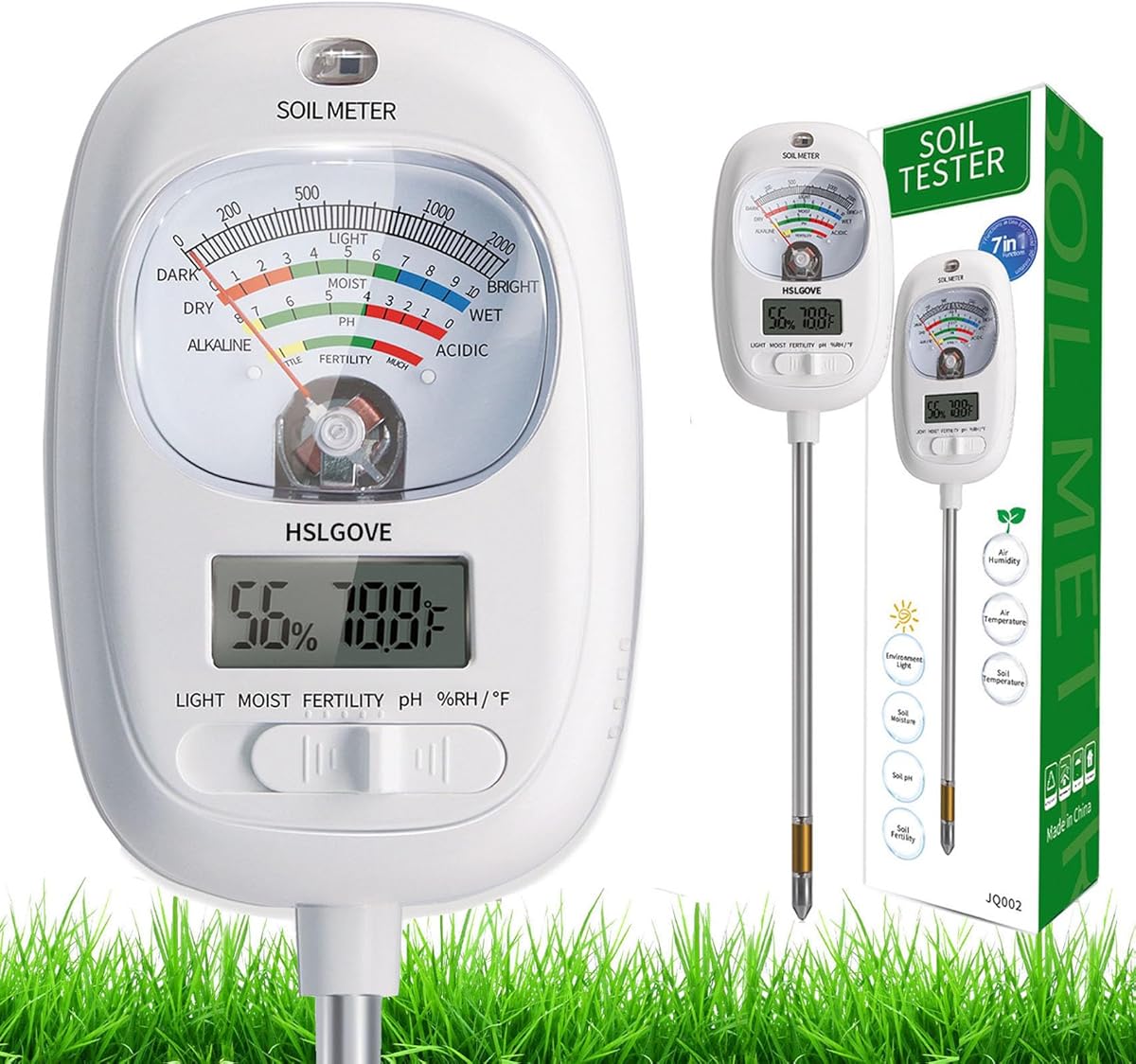
This 7-in-1 kit offers an advanced look at soil health by including fertility functions alongside temperature. It is highly rated for its ability to provide a comprehensive view of your garden's soil chemistry. The device measures EC and TDS to help you gauge nutrient availability effectively.
We may earn a commission when you buy through this link, at no additional cost to you.
The large screen with white backlight makes it easy to read numbers in any lighting condition. You can quickly determine if your plants have enough nutrients or if you need to adjust your feeding schedule. This feature is rare in basic thermometers.
While comprehensive, the number of functions might overwhelm casual users who only need temperature checks. It also requires careful handling of the probe to avoid damage. However, the accuracy of the data provided is worth the extra effort for serious growers.
We recommend this meter for those interested in scientific gardening and nutrient management. It helps you optimize fertilizer use and prevent issues caused by nutrient imbalances. If you want a full picture of soil health, this kit is an excellent investment.
By measuring EC and TDS, this meter tells you about salt content and nutrient levels in the soil.
The backlit screen ensures you can check readings in shaded garden areas or during low light conditions.
We may earn a commission when you buy through this link, at no additional cost to you.
The Reotemp K83B1 is a favorite among composters for its durable 12-inch stainless steel stem. It rates very high for reliability in harsh environments like hot compost piles. The included digital composting guide helps you understand how to manage temperatures for efficient decomposition.
We may earn a commission when you buy through this link, at no additional cost to you.
Its construction is top-notch, featuring a corrosion-resistant 304 stainless steel case and a quality glass lens. This ensures it withstands the moisture and heat found in active compost bins without rusting or breaking. It is built to last for many seasons of use.
The only trade-off is that it uses a manual dial instead of a digital screen, which might be less precise for some users. However, the robustness and specific design for composting make it a superior choice for this task. It is very easy to insert into deep piles.
We suggest this thermometer specifically for anyone managing a compost bin or tumbler. Its long probe reaches the core heat zone where decomposition happens. For composters looking for a durable and trustworthy tool, this model is hard to beat.
The 12-inch stem is designed to penetrate deep compost piles to measure the active temperature zone.
With a stainless steel case and waterproof build, it is built to resist rust and damage in wet piles.
We may earn a commission when you buy through this link, at no additional cost to you.
This kit stands out with its dual screen design that shows soil and air data simultaneously. It is rated well for providing a comprehensive environmental view in one device. The build includes a patented US utility patent for its unique layout and functionality.
We may earn a commission when you buy through this link, at no additional cost to you.
The 1.6 inch chip board allows you to measure moisture, pH, fertility, light, and temperature. You can switch modes with one button to get results quickly. The three metal probe design ensures accurate analysis without harming the plant root system significantly.
Users should note that it takes about 3 to 5 minutes to get a full reading, which is longer than simple thermometers. Also, replacing the batteries involves removing all three each time. Despite this, the data depth makes it valuable for detailed plant care.
We recommend this for gardeners who want to track microclimates alongside soil health. It helps you understand how air conditions affect your plants. If you manage complex setups like greenhouses, this dual read feature is highly useful.
Monitor both soil conditions and ambient humidity on one device for a complete environmental check.
The three metal probe system is designed for strength and long-term use without corroding in soil.
We may earn a commission when you buy through this link, at no additional cost to you.
This thermometer is designed with worm bin owners in mind. It rates high for its simple color-coded tick marks that show safe temperature zones for worms. The 5-inch stainless steel stem is perfect for reaching into smaller compost bins or worm setups.
We may earn a commission when you buy through this link, at no additional cost to you.
The green, yellow, and red marks make it incredibly easy to see if your worms are comfortable. You do not need to interpret complex numbers; the color tells you if it is too hot or cold. This simplicity reduces the learning curve for new vermicomposters.
While it only measures temperature, this is often all you need for a worm bin. However, it does not offer the depth of a multi-function soil meter. The short stem is ideal for bins but might not work for deep garden beds.
We recommend this tool for anyone starting vermicomposting who needs to monitor bin temperatures. It ensures the health of your worms by preventing temperature extremes. It is a small but vital tool for a healthy worm ecosystem.
The tick marks use colors to instantly show you if the temperature is within the safe range for worms.
The 5-inch stem is designed to fit easily into worm bins without being overly long or cumbersome.
We may earn a commission when you buy through this link, at no additional cost to you.
This sensor allows you to track soil temperature remotely via a smartphone app. It rates well for its ability to send data to the cloud and email alerts. The waterproof IP65 design ensures it can stay in the soil outdoors without issues.
We may earn a commission when you buy through this link, at no additional cost to you.
The key feature is its live data stream when paired with a Wi-Fi gateway. You can check conditions from your couch or even while on vacation. It also supports up to eight sensors, letting you monitor multiple zones at once.
You will need to buy the gateway separately, which adds to the cost. Additionally, you need a stable Wi-Fi network for full functionality. For tech-savvy gardeners, this connectivity is a huge advantage over standalone meters.
We recommend this for large gardens or greenhouses where you need to monitor many spots. It saves you from physically checking every sensor manually. If you want automated alerts and history tracking, this system is the best choice.
Check real-time soil temperature from your phone or computer without walking out to the garden.
Expand your monitoring network by adding up to eight sensors to track different areas simultaneously.
We may earn a commission when you buy through this link, at no additional cost to you.
This meter focuses on electrical conductivity which tells you the salt and nutrient levels in soil. It rates well for its precision and backlight display. The 5.4-inch corded electrode is protected with an IP67 rating to withstand water and dust.
We may earn a commission when you buy through this link, at no additional cost to you.
You can use the ATC function to compensate for temperature changes during measurement. This ensures your readings are accurate regardless of the soil temperature. The calibration process is simple with the included button and instructions.
You need to buy calibration solution separately which adds a step to your routine. It is also priced higher than basic thermometers due to its professional features. For those needing precise nutrient data, the investment is justified.
We recommend this tool for professional growers and advanced hobbyists who track fertilization. It helps you avoid over-fertilization by giving you concrete numbers on soil salinity. Use it to fine-tune your feeding schedule for optimal results.
Electrical conductivity readings help you understand if your soil has too much or too little fertilizer.
The IP67 waterproof rating allows you to use the sensor in wet conditions without risking damage.
We may earn a commission when you buy through this link, at no additional cost to you.
This system offers a wireless range of up to 328 feet, allowing you to check plants from a distance. It is rated highly for its ability to monitor up to 12 sensors from one display. The TDR technology ensures stable readings from multiple contact points.
We may earn a commission when you buy through this link, at no additional cost to you.
You can leave the probes in the soil for continuous monitoring without disturbing roots. The display shows moisture, temperature, light, and a real-time clock. This central control makes managing large gardens much easier than checking each pot individually.
The premium price reflects the advanced technology and range. While one sensor works well alone, expanding to 12 can get costly. However, the convenience and detail provided justify the investment for large setups.
We recommend this for those with extensive plant collections or outdoor gardens. It reduces the physical effort needed to maintain plants. If you want to manage many areas from one central screen, this is the most effective tool.
With 328 feet of range, you can monitor plants even from inside your home or office.
Leaving probes in the soil provides constant data without the need for repeated insertion and removal.
We may earn a commission when you buy through this link, at no additional cost to you.
This kit uses a 5-probe system to ensure accurate data across multiple spots. It is rated for its heavy duty construction that can handle tough soil. The split HD display allows you to read data without bending down.
We may earn a commission when you buy through this link, at no additional cost to you.
The probes are made from corrosion resistant materials to withstand long term use in farms and gardens. It supports hydroponic substrate testing which adds versatility. The scientific calibration algorithm helps reduce errors compared to standard 2 probe meters.
You should moisten soil before testing pH to get the best results which adds a prep step. While the display is clear, the learning curve for tips on testing might be steep for some. However, the durability is a major plus.
We recommend this for commercial gardens or large farms where ruggedness is key. It can handle compacted soil that would break cheaper probes. If you need a reliable tool for demanding environments, this meter is a solid choice.
The premium materials resist corrosion and can handle compacted soil without breaking or bending.
Optimized algorithms reduce error and provide more consistent data across multiple probe points.
We may earn a commission when you buy through this link, at no additional cost to you.
Selecting the right thermometer depends on your specific gardening needs and environment.
Accuracy is the most critical factor for a soil thermometer. Look for devices with multiple sensors or calibrated algorithms to ensure consistent readings across different locations. This ensures you get the most reliable data for your plants.
Prioritize models with proven calibration and stable probe technology.
The length of the probe determines how deep you can measure soil temperature. Compost thermometers typically need longer stems to reach the core heat zone. For garden beds, a 10 to 12-inch probe is usually ideal.
Choose a probe length that matches the depth of your planting beds.
You will often read this device in shaded or low light areas. Look for models with large screens and backlighting to ensure you can see the numbers clearly. A rotating or split screen can also help reduce bending.
Opt for a backlit display for easier reading in any lighting condition.
Modern meters often include moisture, pH, and light sensors in addition to temperature. Multi-function devices save money and time by consolidating tools. However, ensure these extra functions are accurate for your use case.
Consider if you need extra sensors beyond just temperature for your garden.
Soil thermometers face harsh conditions like moisture and dirt. Stainless steel probes and waterproof housings extend the life of the device. Look for corrosion resistant materials to prevent rust over time.
Select a model with a rugged construction to withstand regular outdoor use.
Continuous monitoring or wireless models require batteries. Some devices use rechargeable batteries while others use standard AAs. Check how long the battery lasts before needing replacement to avoid frequent interruptions.
Choose a power source that balances convenience with long-term usage.
For larger setups, wireless models with smartphone apps offer significant advantages. They allow you to track data remotely and set alerts for temperature changes. This feature is useful for greenhouses or extensive farms.
Wireless connectivity adds a layer of convenience for remote monitoring needs.
Over time, sensors may drift and lose accuracy. Devices that allow manual or automatic calibration ensure your readings stay precise. Check if the device requires special solutions for calibration.
Ensure the thermometer supports easy calibration to maintain long-term accuracy.
To start, insert the probe into moist soil at a depth of about 4 to 6 inches. Wait for the device to stabilize, which usually takes around 10 to 30 seconds depending on the model.
For accurate temperature readings, avoid touching the probe with your hands while it is in the soil. Ensure the probe is fully inserted to measure the true soil temperature rather than surface temperature.
After use, remove the probe from the soil and wipe it clean with a damp cloth. Store the device in a dry place and remove batteries if you plan to store it for long periods.
Check the specific temperature requirements for your crop. Most cool season crops prefer temperatures below 70°F while warm season crops like tomatoes need at least 60°F. Use your thermometer to monitor these thresholds.
Most soil thermometers are not designed for direct immersion in water. However, waterproof models with IP65 ratings can survive accidental splashes. Check the manual before using them in liquid environments.
Soil temperature varies slightly across different spots due to sun exposure and density. Move the probe to a new spot if you suspect the soil is too dry or hard. Averaging multiple readings gives a better overall view.
During planting season, check daily to catch early shifts in temperature. In stable seasons, checking once a week is usually sufficient. Regular checks help you stay ahead of weather changes.
Yes, direct sunlight can heat the surface faster than the root zone. Insert the probe at least 4 inches deep to avoid surface heat. Always check the shade if possible for the most consistent readings.
Digital models generally stay calibrated for long periods but can drift over time. If you notice inconsistent readings or a drop in accuracy, recalibrate using a calibration solution or ice water test.
We found that the YAMRON 4-in-1 offers the best overall balance of features and price for most home gardeners. The Reotemp K83B1 is the top pick for composters needing a dedicated long-stem probe.
Consider your specific needs like range, durability, and additional features like pH or moisture before deciding. Wireless models are great for large spaces while simple tools work well for small pots.
Always check current listings for availability and ensure you have the right batteries before starting. With the right tool, you can monitor your soil with confidence and help your plants thrive.