
EBOOT 30 Pieces Photoresistor
4.6Editor score
Thirty pieces included
Standard five millimeter size
High voltage tolerance
This guide compares ten top light sensors for Arduino to help you find the best photoresistor, BH1750 module, or photodiode for your next microcontroller
Light sensors are essential components for any Arduino project involving automation, robotics, or environmental monitoring. They allow your system to detect changes in ambient light and trigger actions accordingly.
We have analyzed ten highly rated modules and components to help you choose the right sensor. Our list includes photoresistors, digital modules, and specialized chips like the BH1750 for precise measurements.
Each pick highlights key features, compatibility, and ideal use cases for makers. Please note that product availability and pricing may change over time, so verify details before purchasing.
4.6Editor score
4.7Editor score
5.0Editor score
Here is a side-by-side comparison of the top ten light sensor options available for Arduino and other microcontrollers. This table helps you quickly identify the right fit for your specific needs.


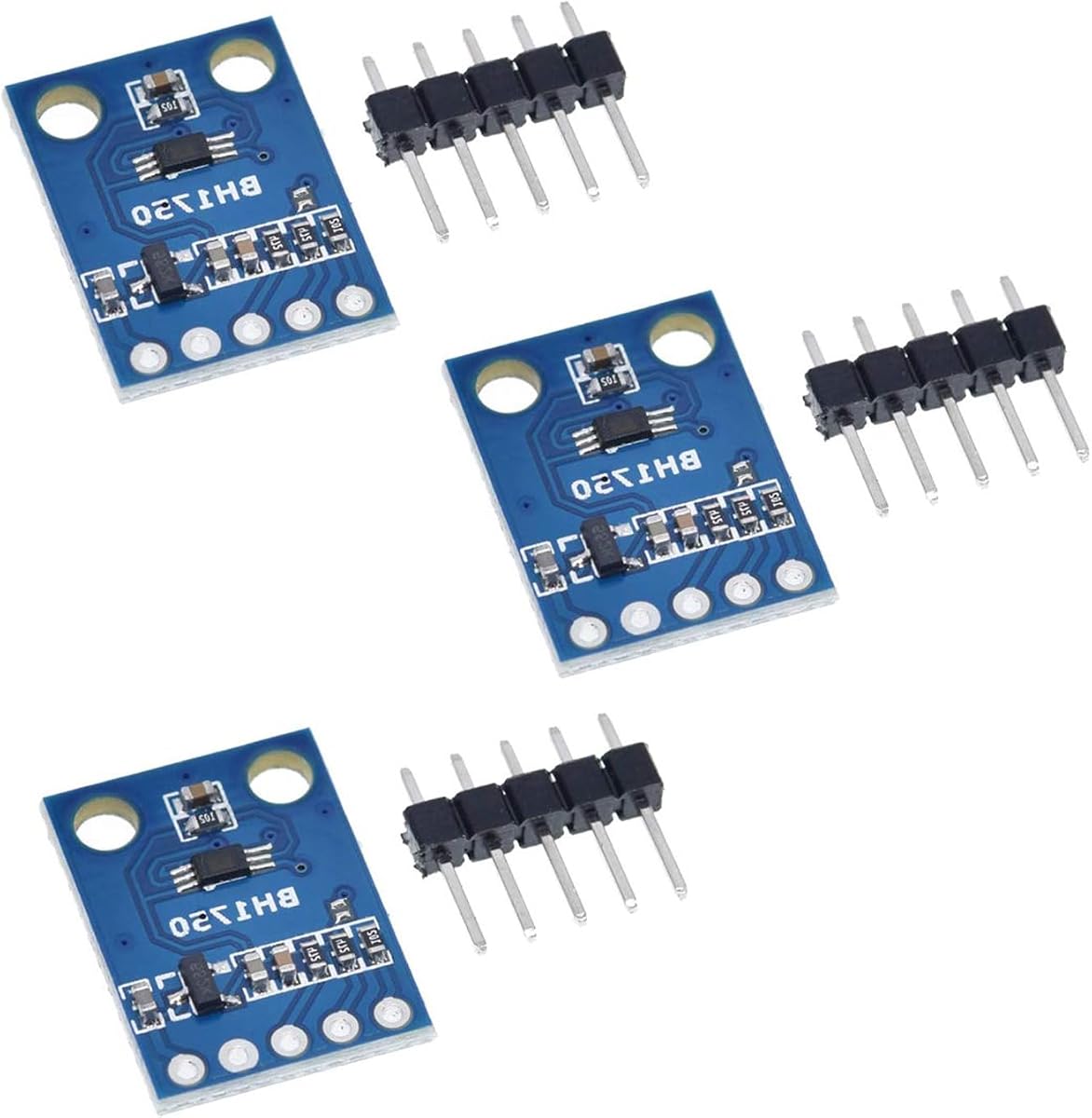
This GY-302 module offers precise digital light measurement using the BH1750FVI chip. It stands out for its accuracy and compatibility with modern microcontrollers like Arduino and ESP32.
We may earn a commission when you buy through this link, at no additional cost to you.
The compact size allows it to fit into tight projects easily. Its digital output simplifies coding and reduces noise issues common with analog sensors.
While it costs more than simple resistors, the precision justifies the cost for professional projects. Wiring can be trickier for beginners due to I2C.
Buy this if you need accurate lux values or plan to automate lighting. It is the top choice for serious makers.
The sensor provides exact light intensity values directly to your microcontroller without complex calibration.
Digital signals ensure reliable data transmission and reduce interference in noisy electronic environments.
We may earn a commission when you buy through this link, at no additional cost to you.
This pack provides thirty standard photoresistors ideal for testing multiple circuits. It is an affordable way to stock up on basic light sensors for your bench.
We may earn a commission when you buy through this link, at no additional cost to you.
The five millimeter size fits standard breadboards perfectly. High voltage tolerance makes them robust for various power scenarios.
They are analog only so you must pair them with resistors. Signal quality depends heavily on your circuit design.
Choose this for bulk projects or when budget matters most. It is perfect for educational kits and mass testing.
Buying in bulk significantly lowers the cost per unit for large scale production or classroom use.
Standard two pin leads allow quick insertion into breadboards for immediate testing and learning.
We may earn a commission when you buy through this link, at no additional cost to you.
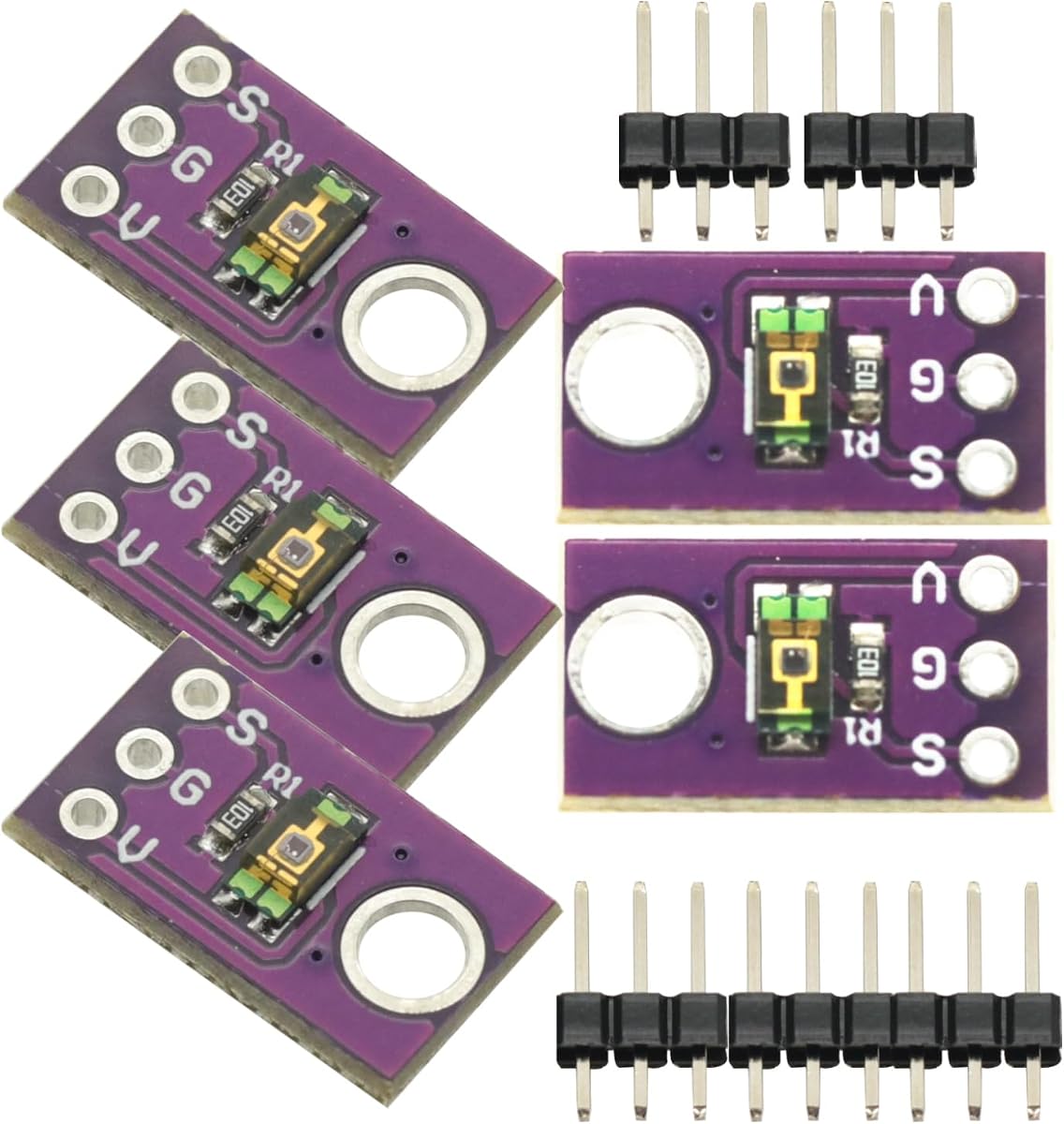
The TEMT6000 is a professional grade ambient light sensor built for precise applications like screen dimming. It offers the highest accuracy in this comparison.
We may earn a commission when you buy through this link, at no additional cost to you.
Its design ensures consistent performance in industrial or consumer electronics. The small footprint makes it suitable for tight spaces.
It might need soldering which adds assembly time. The cost is higher but delivers premium reliability.
Select this for high end products or where light consistency is critical. It is best for professional electronics.
Optimized for adjusting screen brightness based on ambient conditions for better user experience.
Built to withstand varied conditions ensuring stable performance in professional settings.
We may earn a commission when you buy through this link, at no additional cost to you.
This kit combines sensors with an LM393 comparator for convenient switching. It simplifies setup by offering both analog and digital outputs in one module.
We may earn a commission when you buy through this link, at no additional cost to you.
The adjustable threshold allows quick tuning for specific environments. It is great for automation tasks like night lights.
Potentiometers on cheaper modules can sometimes slip. Board dimensions are slightly larger than bare sensors.
Pick this for quick automation prototypes needing switch output. It saves time on external components.
Provides both analog data and digital triggers for versatile control strategies.
Dial in sensitivity settings instantly without code changes using the onboard potentiometer.
We may earn a commission when you buy through this link, at no additional cost to you.
HiLetgo provides reliable versions of the BH1750 sensor with consistent chip quality. These modules are great for precision sensing in Arduino setups.
We may earn a commission when you buy through this link, at no additional cost to you.
Dimensions fit easily on standard shields and breadboards. Voltage compatibility ensures it works with both 3.3V and 5V boards.
You may find slight variations in price compared to others. Setup requires basic I2C library knowledge.
Opt for this when you need trusted component quality. It balances cost and performance well.
Uses original ROHM chips ensuring consistent performance across modules.
Compact footprint allows multiple sensors on single projects without clutter.
We may earn a commission when you buy through this link, at no additional cost to you.
This module uses a photodiode to detect light from a specific direction. It is excellent for line following robots or focused light detection.
We may earn a commission when you buy through this link, at no additional cost to you.
Digital and analog outputs provide flexibility for different needs. The small size fits in narrow spaces easily.
Directional nature limits ambient light coverage. Wiring requires attention to pin alignment.
Use this for tracking or targeted sensing projects. It offers unique directional control at a low cost.
Ideal for applications where only direct light sources should trigger a response.
Minimal PCB size ensures it fits into tight spaces without interfering with other components.
We may earn a commission when you buy through this link, at no additional cost to you.
This module is built for driving relays directly based on ambient light levels. It is perfect for light controlled switches like automatic street lamps.
We may earn a commission when you buy through this link, at no additional cost to you.
The strong signal output ensures reliable relay activation. Ten units offer plenty for batch building.
It lacks analog output which limits data use. Potentiometer calibration is required for accurate triggering.
Choose this for high power switch projects. It simplifies building light operated automation.
Direct relay switching capability enables controlling high voltage devices safely.
Clean digital signals prevent false triggers caused by electrical noise.
We may earn a commission when you buy through this link, at no additional cost to you.
This sensor module works seamlessly with ESP32 and ESP8266 boards. It supports both digital and analog outputs for flexible integration.
We may earn a commission when you buy through this link, at no additional cost to you.
Support for 3.3V logic makes it safe for modern Wi-Fi boards. Tutorials help beginners get started quickly.
Only four pieces are included so plan accordingly. Analog output needs external setup.
Pick this for IoT or wireless projects. It is tailored for popular ESP microcontrollers.
Optimized to work with Wi-Fi capable microcontrollers for connected applications.
Provided tutorials ensure you can set up and test the sensor quickly.
We may earn a commission when you buy through this link, at no additional cost to you.
This bulk pack offers fifty GL5516 resistors ideal for large projects or classroom use. They provide consistent performance across units.
We may earn a commission when you buy through this link, at no additional cost to you.
Dark resistance is high for reliable detection. They suit solar tracking applications well.
Components are bare so mounting is required. No module electronics included.
Best for high volume assembly or stocking up. It offers unmatched quantity for the price.
Large quantity ensures you never run out during multi unit builds.
High resistance in dark makes them sensitive enough for sun tracking mechanisms.
We may earn a commission when you buy through this link, at no additional cost to you.
This module is designed for smart car projects needing reliable light detection. It includes an LM393 comparator for stable output.
We may earn a commission when you buy through this link, at no additional cost to you.
Dual outputs support various microcontroller setups. Compact size fits small vehicles easily.
Pack size is small so order multiple sets. No extra accessories included.
Choose for robotics or automotive light control. It balances stability and size.
Built to handle vibration and power fluctuations common in smart cars.
Supports both analog and digital signals for versatile control options.
We may earn a commission when you buy through this link, at no additional cost to you.
Selecting the right light sensor requires considering voltage, output type, and application. Here are the key factors to help you make the best choice.
There are two main types of light sensors: photoresistors (LDR) and photodiodes. Photoresistors change resistance based on light, while photodiodes generate current. Modules with integrated comparators make LDRs easier to use.
Choose modules for simple switching or raw sensors for custom circuits.
Output options include analog (0-5V), digital (0 or 1), or I2C digital data. Analog provides a range of values but needs analog pins. Digital simplifies coding but limits precision.
Digital outputs are easier for beginners while analog offers more data detail.
Most Arduino boards use 5V but modern chips like ESP32 use 3.3V. Ensure your sensor supports your board's logic levels to avoid damage. Some modules support both 3.3V and 5V.
Verify voltage specs before connecting to protect your microcontroller.
Some sensors detect light from all directions while others are directional. Directional sensors are better for focused detection like line tracking. Ambient sensors work best for general lighting automation.
Match directionality to your specific project requirements.
Modules like BH1750 provide precise lux measurements while LDRs offer rough estimates. High precision sensors are needed for scientific or display applications. Simple switches work well for on/off automation.
Consider whether you need exact values or simple triggers.
Bare components require more wiring while modules include circuits. Modules simplify prototyping but take more space. Select based on available board space.
Modules are convenient for testing; bare components for final builds.
Sensors come in packs ranging from 1 to 50 units. Bulk packs are cheaper per unit but require more storage. Small packs are good for single projects.
Buy bulk if you plan multiple projects or teaching kits.
Some modules include potentiometers for sensitivity adjustment or built-in relays. These add convenience but increase size. Evaluate if extra features are worth the trade-off.
Additional features can save coding time but cost more.
Connect the sensor to your Arduino using the provided pins. VCC connects to 5V or 3.3V, GND to ground, and output to an analog or digital pin. Ensure correct wiring to avoid damage.
For modules, adjust the potentiometer to set detection thresholds. Use the IDE to read values. Simple code helps verify sensor status before full integration.
Keep sensors away from direct heat and moisture to ensure longevity. Store them in a dry place to prevent oxidation. Avoid bending wires too sharply during use.
A photoresistor changes resistance when exposed to light while a photodiode produces current. Photoresistors are cheaper and simpler to use. Photodiodes are faster but require more complex circuits for best results.
Not without checking voltage compatibility. Some modules support both but connecting 5V to 3.3V logic can damage boards. Always verify the sensor supports 3.3V logic before connecting.
Digital modules like BH1750 are pre-calibrated but ambient conditions vary. You may need to adjust thresholds in code to match your specific lighting environment. Modules with pots make this easier.
A simple LDR module with a comparator is ideal for night lights. It provides a digital signal that triggers directly without complex code. The WWZMDiB module is a good choice.
Read the output pin value with serial monitor. In dark, the value should change significantly compared to light. If values stay constant, check connections and power supply.
Yes, digital sensors use shared I2C lines allowing many on two wires. Analog sensors require separate pins so limit the number by available ports. Digital is best for large setups.
Choosing the right sensor depends on whether you need simple switching or precise data. The BH1750 modules are great for accuracy while LDR modules suit automation.
Consider voltage, package size, and extra features like threshold adjustment. Balance cost with the complexity of your project to save time and effort.
Always verify current availability and prices before buying. These picks cover the best options for most Arduino light detection tasks.