
DY-50 Intraoral Camera
4.5Editor score
Works with major software
Ergonomic lightweight design
Direct USB connection
This guide compares the top 10 cameras for dental photography including intraoral systems and DSLRs to help you choose the right imaging solution for your
Choosing the right camera for dental photography is essential for accurate diagnostics and effective patient communication. High-quality images allow practitioners to document conditions precisely and illustrate treatment needs clearly during consultations.
We evaluated ten leading options ranging from dedicated intraoral cameras to versatile DSLR and mirrorless systems. Our analysis considers image clarity, ease of integration with dental software, ergonomics, and overall value for professional use.
Each selection highlights specific strengths tailored to different clinical needs and budgets. Please note that product availability and pricing fluctuate frequently so verify current details before making your final purchasing decision today.
4.5Editor score
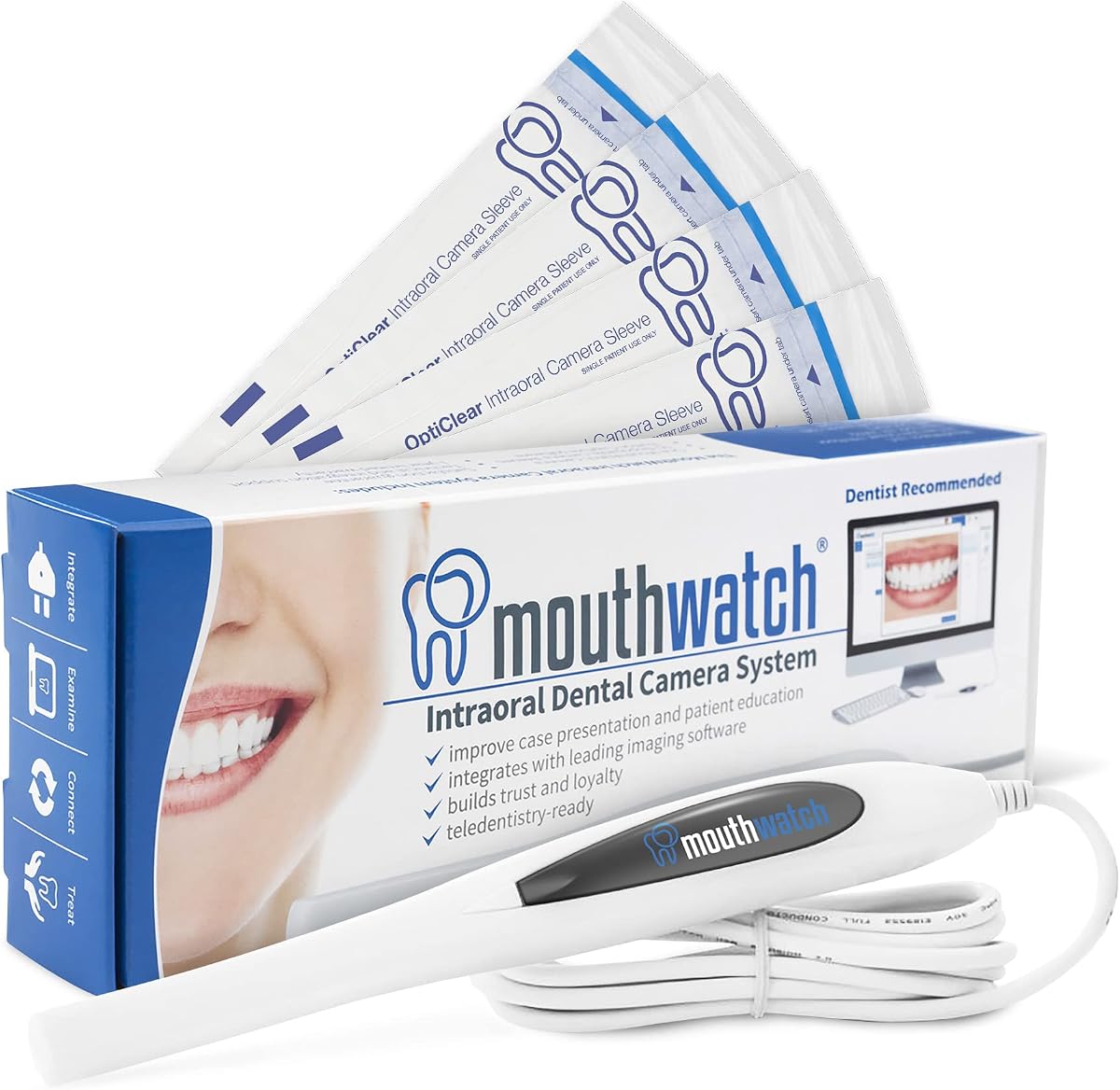
4.4Editor score

4.5Editor score
The following table provides a side-by-side comparison of all ten selected cameras highlighting their core specifications and primary use cases for dental professionals.


The Intraoral Camera Crystal Clear stands out as a top choice for dental professionals seeking efficiency and clarity. With a 4.4-star rating users appreciate its ability to capture well-illuminated images without the lag often found in cheaper models.
We may earn a commission when you buy through this link, at no additional cost to you.
Its standout quality is the fixed focal distance which removes the frustration of auto-focus hunting during patient exams. The single button operation allows for immediate image capture directly into patient charts without needing a mouse or keyboard.
While the fixed focal distance limits versatility compared to interchangeable lens systems it ensures consistent results for standard intraoral shots. Some users may need to ensure their imaging software is on the supported list before purchasing.
This camera is ideal for clinics prioritizing workflow speed and patient communication. It delivers reliable performance that helps professionals show patients exactly what needs treatment with minimal setup time.
The included capture software supports over fifty major imaging solutions ensuring seamless integration into existing clinic workflows without complex configuration.
Clear well-illuminated images help patients understand treatment needs quickly leading to better case comprehension and higher acceptance rates.
We may earn a commission when you buy through this link, at no additional cost to you.
The Canon EOS Rebel T7 DSLR offers exceptional image quality for those who need flexibility beyond standard intraoral cameras. Its 24.1-megapixel APS-C CMOS sensor captures vibrant colors and sharp details suitable for detailed dental documentation.
We may earn a commission when you buy through this link, at no additional cost to you.
This camera shines with its built-in Wi-Fi and NFC which allow quick transfer of images to smartphones or tablets for immediate patient reviews. The optical viewfinder provides approximately 95% viewing coverage for accurate framing during static shots.
However using a DSLR for dental work often requires purchasing an additional macro lens to achieve the close-up focus needed for tooth detail. The weight and size are also significantly larger than dedicated intraoral handsets.
It is best suited for clinics that want a versatile camera capable of both intraoral work and other clinical photography needs. The robust lens ecosystem allows growth as skills and requirements evolve over time.
Compatible with all Canon EF and EF-S lenses enabling users to add macro lenses for extreme close-ups when needed.
Built-in Wi-Fi and NFC streamline the process of transferring high-resolution images to mobile devices for instant patient education.
We may earn a commission when you buy through this link, at no additional cost to you.
This bundle expands on the T7 offering by including essential accessories like a 64GB memory card and shoulder bag. It provides a complete package for clinics ready to invest in a full camera system without buying items separately.
We may earn a commission when you buy through this link, at no additional cost to you.
The exceptional image quality remains a highlight with true-to-life colors and sharp details even in low light conditions. Intuitive automatic settings make it easy for staff with varying photography skills to take usable images immediately.
While the bundle saves money compared to buying components individually it still requires a macro lens for optimal dental photography. The included 18-55mm lens is standard and not sufficient for detailed intraoral shots.
Clinics looking for a comprehensive starting point that includes storage and transport solutions will find this bundle valuable. It supports long sessions with a long-lasting battery and ergonomic grip.
The package includes a memory card charger and bag reducing the need for separate purchases and ensuring readiness for clinical documentation.
Simplified menu system and automatic settings allow new users to navigate settings easily without extensive training or technical knowledge.
We may earn a commission when you buy through this link, at no additional cost to you.
The Canon EOS R50 represents a significant leap in performance with its advanced autofocus system and high-speed capabilities. Its Dual Pixel CMOS AF II covers 100% of the frame ensuring precise focus even for complex dental documentation tasks.
We may earn a commission when you buy through this link, at no additional cost to you.
This mirrorless camera excels with fluid video capture and high-speed continuous shooting up to 15 fps with electronic shutter. The vari-angle touchscreen facilitates composition from difficult angles which is useful for detailed clinical documentation.
While premium priced the R50 offers future-proof technology including deep learning subject detection. The RF-S lens lineup is expanding though currently fewer options exist compared to older EF mounts for macro work.
It is best for modern clinics wanting top-tier imaging capabilities that can handle both stills and video for educational purposes. The lightweight body reduces fatigue during extended shooting sessions.
Deep learning based subject detection tracks patients and specific features automatically ensuring consistent focus during dynamic documentation sessions.
4K video recording and high frame rates allow for detailed motion analysis and dynamic presentation of dental procedures.
We may earn a commission when you buy through this link, at no additional cost to you.
The Sony ZV-1 bundle offers a compact yet powerful solution for clinics needing high-quality imagery without the bulk of a DSLR. Its fast ZEISS lens and 20.1MP sensor capture crisp details with vibrant colors ideal for patient communication.
We may earn a commission when you buy through this link, at no additional cost to you.
A unique benefit is the product showcase mode which quickly and automatically switches focus to the subject closest to the camera. This feature is particularly useful for highlighting dental tools or materials during consultations.
Fixed lens limitation means you cannot swap optics for extreme macro needs but the close focus capability is generally sufficient for many clinical tasks. The focus can sometimes hunt on very close objects requiring patience.
This camera is perfect for content creation focused clinics that want to produce educational videos or social media content alongside clinical documentation. Its portability makes it easy to transport between locations.
Product showcase mode ensures rapid focus switching on nearby subjects making it ideal for highlighting dental materials or procedures.
The included 3-capsule directional microphone isolates voices clearly ensuring high-quality audio for educational videos or patient interviews.
We may earn a commission when you buy through this link, at no additional cost to you.
This budget-friendly option boasts impressive specifications on paper with an 88MP sensor and 8K video capability. For clinics on a tight budget it offers a high-megapixel alternative that can provide detailed still images for documentation purposes.
We may earn a commission when you buy through this link, at no additional cost to you.
The dual lens system and large touchscreen allow for flexible shooting angles which can be useful for capturing different views of the oral cavity. The included accessories like batteries and charging stand add value to the package.
However the 16X zoom is digital rather than optical which means zooming in significantly reduces image clarity. Build quality may vary compared to established brands so reliability might not match professional clinical standards.
It is suitable for practices needing a secondary camera for general documentation where extreme detail is less critical. The stabilization system helps keep shots steady even if handheld without a tripod.
The 88MP sensor captures extensive detail allowing for cropping and zooming on specific areas during patient consultations.
Included batteries and accessories ensure readiness for extended use without additional immediate purchases beyond the camera itself.
We may earn a commission when you buy through this link, at no additional cost to you.
The DY-50 is a dedicated intraoral camera designed specifically for dental use at a very competitive price point. It works with an extensive list of North American imaging software making it a safe choice for many clinics.
We may earn a commission when you buy through this link, at no additional cost to you.
Its ergonomic design allows easy capture from upper and lower arches with a direct USB connection to your computer. The anti-fog non-spherical lens ensures clear visuals even in the moist environment of the mouth.
While it lacks the high resolution of a DSLR it provides adequate quality for clinical records and patient education. Ensure your software is on the list before buying as compatibility is critical for seamless workflow.
This camera is perfect for small practices needing a reliable tool without a large financial investment. The simple plug-and-play setup minimizes downtime and technical frustration for busy staff.
The included driver ensures the capture button works directly with major software like Eaglesoft Dexis and Dentrix streamlining documentation.
Designed for comfortable use the lightweight handset reduces strain during frequent intraoral photography sessions throughout the day.
We may earn a commission when you buy through this link, at no additional cost to you.
The DARYOU DY-60 offers 720P HD resolution with 4X zoom capability allowing for flexible framing without moving the camera. It supports many popular imaging suites with an included driver for the capture button.
We may earn a commission when you buy through this link, at no additional cost to you.
This camera provides a balance between resolution and zoom utility which can be helpful for capturing both wider views and specific tooth details. The direct USB connection ensures stable data transfer to the computer.
While 720P is lower than modern standards it remains sufficient for most clinical documentation needs. The zoom might not be as sharp as optical macro lenses on larger cameras but it adds flexibility.
It is a solid choice for clinics wanting zoom features at an affordable price. Ensure your imaging software is compatible before purchasing to avoid integration issues.
The 4X zoomable lens allows clinicians to focus on specific dental features without changing physical positioning during exams.
No foot pedal is required and the included driver ensures the capture button functions correctly with major dental software.
We may earn a commission when you buy through this link, at no additional cost to you.
The UNK Kime-X8S offers an all-in-one solution featuring a 17-inch touchscreen computer integrated directly with the camera system. It delivers HD visuals via a high-performance chip to assist in precise dental analysis.
We may earn a commission when you buy through this link, at no additional cost to you.
A standout feature is the WiFi QR code functionality which allows transferring patient photos to any device in seconds without cables. The multi-view screen allows comparing before and after images efficiently during presentations.
While this system provides a complete workstation it may be more complex to manage than a simple camera. Ensuring the software meets your clinic specific needs is crucial before committing to this setup.
It is ideal for clinics wanting a modern streamlined approach to documentation and patient education. The plug-and-play design minimizes setup time while offering advanced features.
The 17-inch touchscreen supports quad-split views enabling efficient comparison of multiple angles or before and after results.
WiFi QR code transfer enables instant sharing of images to patient devices or mobile terminals without cable clutter.
We may earn a commission when you buy through this link, at no additional cost to you.
This aid is not a camera itself but a specialized lighting kit designed to enhance images taken with smartphones or dental equipment. It provides adjustable brightness from zero to one hundred percent to illuminate details inside the mouth.
We may earn a commission when you buy through this link, at no additional cost to you.
The omni directional shooting support bar allows flexible positioning to achieve the ideal view inside the oral cavity. Its removable handpiece bracket makes it highly adaptable for different angles and phone models.
While dependent on the quality of the smartphone camera it solves a common issue of poor lighting that affects image clarity. This kit is a practical tool for practices wanting to leverage existing devices.
It is best for clinics seeking an affordable way to improve photography without buying new hardware. The portable case makes it easy to move between examination rooms.
Fully adjustable brightness ensures you can tailor illumination for any dental feature without overexposure or shadows.
Designed to work with most cell phones it allows immediate use of existing devices for quality documentation tasks.
We may earn a commission when you buy through this link, at no additional cost to you.
Selecting the right dental camera depends on your workflow integration needs and the level of detail required for documentation.
Ensure the camera works seamlessly with your existing practice management and imaging software. Many systems require specific drivers or plugins to upload images directly into patient charts. Always verify a list of supported programs before purchasing.
Compatibility prevents workflow bottlenecks and ensures images are saved correctly without manual file transfers.
Look for cameras that produce sharp well-lit images. DSLRs and mirrorless cameras offer higher resolution than basic intraoral cameras but require more setup. Intraoral cameras prioritize ease of use and consistent lighting.
Higher resolution helps in diagnosing small imperfections and providing clear visual documentation for treatment plans.
Since these cameras are used frequently comfort is key. Lightweight handsets reduce hand fatigue during long days. Single button capture and auto focus help speed up the process significantly.
Ergonomic designs ensure that staff can operate the camera efficiently without straining their hands or wrists.
Direct USB connections are common for intraoral cameras allowing immediate image transfer. Wireless options add flexibility but may introduce latency or connectivity issues. Consider how quickly you need images available after capture.
Faster connection methods streamline patient consultations by showing results almost instantly without technical delays.
Fixed focal distance cameras like many intraoral units eliminate focusing issues but limit flexibility. Interchangeable lens cameras require macro lenses for close-ups but offer greater creative control. Choose based on your specific clinical needs.
A fixed lens simplifies operation while interchangeable lenses offer versatility for varied clinical photography scenarios.
Dental cameras range from affordable add-ons to professional systems. Consider the total cost including accessories or additional lenses. A higher price often brings better build quality and support which justifies investment for busy clinics.
Balance your initial budget against long-term reliability and feature set to ensure you get the best value for your practice.
Always start by cleaning the camera tip according to manufacturer guidelines to prevent contamination between patients. Use sterile sheaths for intraoral cameras to maintain hygiene standards effectively.
Connect the camera to your computer or system and ensure the drivers are installed correctly. Test the capture button with your imaging software before beginning patient exams to avoid workflow interruptions.
After use store the camera in a protective case to prevent physical damage. Regularly check for firmware updates and clean the lens to ensure consistent image quality over time.
Not all cameras work with every software. Dedicated intraoral cameras often list supported suites like Eaglesoft and Dentrix. Always check the compatibility list or ask the manufacturer before purchasing to ensure seamless integration.
It depends on your needs. DSLRs offer higher resolution and versatility for macro photography but require extra lenses and training. Intraoral cameras provide convenience and quick workflow integration for daily clinical documentation.
Use appropriate disinfectants and sterile sheaths as recommended by the manufacturer. Avoid submerging non waterproof parts in liquid. Regular maintenance ensures hygiene and prolongs the camera's lifespan significantly.
Yes especially when paired with a specialized lighting kit. Smartphone cameras have improved significantly but quality depends on the specific device model. A lighting accessory can enhance clarity and color accuracy for documentation.
Higher resolution is better for detailed diagnostics but 5 to 10 megapixels often suffice for standard clinical use. Focus on sharpness and lighting quality rather than just resolution numbers for practical results.
Yes some modern systems support wireless data transfer via WiFi or Bluetooth. However wired USB connections remain more reliable for consistent high-speed transfer in busy clinical environments.
Our top picks range from specialized intraoral cameras for speed to versatile DSLRs for detailed work. The Intraoral Camera Crystal Clear stands out for its balance of ease of use and integration.
Prioritize compatibility with your current software and the ergonomic comfort of the device. The right tool should simplify your workflow rather than complicate it with technical hurdles.
Remember to check current availability and pricing before purchasing as these can change frequently. Investing in reliable imaging equipment improves patient communication and documentation quality overall.