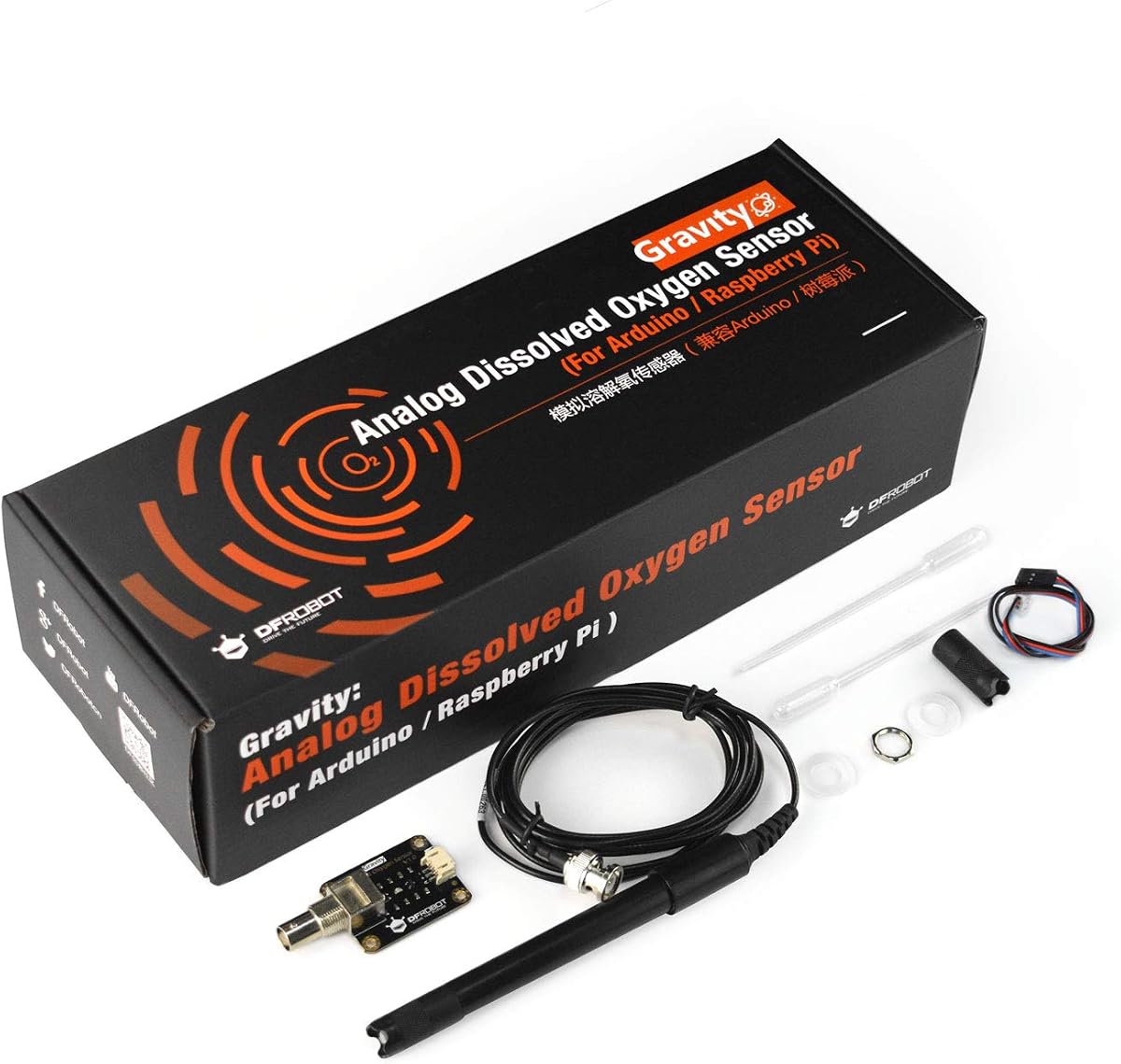
Gravity Analog Dissolved Oxygen Sensor Kit
4.4Editor score
No polarization required
Instant reading capability
Arduino ESP32 compatible
This guide compares the top 10 dissolved oxygen sensors 2 for aquaculture and labs, evaluating accuracy, durability, calibration ease, and sensor types for
Dissolved oxygen sensors are critical tools for monitoring water quality in aquaculture, laboratories, and environmental research. Selecting the right sensor ensures accurate readings that support healthy aquatic life and reliable scientific data. A good sensor offers stability, ease of calibration, and durability under various conditions.
We compared ten leading models based on sensor technology, response time, calibration methods, and user feedback. Each product was evaluated for its suitability across different applications, from hobbyist aquariums to industrial wastewater treatment. This list covers portable meters, IoT kits, and industrial probes.
Each pick highlights key specifications, pros, cons, and ideal use cases to help you decide. Prices and availability change frequently, so verify current details before purchasing. Our goal is to provide clear, factual comparisons to streamline your selection process for dissolved oxygen monitoring.
4.4Editor score
4.6Editor score

This table provides a side-by-side comparison of all ten selected dissolved oxygen sensors. It highlights key specifications and features to help you identify the model that best fits your specific monitoring needs and budget constraints.


This Gravity Analog Dissolved Oxygen Sensor Kit is a top choice for makers and IoT developers needing affordable water quality monitoring. With a 4.4 rating, it stands out for its galvanic probe that requires no polarization time. This feature allows for instant readings whenever the device is powered on, making it ideal for intermittent power setups.
We may earn a commission when you buy through this link, at no additional cost to you.
The sensor kit includes a signal converter board with hardware filtering to ensure stable analog voltage outputs. This reduces the need for software noise reduction, simplifying integration with microcontrollers like Arduino, ESP32, and Raspberry Pi. The detection range of 0 to 20mg/L covers most aquaculture and hydroponics needs effectively.
While the kit offers excellent value and low maintenance due to replaceable caps, users must note that the filling solution is not included due to shipping restrictions. Preparing the solution is straightforward but requires an extra step before first use. Additionally, an external ADC module is needed for Raspberry Pi setups.
For hobbyists building smart aquariums or lab research projects, this kit provides a reliable entry point into dissolved oxygen monitoring. The comprehensive documentation and open-source algorithms support quick deployment. Its cost-effective nature and ease of use make it a strong recommendation for budget-conscious technical users.
The galvanic probe design eliminates the wait time typically associated with polarographic sensors, allowing immediate measurements during critical monitoring periods.
Access to open-source code and wiring diagrams helps users troubleshoot quickly and customize their monitoring systems for specific IoT applications.
We may earn a commission when you buy through this link, at no additional cost to you.
The LDO Dissolved Oxygen Sensor 9020000SLU is designed for industrial and laboratory settings where reliability is paramount. While it lacks a specific user rating, the product description emphasizes accurate and consistent results. This sensor is built with durable materials to ensure long-term reliability in demanding environments.
We may earn a commission when you buy through this link, at no additional cost to you.
Its design simplifies setup and reduces maintenance costs, which is crucial for large-scale operations. The 10-meter probe length allows for flexible placement in tanks or rivers. Improved efficiency comes from its quick and stable performance, ensuring that data collection is not hindered by sensor lag or drift.
The primary trade-off for this level of durability and consistency is the significant cost. It is a premium solution intended for professional use rather than hobbyists. Users should ensure they have the necessary infrastructure to support this industrial-grade sensor before purchase.
This sensor is ideal for facilities needing dependable water analysis over extended periods. Its versatility suits industrial, laboratory, and environmental applications effectively. For organizations prioritizing data integrity and sensor lifespan, this model offers a robust solution despite the higher investment.
Constructed with materials meant for durability, this sensor maintains performance over time, reducing the frequency of replacements and associated costs.
The 10-meter cable allows the sensor to be positioned in deep or hard-to-reach areas while keeping the readout device safe from water exposure.
We may earn a commission when you buy through this link, at no additional cost to you.
The YSI 605203 Pro Series Polarographic Dissolved Oxygen Sensor is a highly rated option for laboratory use. With a 4.6 rating, it reflects user satisfaction with its performance. As a polarographic sensor, it offers the precision required for scientific research and rigorous water quality testing.
We may earn a commission when you buy through this link, at no additional cost to you.
The product is categorized as a lab supply, indicating its design for controlled environments. The packaging dimensions are compact, suggesting ease of storage and transport. YSI is a recognized brand in water quality monitoring, adding confidence to its reliability and accuracy in professional settings.
While the detailed specifications are limited in the listing, the focus on polarographic technology implies a robust measurement capability. Users seeking a trusted component for existing lab setups will find this fits well. However, those needing extensive additional features may need to pair it with a robust meter.
This sensor is best suited for researchers and technicians who require dependable readings in a laboratory context. Its high rating underscores its value in critical applications. For those prioritizing brand reputation and accuracy in a polarographic format, this model is a recommended choice.
Polarographic sensors are known for their stability and accuracy, making this a reliable choice for scientific and environmental testing needs.
Designed specifically as a lab supply, it integrates seamlessly into standard testing workflows used by professionals and academic institutions.
We may earn a commission when you buy through this link, at no additional cost to you.
This Dissolved Oxygen Meter comes with an 11.48 ft cable and ATC, making it a practical choice for aquariums and fish tanks. With a 4.0 rating, it balances functionality with affordability. The large LCD display ensures readings for dissolved oxygen, temperature, and pressure are clear even in low light.
We may earn a commission when you buy through this link, at no additional cost to you.
The meter features smart functions like 99-data memory and hold functions, which are useful for tracking trends over time. It supports multiple measurement units including ppm and mg/L. The durable design operates in a wide temperature range, and it includes membranes and electrolyte bottles for immediate use.
Using a Clark-type electrode with a life of over 12 months with maintenance provides cost-effective operation. However, the lower rating compared to other options suggests potential limitations in precision or user experience. The manual salinity compensation may require user intervention for accuracy.
For aquarium hobbyists and educational settings, this kit offers comprehensive tools for water quality management. The carrying case and included accessories reduce setup time. If you need a portable, easy-to-use meter for tanks without complex software, this is a viable option.
Includes probe, membranes, electrolyte, and carrying case, ensuring you have everything needed to start testing right out of the box.
The 99-data memory allows users to store multiple readings for later review, aiding in long-term water quality monitoring efforts.
We may earn a commission when you buy through this link, at no additional cost to you.
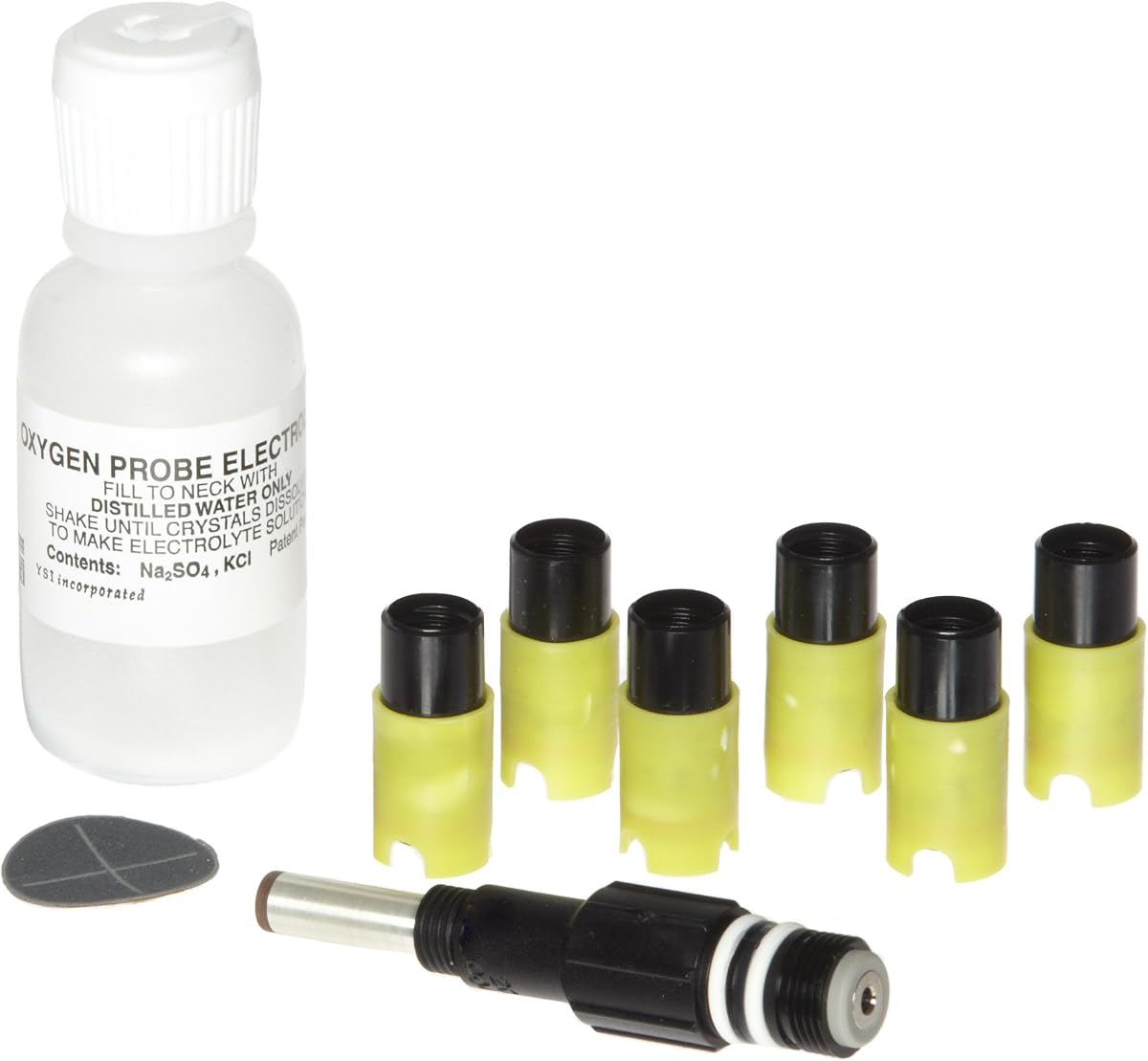
The YSI 605202 Pro Series Galvanic Dissolved Oxygen Sensor stands out with an impressive 4.8 rating. It is designed for easy user replacement, meaning maintenance is straightforward without specialized tools. The screw-on cap membranes simplify changes, ensuring consistent performance with minimal downtime.
We may earn a commission when you buy through this link, at no additional cost to you.
A key benefit is that it comes with 6 membrane caps and a bottle of solution, ready for immediate maintenance. This inclusion reduces initial setup costs and effort. The galvanic design typically offers faster response times and simpler operation compared to polarographic types.
While the rating is high, it is a sensor component rather than a full meter kit. Users must ensure compatibility with their existing measurement devices. The ease of use and included consumables make it a preferred choice for those looking to maintain their setups efficiently.
Ideal for professionals or serious hobbyists who value reliability and ease of maintenance, this sensor offers excellent value. The high user satisfaction suggests it meets expectations for accuracy and durability. If you need a reliable galvanic sensor with easy maintenance features, this is a top contender.
The screw-on cap design allows for quick membrane changes without tools, keeping your monitoring system operational with minimal interruption.
Comes with 6 membrane caps and solution, ensuring you can perform routine maintenance immediately after receiving the product.
We may earn a commission when you buy through this link, at no additional cost to you.
The Zopsc 2 Pack DO Tester pairs wirelessly with mobile devices for convenient real-time monitoring. While user ratings are not yet available, the features highlight strong connectivity options. The 10-meter wireless range allows for flexibility during on-site testing without tangled cables.
We may earn a commission when you buy through this link, at no additional cost to you.
The floating design with a weather-shielded ABS housing ensures safety in wet environments. An app supporting eight languages makes it accessible for international users. Data can be exported via email, simplifying reporting tasks. The battery offers up to five days of operation with smart power management.
The main reliance is on the smartphone app for viewing data, which may not suit users who prefer a standalone display. Additionally, the lack of established ratings means performance must be judged on features alone. However, the data export capability is a strong plus for record-keeping.
This tester is well-suited for modern hobbyists who want to track data on their phones. The durable design and multi-language support add value for diverse users. If you prefer app-based monitoring for your aquarium or field research, this device provides a convenient solution.
Wireless pairing allows you to view water quality metrics directly on your smartphone, streamlining the monitoring process.
Export records via email at various intervals helps you maintain detailed logs for hydroponics or laboratory analysis.
We may earn a commission when you buy through this link, at no additional cost to you.
The YSI DO200 Kit EcoSense is a portable meter with a 4.5 rating, known for its reliability. It features automatic temperature compensation and resolution of 0.01 ppm. The 2 percent accuracy ensures dependable readings for various water quality needs. A 9V battery is included for immediate use.
We may earn a commission when you buy through this link, at no additional cost to you.
Manual input for salinity and barometric pressure allows for precise adjustments based on specific conditions. The screw-on cap membranes are easy to replace, reducing long-term maintenance costs. The compact meter type makes it ideal for fieldwork or lab stations alike.
While the resolution is high, users may find the interface basic compared to modern digital meters. However, the brand reputation supports its quality. The focus on core measurement functions makes it a solid choice for those prioritizing accuracy over extra features.
For professionals needing a straightforward, portable solution for dissolved oxygen testing, this kit is a reliable option. The included battery and easy maintenance features add to its value. If you appreciate a classic design with proven accuracy, this model is a good fit.
Auto temp compensation ensures readings remain accurate even when water temperature fluctuates, removing the need for manual calculations.
The 0.01 ppm resolution allows for detecting small changes in oxygen levels, crucial for sensitive environments.
We may earn a commission when you buy through this link, at no additional cost to you.
The YSI 6900 ProDSS Optical Dissolved Oxygen Sensor represents a premium choice for industrial applications. As an optical sensor, it eliminates the need for membrane changes and electrolyte refills. It integrates with the ProDSS system for seamless data acquisition and analysis.
We may earn a commission when you buy through this link, at no additional cost to you.
Optical technology typically offers superior stability and longevity compared to electrochemical sensors. This reduces maintenance frequency and ensures continuous operation in harsh environments. The lack of user ratings reflects its niche industrial focus, where reliability is verified through system performance rather than general reviews.
The main limitation is the requirement for a compatible ProDSS meter. This makes it less accessible for users with older systems. The cost is also significant, but justified by the reduced maintenance and operational efficiency over time.
Ideal for facilities requiring continuous, low-maintenance monitoring, this sensor provides high reliability. Its integration with ProDSS offers advanced capabilities for water management. If you are building or upgrading an industrial monitoring station, this is a top-tier component.
Optical sensors do not require membranes or electrolytes, significantly reducing maintenance time and consumable costs.
Designed to work seamlessly with the YSI ProDSS system for enhanced data logging and reporting capabilities.
We may earn a commission when you buy through this link, at no additional cost to you.
The DAN&DRE Portable Dissolved Oxygen Meter features convenient 0% and 100% automatic calibration buttons. With a modular design, the electrode can be replaced easily to extend the device's life. It uses a thin film electrode for fast response times under 15 seconds.
We may earn a commission when you buy through this link, at no additional cost to you.
Intelligent temperature compensation ensures readings remain accurate across a wide temperature range from 0 to 50 degrees Celsius. The compact ABS construction makes it portable for aquariums and ponds. The 0.1% resolution provides sufficient detail for most monitoring needs.
Lack of user ratings suggests this is a newer product in the market. However, the auto calibration and modular design address common pain points for users. The ability to swap electrodes independently of the electronic unit is a distinct advantage for long-term use.
This meter is recommended for those needing reliable calibration and replaceable parts without a high price tag. Its versatility makes it suitable for aquaculture and home tanks. If you want a modern meter with easy setup and maintenance, this is a promising choice.
Buttons for 0% and 100% calibration allow for quick setup, saving time and ensuring reliable readings every session.
The ability to replace just the electrode reduces long-term costs, ensuring you do not need to buy a new unit when parts wear.
We may earn a commission when you buy through this link, at no additional cost to you.
The Yewhick Dissolved Oxygen Meter comes with ATC and a wide 0 to 40mg/L range. It includes electrode filling fluid and anaerobic calibration powder, which is rare for standard kits. The built-in temperature sensor and gold and silver electrodes promise fast readings.
We may earn a commission when you buy through this link, at no additional cost to you.
The meter offers a resolution of 0.01mg/L and supports two-point automatic calibration. A large LCD screen ensures clear visibility. The package includes six spare membrane caps, electrolyte, and extra batteries, making it a ready-to-use solution right out of the box.
Using three LR44 alkaline batteries means the device relies on smaller cells compared to 9V options. However, the 2000-hour battery life is impressive. The automatic shutdown preserves power. For users needing a comprehensive kit without buying accessories separately, this stands out.
This meter is ideal for aquaculture, wastewater, and education where a complete setup is preferred. The included calibration materials simplify initial use. If you want a value package with spare parts and fluids included, this is a solid practical choice.
Includes calibration powder and filling fluid, saving you the trouble of buying these essentials separately.
Up to 2000 hours of continuous use on three LR44 batteries ensures extended operation without frequent changes.
We may earn a commission when you buy through this link, at no additional cost to you.
Choosing the right dissolved oxygen sensor requires understanding your specific monitoring needs, budget, and technical capabilities. The following factors will help you select the most suitable device for your application.
Dissolved oxygen sensors generally fall into polarographic or galvanic categories. Polarographic sensors require a membrane and electrolyte solution, offering stable readings but needing regular calibration. Galvanic sensors do not require external power for polarization, making them easier to use for quick measurements.
Select polarographic for high precision in labs and galvanic for general or industrial applications.
Consider the range needed for your environment. Most devices cover 0 to 20mg/L, but some extend to 40mg/L. Resolution determines how small changes are detected; look for at least 0.01mg/L for accurate tracking.
Ensure the range and resolution match your specific water quality monitoring goals.
Calibration is critical for accuracy. Some models offer automatic two-point calibration using buttons, while others require manual input. Look for devices with air calibration or saturation calibration options for ease of use.
Prioritize meters with automated features to maintain accuracy consistently.
For field use or industrial settings, waterproof and rugged construction is essential. ABS housings and sealed probes prevent water damage. Check if the device floats or is submersible based on your testing method.
Choose robust construction to withstand harsh conditions and frequent handling.
Modern sensors may offer Bluetooth, wireless, or IRDA ports for data transfer. Smartphones or computers. If you need to track trends, models with memory and export capabilities save time.
Opt for connectivity features if long-term data analysis is required.
Battery life impacts usability in remote locations. Meters using AA or LR44 batteries are easy to replace. Check the expected hours of operation to avoid interruptions during critical monitoring.
Ensure battery life meets your testing duration requirements.
Maintenance involves replacing membranes, electrolytes, and calibration solutions. Some sensors offer tool-free membrane changes, reducing downtime. Factor in the cost of these consumables over time.
Select sensors with easy maintenance to reduce long-term operational costs.
Well-known brands like YSI offer proven reliability and technical support. For DIY solutions, open-source compatible kits may be preferred. Check for available documentation and community support.
Invest in trusted brands for critical industrial or research applications.
Before first use, ensure the sensor is filled with the correct electrolyte solution if required. For galvanic sensors, check that the membrane is intact and free of bubbles. Allow the sensor to stabilize in air or water for the recommended time before taking a reading.
Regular calibration is essential to maintain accuracy. Use two-point calibration with air saturation and zero-oxygen solutions as instructed. Record calibration data to track sensor health over time and adjust settings if deviations occur.
Store the sensor in a moist environment to prevent the membrane from drying out. Rinse the probe with fresh water after each use and check for wear regularly. Replace membranes or caps according to the manufacturer's schedule to ensure consistent performance.
Polarographic sensors require an external voltage to operate and typically need a longer warm-up time. Galvanic sensors generate their own voltage and can provide immediate readings. Polarographic options are often more accurate for lab use, while galvanic is convenient for field applications.
It is recommended to calibrate your meter before every critical measurement session or at least weekly for routine checks. Frequent calibration ensures readings remain accurate, especially if the sensor is used in varying temperatures or contaminated environments.
While some sensors can measure oxygen in drinking water, specialized drinking water kits are more common. Ensure the sensor range and materials are safe for potable water. Always verify local regulations for testing standards.
Polarographic sensors need an electrolyte solution to complete the electrical circuit that measures oxygen. The solution facilitates the reaction between oxygen and the sensor electrodes. Without it, the sensor cannot produce a valid reading.
Membranes typically last from a few weeks to several months depending on usage and water quality. Frequent calibration or exposure to harsh chemicals may shorten this lifespan. Regular inspection helps determine when replacement is needed.
Temperature, salinity, and barometric pressure all influence dissolved oxygen levels. Meters with automatic temperature compensation adjust for these factors. Always ensure the sensor is calibrated for the specific conditions of your environment.
We have reviewed ten top options for dissolved oxygen monitoring, ranging from budget IoT kits to industrial-grade optical sensors. Each offers unique advantages for aquaculture, labs, and aquariums. The best choice depends on your need for precision, automation, and connectivity.
For reliable daily use, consider models with auto calibration and durable membranes. If you require data logging, look for wireless or memory features. Always prioritize ease of maintenance to ensure long-term accuracy.
Prices and availability may change, so verify details before purchase. We hope this guide helps you select the right sensor for your water quality monitoring needs. Investing in a quality sensor ensures healthy environments and accurate data.