
BUFFALO LinkStation 210
3.9Editor score
Includes 2TB HDD Drive
Simple Plug and Play Setup
Low Power Standby Mode
We compare the top ten low power consumption NAS devices for home and office use, focusing on energy efficiency, performance, storage capacity, and reliability.
Finding a low power consumption NAS is essential for users who want always storage without high energy bills. These devices run quietly and efficiently, making them perfect for 24/7 operation in homes or small offices.
This guide evaluates ten distinct network attached storage solutions based on their power efficiency, processing capabilities, and overall value. We examined specs like processor type, RAM, and network ports to ensure they balance performance with energy savings.
Each pick highlights unique strengths and weaknesses to help you choose the right fit for your needs. Keep in mind that prices and availability change frequently, so check current listings before making your final decision.
3.9Editor score

4.6Editor score

4.5Editor score
This side-by-side comparison highlights the key specifications and strengths of each low power consumption NAS model. Use this table to quickly identify which device matches your storage needs and performance requirements while minimizing energy usage.




The UGREEN NAS DXP2800 stands out as an exceptional choice for advanced users needing a low power consumption NAS. With a rating of 4.5 stars, it balances energy efficiency and powerful performance effectively.
We may earn a commission when you buy through this link, at no additional cost to you.
Its Intel N100 quad-core CPU ensures minimal power usage while handling heavy workloads like Docker containers and virtual machines. The included 8GB DDR5 RAM supports fast operations for multiple users simultaneously.
While it costs more than basic models, the value lies in its flexibility and low energy costs over time. The lack of built-in Wi-Fi might be a minor inconvenience for some users.
Buyers seeking a robust home media hub or private cloud should consider this unit. It delivers long-term savings and high performance without excessive electricity demands.
The N100 processor consumes less power than traditional desktop CPUs, ideal for 24/7 NAS operation.
Supports M.2 NVMe caching for faster access to frequently used files while keeping cold storage on HDDs.
We may earn a commission when you buy through this link, at no additional cost to you.
The UGREEN NAS DH2300 is a fantastic entry-level option for anyone wanting a low power consumption NAS without complexity. Rated 4.5 stars, it simplifies moving from cloud storage to local backup.
We may earn a commission when you buy through this link, at no additional cost to you.
This model focuses on personal storage needs like photo backup and file sharing with minimal technical requirements. Its efficient processor keeps power usage low even during long idle periods.
Performance limitations like no Docker support or 1GbE speeds are acceptable for home users who just need reliable storage. The lack of virtual machine capabilities keeps costs down.
Ideal for families needing secure personal storage without monthly fees, this device offers excellent value. It balances simplicity and efficiency for users new to NAS systems.
The one-time purchase cost beats recurring cloud subscription fees over time, especially for large file collections.
Built-in AI tools automatically tag and organize photos, saving time on manual sorting and management.
We may earn a commission when you buy through this link, at no additional cost to you.
The MINISFORUM N5 Air offers powerful performance in a NAS package that still manages power efficiently for its class. With a 4.2 rating, it targets users needing serious throughput and capacity.
We may earn a commission when you buy through this link, at no additional cost to you.
Its AMD Ryzen 7 processor and dual multi-gigabit ports enable fast data transfers and simultaneous heavy tasks. While not as low power as entry devices, it balances speed with efficiency well.
The modular design allows easy upgrades to RAM and storage, adapting to future needs. Advanced features like OCuLink provide unique expansion possibilities beyond standard NAS units.
This unit suits power users or small offices needing high capacity and speed. It delivers premium features while keeping power consumption in check for continuous operation.
Combined 10GbE and 5GbE ports support link aggregation for faster data movement across large networks.
Modular design supports easy RAM and SSD upgrades, allowing flexibility as storage needs grow over time.
We may earn a commission when you buy through this link, at no additional cost to you.
The Synology DS225+ is a top-rated device for those prioritizing software and streaming capabilities alongside low power use. With a 4.6 rating, it offers seamless integration across devices.
We may earn a commission when you buy through this link, at no additional cost to you.
Intel hardware transcoding ensures smooth 4K streaming without stressing the CPU, keeping power usage low during media tasks. Its intuitive software makes management effortless for any user.
While limited to two bays, it covers most home needs efficiently. The focus on streamlined functionality reduces unnecessary processing, saving energy during daily operations.
Ideal for media enthusiasts and general backup, this Synology unit delivers reliability and efficiency. It is a strong choice for continuous operation without high energy costs.
DSM software simplifies management, reducing the need for constant administrative tasks and optimizing system resources.
Dedicated Intel GPU handles media conversion efficiently, lowering CPU load and power consumption during streaming.
We may earn a commission when you buy through this link, at no additional cost to you.
The BUFFALO LinkStation 210 is a straightforward low power consumption NAS for users needing simple backup without setup. Rated 3.9 stars, it provides ready-to-use storage out of the box.
We may earn a commission when you buy through this link, at no additional cost to you.
It includes a 2TB hard drive, eliminating initial purchase steps. The simple interface ensures easy access across devices while keeping power needs minimal.
Advanced users may find features limited, but for basic storage, it works reliably. The closed system protects against external threats while maintaining low resource usage.
Buyers needing a no-fuss backup solution will appreciate this unit. It balances convenience with efficiency for home environments.
Included hard drive means immediate use without extra purchases or complex configuration steps for average users.
Automated backup tools protect files effortlessly, ensuring safety without manual intervention or high energy use.
We may earn a commission when you buy through this link, at no additional cost to you.
The UGREEN DXP4800 GT offers solid performance for office teams needing efficient shared storage. With a 4.5 rating, it handles multiple workloads smoothly.
We may earn a commission when you buy through this link, at no additional cost to you.
Its AMD Ryzen CPU and dual 10GbE ports allow rapid file access and efficient processing. This keeps latency low while maintaining reasonable power levels.
Plex setup requires Docker configuration, which might deter casual users. However, for professional environments, the performance and scalability justify the effort.
This model suits small offices needing reliable collaboration tools. It delivers speed and capacity while managing power demands well.
Multi-user access tools and shared folders enable seamless teamwork without requiring high power systems.
Dual 10GbE ports support heavy traffic environments, ensuring fast transfers without network bottlenecks.
We may earn a commission when you buy through this link, at no additional cost to you.
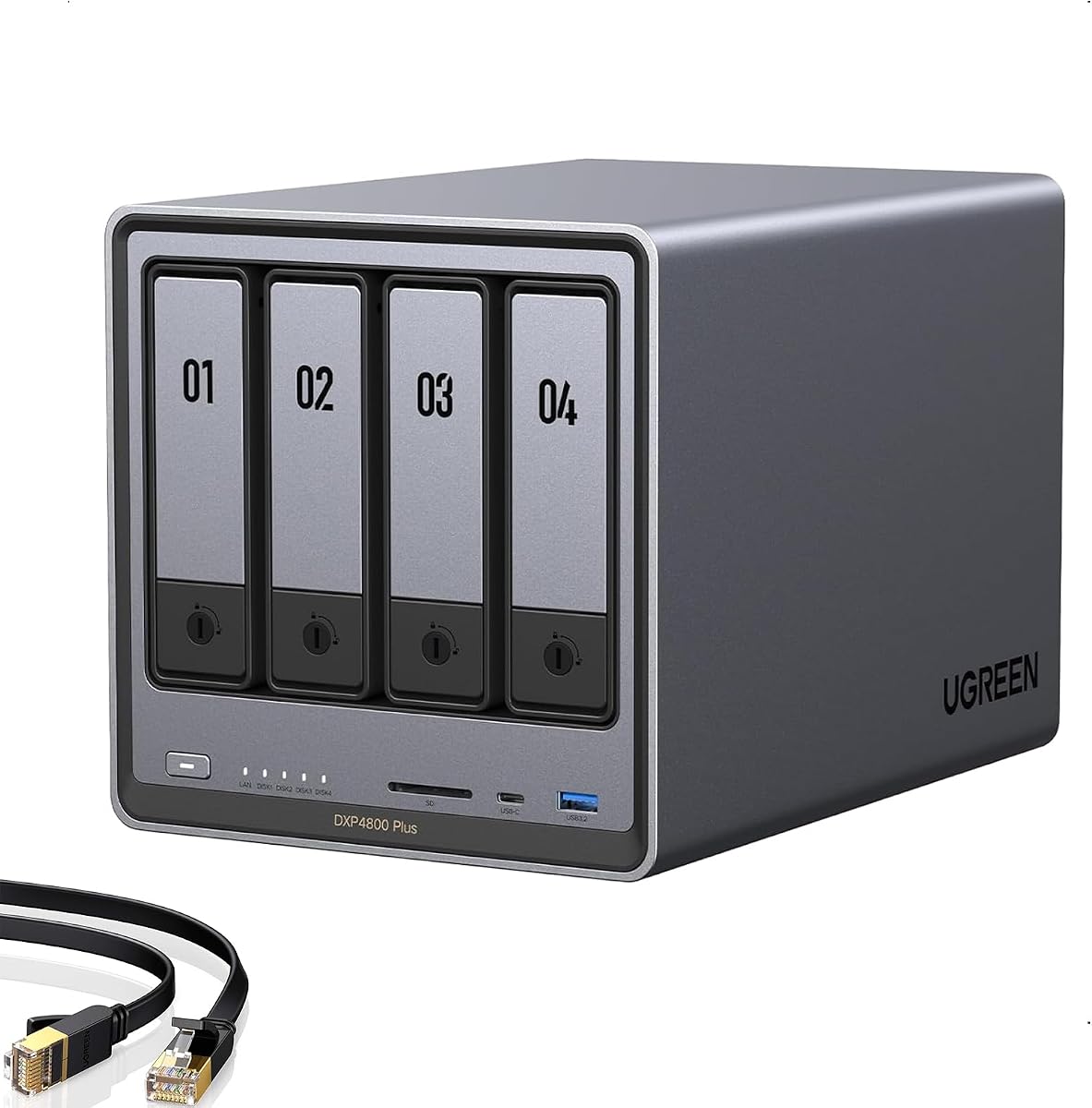
The UGREEN DXP4800 Plus is a family-focused low power consumption NAS with powerful performance and smart tools. Rated 4.5 stars, it balances capacity and ease of use.
We may earn a commission when you buy through this link, at no additional cost to you.
Its fast networking and AI photo management make media handling effortless. The software simplifies sharing while keeping data secure through encryption.
Higher cost might deter budget buyers, but features like Docker and virtualization add long-term value. Its power-efficient CPU ensures 24/7 operation is economical.
Ideal for households needing central storage and media streaming. It offers great balance between advanced features and daily usability.
AI features automatically organize photos, saving time for families with large digital libraries.
Encryption and permission controls ensure data safety for multiple family members using the system.
We may earn a commission when you buy through this link, at no additional cost to you.
The Synology DS223j is an entry-level low power consumption NAS ideal for home backup and basic media. Rated 4.5 stars, it offers reliable performance at an affordable price.
We may earn a commission when you buy through this link, at no additional cost to you.
Its design prioritizes ease of use, with setup that is intuitive for any user. Energy usage remains low, making it suitable for continuous operation without high bills.
While slower than premium models, it handles daily tasks effectively. The focus on core features ensures efficiency without unnecessary power consumption.
Perfect for first-time NAS buyers or basic storage needs. It provides dependable service and low energy use.
Simple setup guides help users get started quickly without technical knowledge or complex configurations.
Supports multiple IP cameras for home monitoring, integrating security with storage efficiently.
We may earn a commission when you buy through this link, at no additional cost to you.
The Beelink ME Mini N150 is a versatile low power consumption NAS that functions as a mini PC. Rated 4.4 stars, it offers flexibility for advanced users.
We may earn a commission when you buy through this link, at no additional cost to you.
With 6 M.2 slots and Wi-Fi 6, it supports diverse setups in a tiny footprint. Energy-efficient components keep power needs minimal for continuous tasks.
Setup may require more effort than traditional NAS devices, but the control is unmatched for tech enthusiasts. Its low profile suits discreet home offices.
Ideal for users who want more than basic storage. It combines NAS functions with mini PC efficiency.
Small footprint saves desk space while delivering full NAS capabilities for home or office use.
Built-in Wi-Fi 6 offers flexible placement without needing extra network cables for setup.
We may earn a commission when you buy through this link, at no additional cost to you.
The Beelink ME Mini PC is a compact low power consumption NAS solution ideal for general storage needs. Rated 4.6 stars, it combines efficiency with speed.
We may earn a commission when you buy through this link, at no additional cost to you.
Its N95 processor and 1TB SSD provide ready-to-use performance. Dual 2.5G LAN ensures fast transfers without requiring extra peripherals.
While not as expandable as other models, it handles daily tasks efficiently. The small size suits users who prioritize space saving.
Buyers needing a reliable compact storage device will find this appealing. It balances performance and low energy use effectively.
Built-in SSD means immediate use without waiting for hard drive installation or setup.
Compact form factor fits easily on desks or shelves, ideal for small spaces.
We may earn a commission when you buy through this link, at no additional cost to you.
Choosing a low power consumption NAS requires balancing performance needs with energy efficiency. This guide outlines key factors to consider before purchasing.
Look for ARM-based or low-power Intel processors like the N100 or N95. These CPUs provide sufficient performance for basic tasks without consuming excessive electricity. High-performance processors like AMD Ryzen are better for heavy workloads but may use more power.
Choose processors that match your workload to ensure energy efficiency without sacrificing necessary speed.
RAM affects how well a NAS handles multiple tasks. More memory allows smoother operation without needing to spin up drives frequently, which saves power. Ensure at least 4GB for basic use and 8GB for heavier tasks.
Selecting enough RAM minimizes CPU load and keeps the system energy efficient during multitasking.
The number of bays determines capacity. Fewer bays generally mean less power consumption when idle. Consider if you need expansion later or if current needs are met by 2-bay models.
Matching bay count to actual needs prevents wasting energy on unused drive slots.
Fast network ports like 10GbE enable quicker transfers, reducing active time. While these ports may use more power when active, they reduce overall operation time, potentially saving energy.
Balance network speed needs against power usage to find the right configuration for your setup.
Intuitive software reduces management time. Features like sleep modes, smart backups, and efficient caching help lower power use during idle times. A well-designed OS optimizes hardware performance.
Choose a system with power management features to ensure low energy consumption around the clock.
Smaller devices typically use less power due to fewer components. Compact NAS units often lack extra features but save space and electricity. Consider where the device will be placed before buying.
A smaller form factor often correlates with better energy efficiency for basic needs.
External power adapters can be inefficient. Look for internal power supplies with high ratings to reduce wasted electricity. Efficient power units keep costs down over time.
Verify power supply efficiency to ensure consistent low energy performance during operation.
Affordable models save upfront costs but may lack advanced power management. Higher priced units often offer better long-term savings through efficient energy use. Calculate total cost of ownership before purchasing.
Invest in a device that balances initial cost with ongoing energy savings for best value.
Begin by connecting your NAS to a stable power source and router using Ethernet. Follow the manufacturer's setup instructions to initialize drives and configure user accounts.
Schedule regular backups to ensure data safety without consuming unnecessary processing power. Use built-in tools to automate these tasks so the system runs efficiently in the background.
Keep your NAS firmware updated to maintain security and performance efficiency. Ensure proper ventilation to prevent overheating, which can increase power draw and reduce hardware life.
Yes, many models like the UGREEN DXP2800 and Synology DS225+ support hardware transcoding. This allows smooth streaming of 4K content without high energy usage during playback. Ensure the device has compatible CPU features.
Most low power NAS units use between 10 to 30 watts during active use and less when idle. This translates to roughly 0.24 to 0.72 kWh per day, depending on usage patterns. It is far less than a desktop PC.
Some models like the UGREEN DXP4800 GT allow RAM upgrades to increase multitasking ability. Check the specifications before purchasing to confirm compatibility. More RAM reduces CPU load and can improve efficiency.
The UGREEN NAS DH2300 or BUFFALO LinkStation 210 are ideal for beginners. They offer easy setup and essential features without complexity. These models prioritize user-friendliness and low maintenance needs.
Most NAS software, including Synology and UGREEN OS, is free for basic use. Advanced features may require additional purchases, but core functions like file sharing and backup remain accessible. This helps keep long-term costs down.
Yes, all reviewed models support mobile access via dedicated apps for iOS and Android. This allows secure file access and backups on the go. Check app reviews for usability feedback.
The UGREEN DXP2800 and Synology DS225+ lead the list for balancing performance and efficiency. These devices offer excellent features for media streaming and secure backups without high energy costs.
When choosing, prioritize processor efficiency and software features to match your needs. Whether you want simple storage or advanced capabilities, there is a model to suit your environment.
Always check current prices and availability before purchasing to ensure the best deal. Energy-efficient NAS devices are an investment that pays off through long-term savings and reliability.